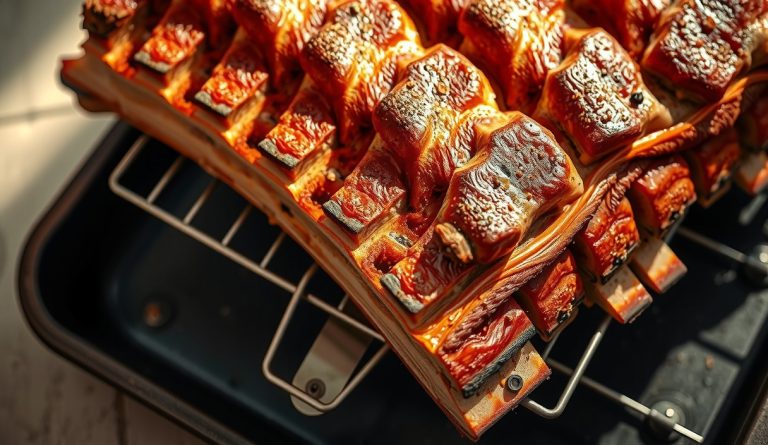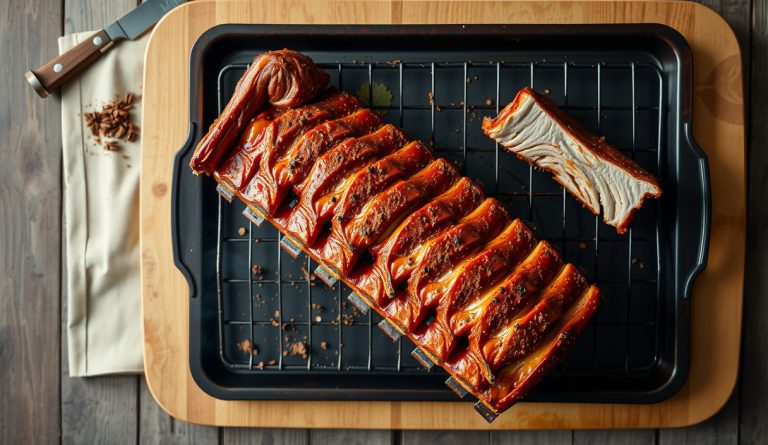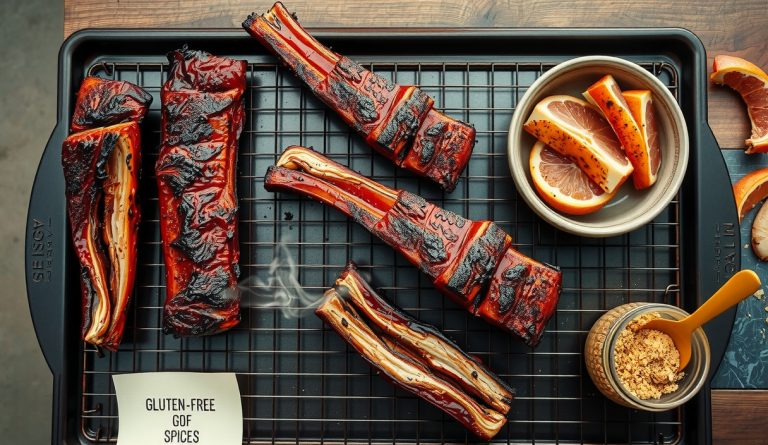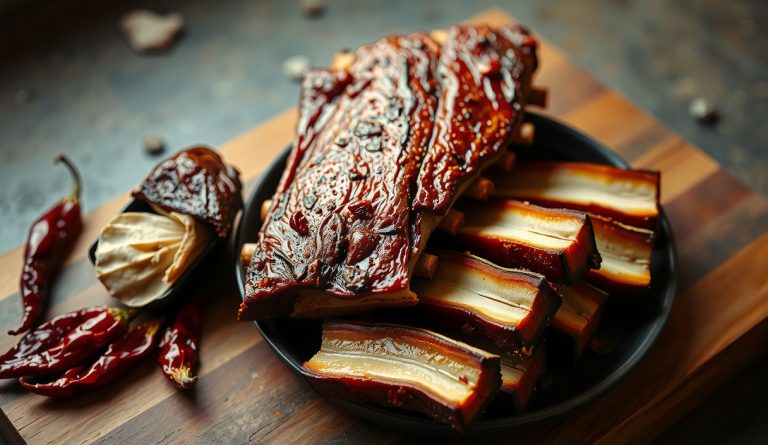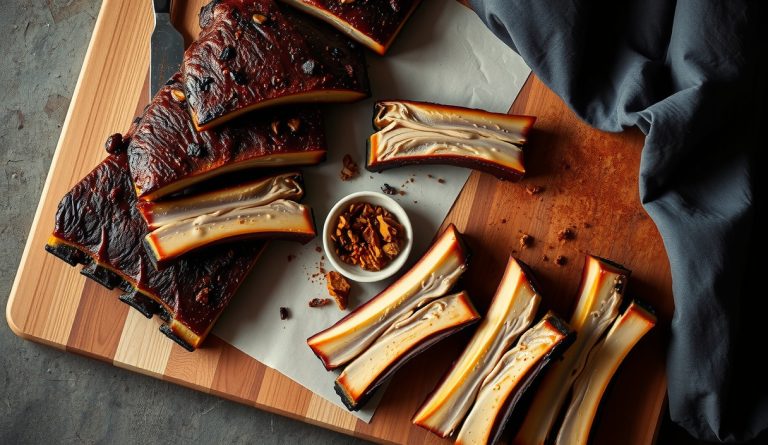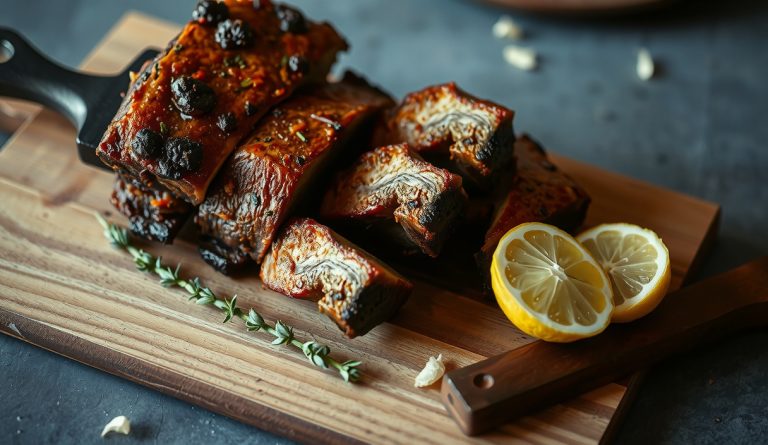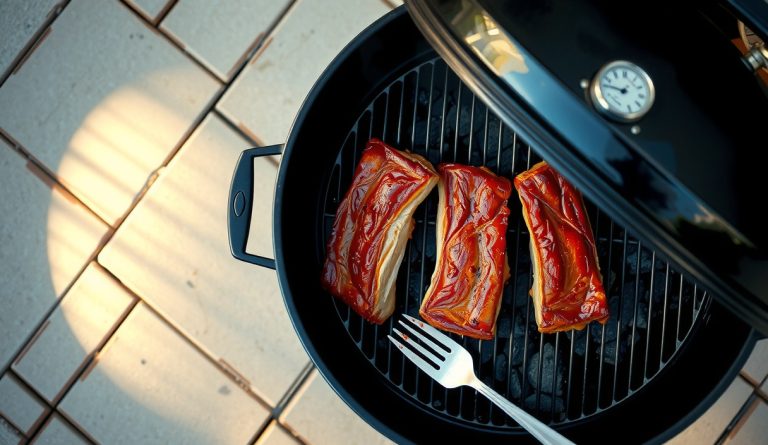
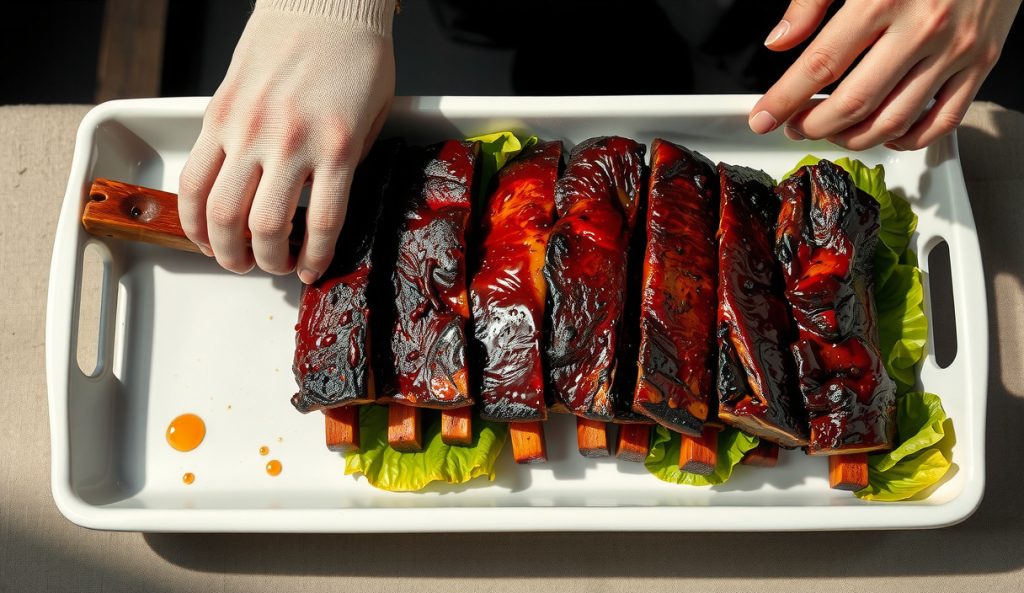
Memphis competition circuits occupy a precise middle ground: ribs must arrive at the judges’ table gleaming but not sauced. A thin glaze of apple juice, honey, and a dusting of the same dry rub achieves that candy-lacquer surface while the flavors remain unambiguously in the dry-rub tradition. This finish is for cooks who want the visual drama of a competition rack without abandoning the philosophy of letting the rub and smoke do the primary work.
What changes with the wet finish — and how do you apply it?
In the final 20 minutes of the unwrapped phase, mix equal parts apple juice and honey — roughly one tablespoon of each per rack — and stir in a half-teaspoon of the dry rub until dissolved. Brush the glaze lightly at the 10-minute mark, let it tack for 10 minutes, then apply a second coat. Two thin layers build a translucent lacquer; a single heavy coat pools in the bone concavities, runs off the edges, and scorches against the grate.
The mechanism is straightforward: honey’s fructose fraction begins caramelizing around 230°F, well within a typical grate temperature range, so each coat sets before the next goes on. Apple juice contributes malic acid, which prevents the glaze from becoming cloyingly sweet and brightens the pork’s natural flavor. Resist adding more than two coats — the goal is a translucent sheen, not an opaque candy shell. If the glaze starts showing dark edges at the thinner end of the rack, tent the ribs loosely with foil for the last five minutes.
What stays the same as the original method?
The full 3-2-1 cook structure, the rub formula, the smoke wood selection, and every time-and-temperature target remain unchanged from the base recipe. The glaze is strictly a finish applied in the final 20 minutes — it does not alter the cook, the wrap phase, or the bend-test standard for doneness. Everything that defines the Memphis dry-rub tradition stays intact beneath the lacquer.
When is the competition wet finish the better choice?
Use this variation when presentation matters — competition turns, catered events, or any table where a polished surface signals effort. The wet finish also appeals to guests accustomed to Kansas City-style glazed ribs who need a visual cue that the rack is finished; the sheen reads as intentional rather than merely dry. If you are cooking strictly for the rub’s textural bark, skip the glaze entirely and follow the canonical method.
Use the full method, equipment, and rub measurements from the original Memphis Dry-Rub Spare Ribs.