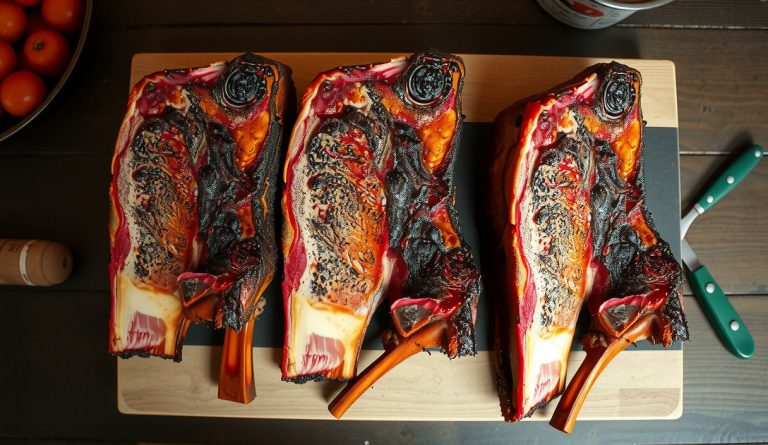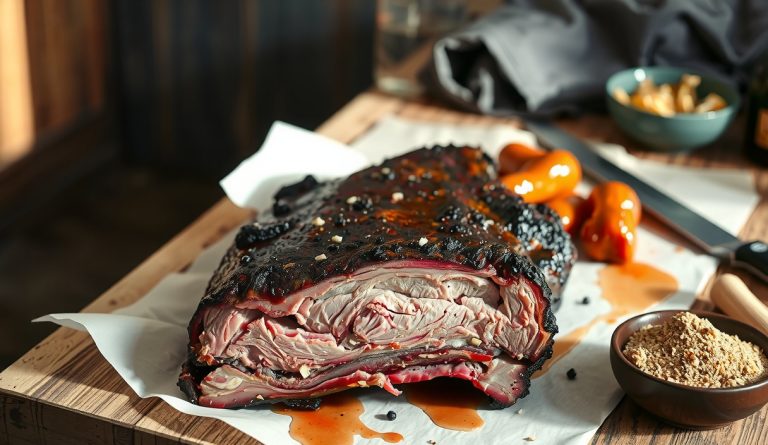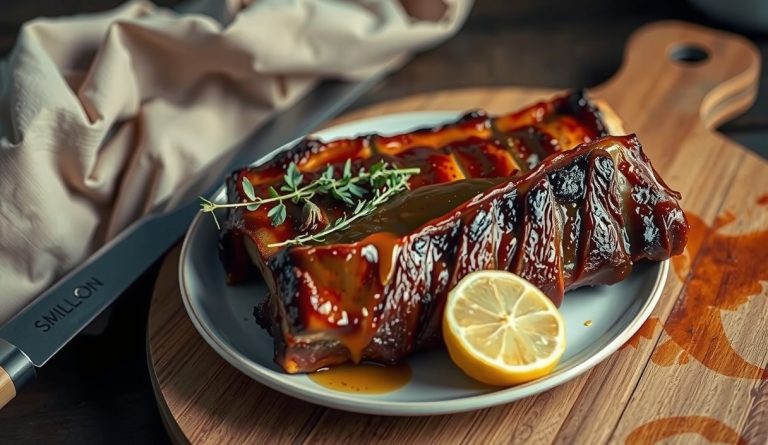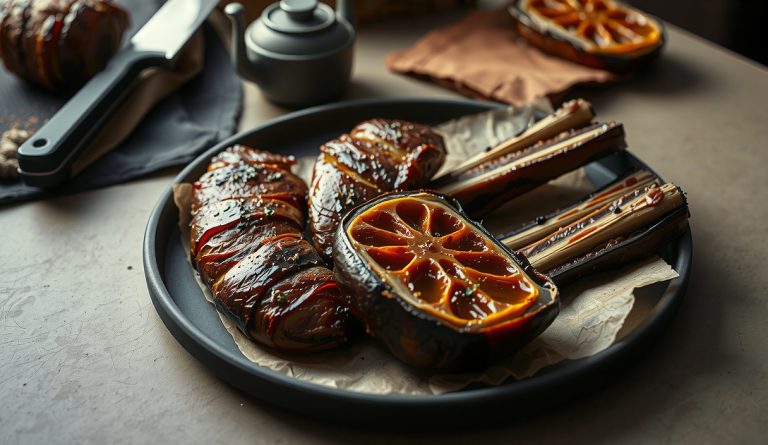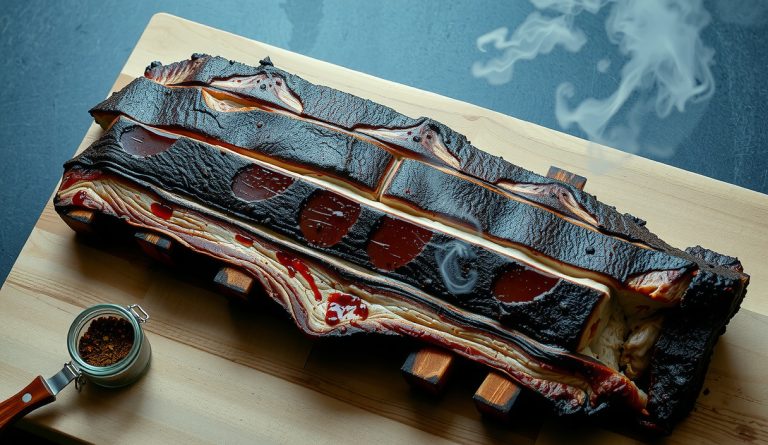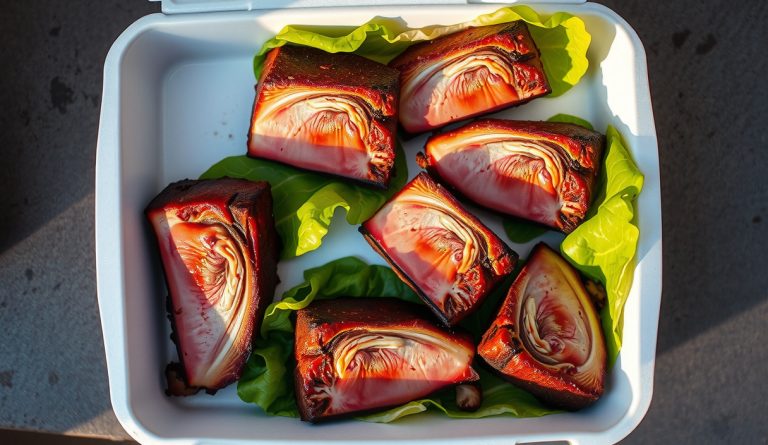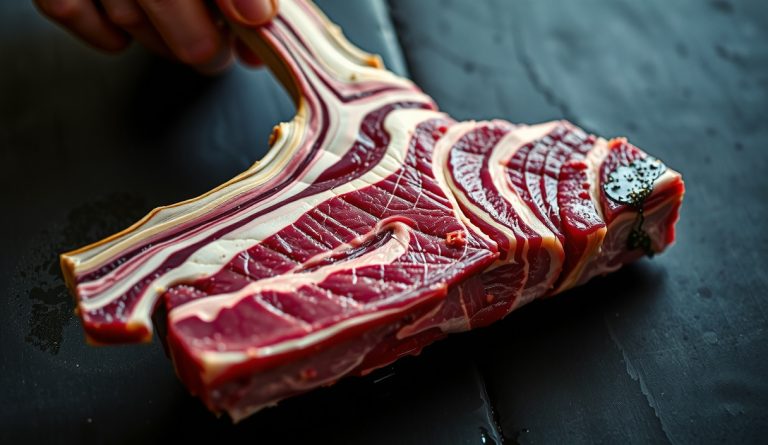
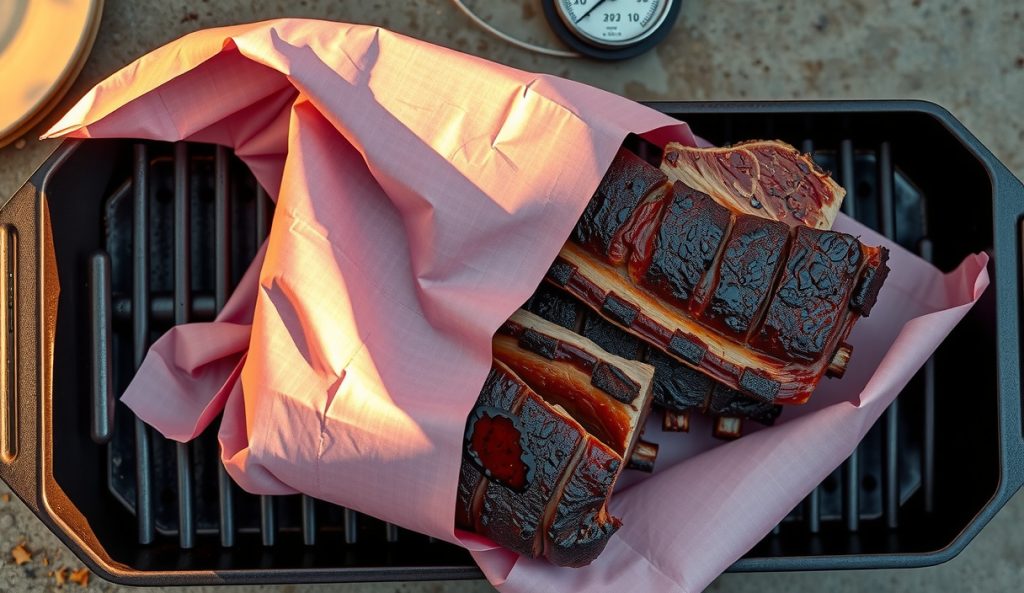
The hot-and-fast dino bones protocol is an emergency cook window solution: run the pit at 300°F–325°F with a mandatory butcher-paper wrap at the stall, and plate ribs still arrive at the table markedly better than any oven-braised short rib. This is not the canonical outcome, but it is not a result you will apologize for.
What changes when you cook dino bones hot and fast?
Pit temperature rises to 300°F–325°F from the start. At those temperatures, collagen hydrolysis still proceeds — the conversion of type-I collagen to gelatin is an irreversible thermal reaction that begins around 160°F internal and accelerates with sustained time at temperature — but because the cook is shorter, total gelatin yield is reduced. The plate rib probes tender, yet its liquid fat and gelatin content at the slice is noticeably leaner and less unctuous than the low-and-slow version.
Wrapping in unlined butcher paper at the stall is not optional in this protocol. The wrap moderates surface heat and prevents evaporative cooling from stalling the cook indefinitely at the elevated ambient pit temperature, while still allowing enough vapor escape to preserve whatever bark has formed by that point.
Do not exceed 325°F. Above that ceiling, actin denaturation — which begins around 150°F internal but accelerates sharply above 165°F — outpaces the rate of collagen hydrolysis. The outer muscle layers cross-link and expel moisture faster than the center reaches conversion temperature, producing a dry exterior over an under-rendered core. The 325°F ceiling keeps the differential between surface and center within a manageable range for a cut this thick.
What stays the same in the hot-and-fast method?
The rub, the wood selection, the target internal temperature of 200°F probe-tender, the butcher-paper wrap material, and the post-cook rest all remain identical to the canonical method. The only variable that changes is pit temperature, and the only accepted trade-off is a softer bark in exchange for saved time.
When is the hot-and-fast dino bones method the better choice?
Use this protocol when your available cook window is under six hours and rescheduling is not an option — guests arriving early, a delayed start, or a cooker that would not come to temp on schedule are all qualifying situations. It is also appropriate for cooks on pellet grills with limited upper-temperature stability, where holding 250°F for ten or more hours can be mechanically inconsistent and a shorter, hotter cook with active monitoring is more reliable in practice.
Use the full method, rub ratios, wood recommendations, and rest protocol from the original Smoked Beef Ribs — Dino Bones recipe, adjusting only the pit temperature to 300°F–325°F and treating the butcher-paper wrap as mandatory.