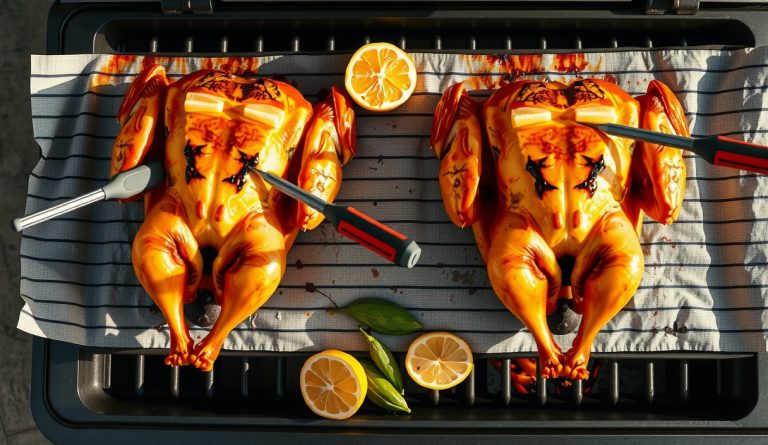
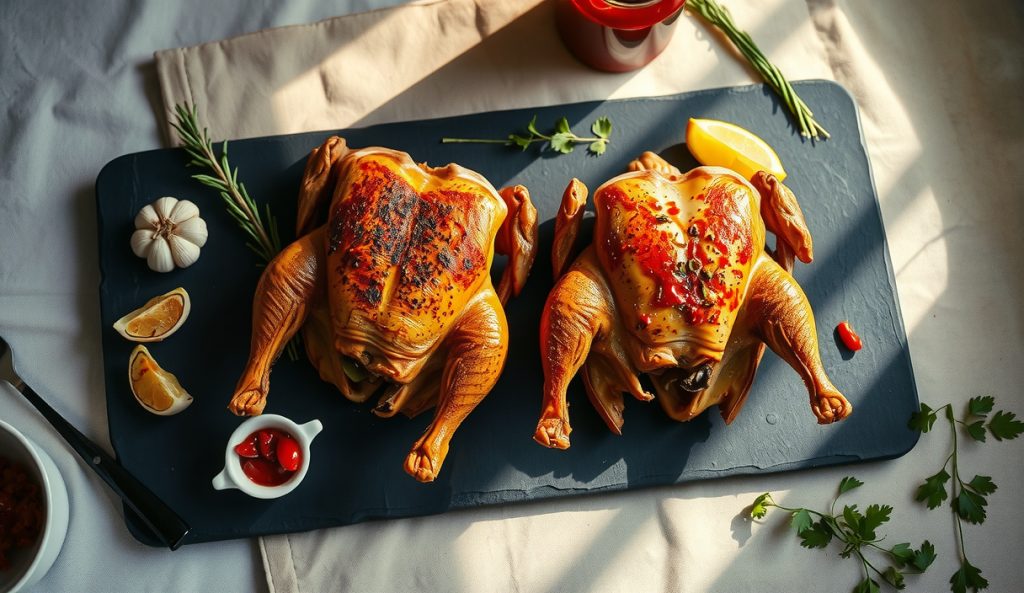
The canonical lemon-garlic marinade for grilled spatchcock chicken is built on a thyme-forward Mediterranean profile. That profile is a strong default, but the same acid concentration and marinade window support entirely different flavor architectures with two targeted substitutions made at the marinade stage — not two separate recipes, but two swap decisions.
What changes between the herb swap variations?
For a Spanish-inflected version, replace all fresh thyme with an equal volume of fresh rosemary and stir in one teaspoon of smoked paprika (pimentón de la Vera if available). Rosemary’s piney, camphor-forward volatile compounds are more heat-stable than thyme’s thymol, so more aromatic character survives the extended indirect cook. The smoked paprika contributes a low-capsaicin, sweet-smoke baseline that complements the Maillard crust without competing with the lemon.
For a North African register, keep the thyme and add two tablespoons of harissa paste directly to the marinade. Harissa’s capsaicin content activates TRPV1 thermoreceptors in the mouth, which neurologically amplifies the perception of heat and char — the effect is that the Maillard-browned skin reads as more intensely roasted than it would on the canonical build at the same grill temperature. Both swaps maintain the same acid concentration (lemon juice and zest quantities unchanged) and the same two-hour minimum marinade window.
What stays the same across all three versions?
The lemon juice volume, garlic quantity, olive oil ratio, marinade timing, grill temperature, indirect cook duration, and internal temperature target are unchanged across all three builds. The acid is doing the same tenderizing and surface-pH work in every version; only the aromatic and heat compounds riding alongside it differ. Swapping herbs does not require recalibrating any other variable.
When is each variation the better choice?
The Spanish rosemary-paprika build suits menus with Iberian accompaniments — roasted peppers, white beans, saffron rice — or any situation where a smokier, more resinous aromatic fits the table. The harissa build is the better choice when the audience wants heat and when the char on the skin is intended as a featured flavor note rather than background structure. Both outperform the canonical thyme-Mediterranean build when that profile feels redundant alongside other elements already on the plate.
Use the full base marinade quantities, spatchcock technique, and grill setup from the original Grilled Spatchcock Chicken — Lemon-Garlic.