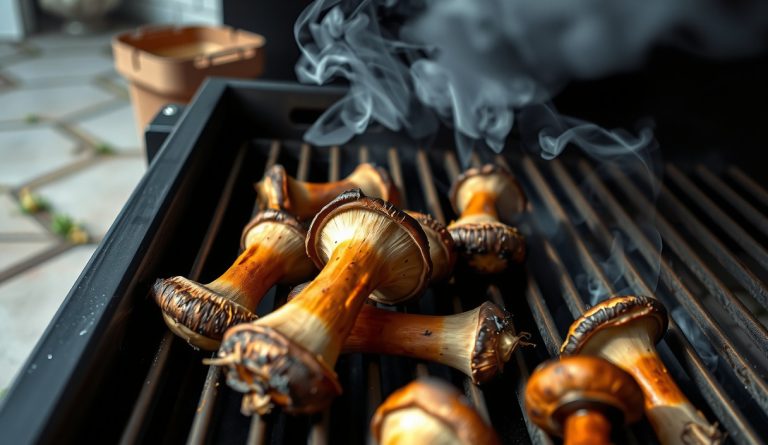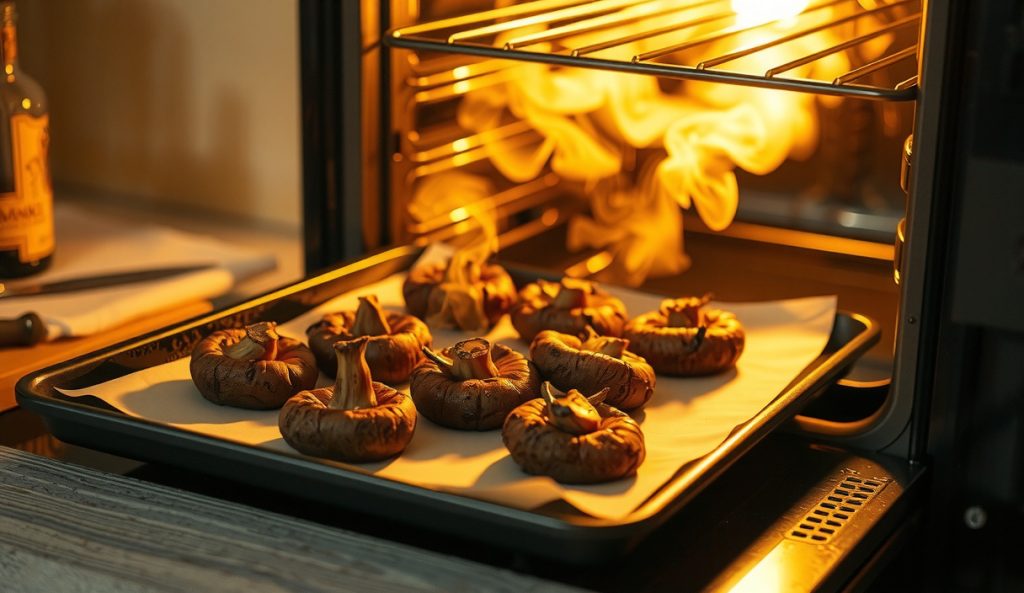
An oven can replicate nearly all of the physics behind smoked mushroom burnt ends — Maillard browning, moisture reduction, and glaze lacquering — without a smoker. The one mechanism an oven cannot reproduce is the true smoke ring, which is a myoglobin-nitric oxide reaction requiring actual combustion gases; no additive substitutes for it structurally. For every other dimension of flavor and texture, this indoor method closes nearly all of the gap between live-fire and kitchen cooking.
What changes for the oven method?
Set the oven to 275°F on the convection setting. Moving air is essential here: convection mimics the continuous airflow inside a smoker and prevents the mushroom surface from stewing in its own released moisture, which would suppress Maillard browning rather than promote it.
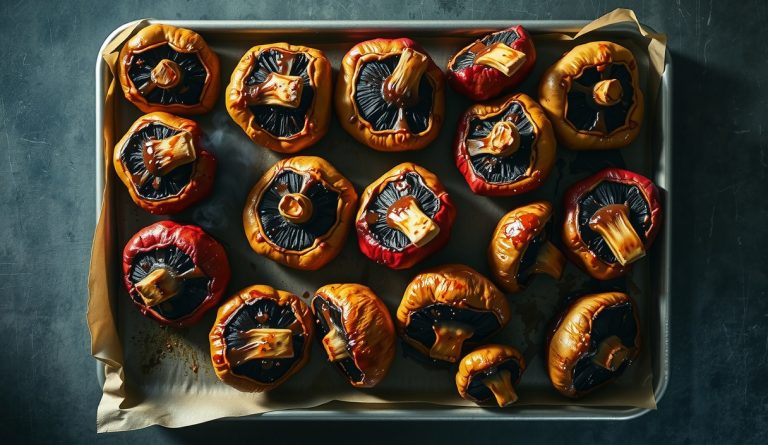
Place the scored mushrooms on a wire rack set over a sheet pan — never directly on the pan surface. The rack ensures that convecting air reaches every scored face, replicating the 360-degree heat exposure a smoker grate provides.
Before applying the dry rub, blend in one-half teaspoon of smoked paprika and one-quarter teaspoon of liquid smoke. Smoked paprika contributes guaiacol and syringol — the same phenolic volatile organic compounds produced by wood combustion. Liquid smoke is a water-soluble condensate of real smoke and provides a broader spectrum of the missing combustion compounds. Neither achieves the penetration depth that hours of live smoke produces, but both act on the surface flavor layer where those compounds matter most to the palate.
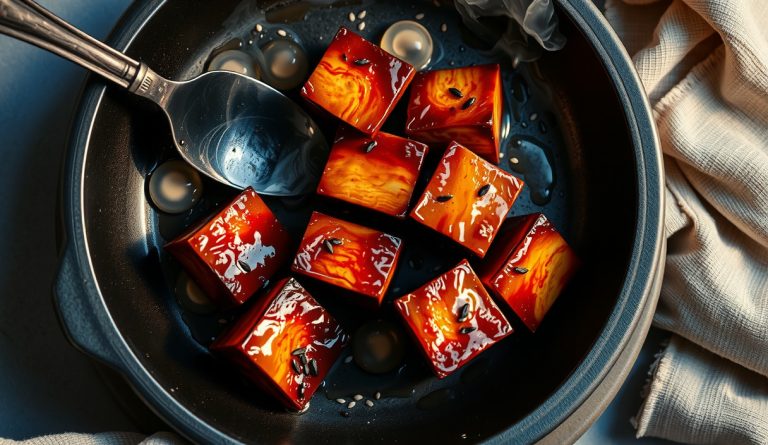
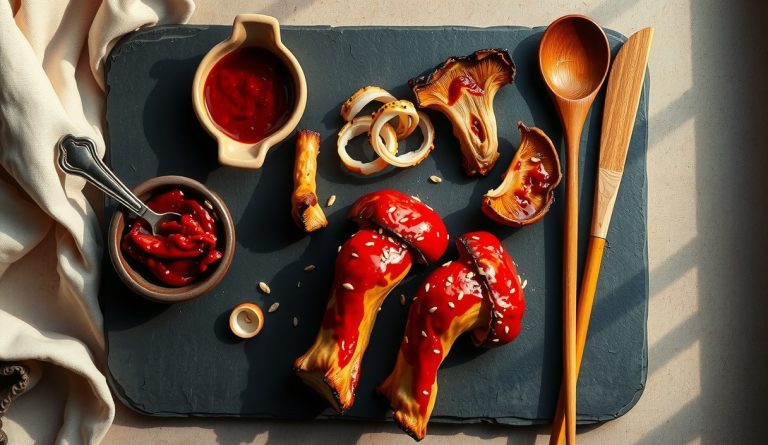
Roast the mushrooms for 75 minutes total. Apply the glaze at the 60-minute mark and again at the 70-minute mark, following the canonical two-stage protocol. After the second glaze application, return the pan to the oven for a final 5 minutes, then transfer it immediately to the broiler on high and finish for 90 seconds per side.
The broiler step is the functional equivalent of opening a smoker’s vents at the end of a cook. It spikes the mushroom surface temperature above 300°F, triggering sucrose and glucose caramelization onset and setting the glaze to a tacky, slightly charred finish that no lower-temperature oven stage can replicate.
What stays exactly the same?
The mushroom selection, scoring geometry, rub-to-mushroom ratio, glaze formula, two-stage glaze timing, and resting period are all identical to the canonical smoked recipe. The Maillard chemistry driving surface browning and the glaze reduction physics are fully reproducible at standard oven temperatures, so no adjustments to quantities or timing windows are needed for those elements.
When is the oven method the better choice?
The oven method is the right choice for apartment cooking, year-round preparation in cold climates, or any occasion where the setup time for a smoker is not practical. It is also the most accessible entry point for cooks who want to evaluate the recipe before investing in outdoor equipment — the flavor profile is distinct from the fully smoked version but wholly satisfying on its own terms.
Use the full mushroom prep, scoring instructions, glaze quantities, and resting guidance from the original Plant-Based Smoked Mushroom Burnt Ends.