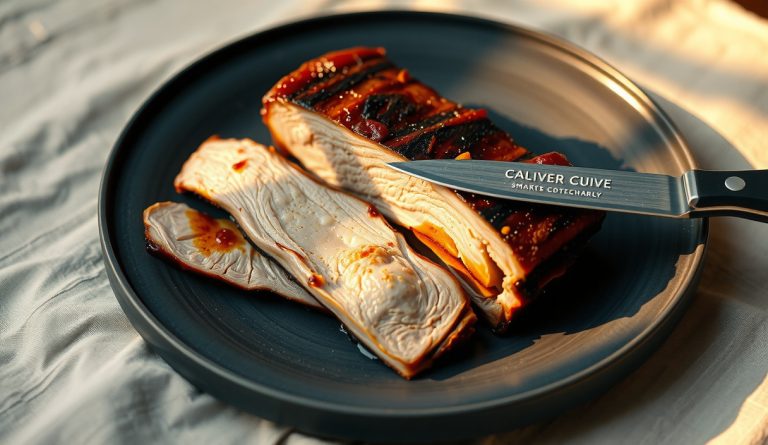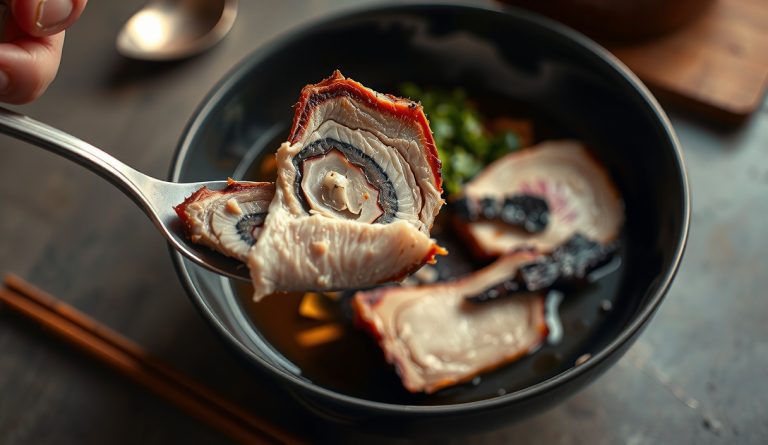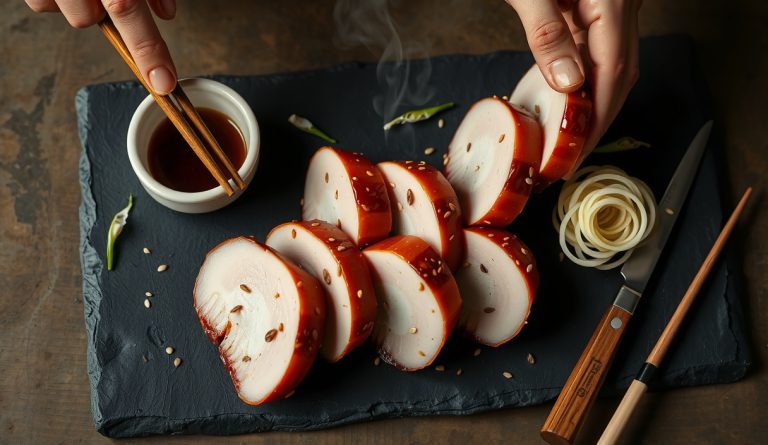
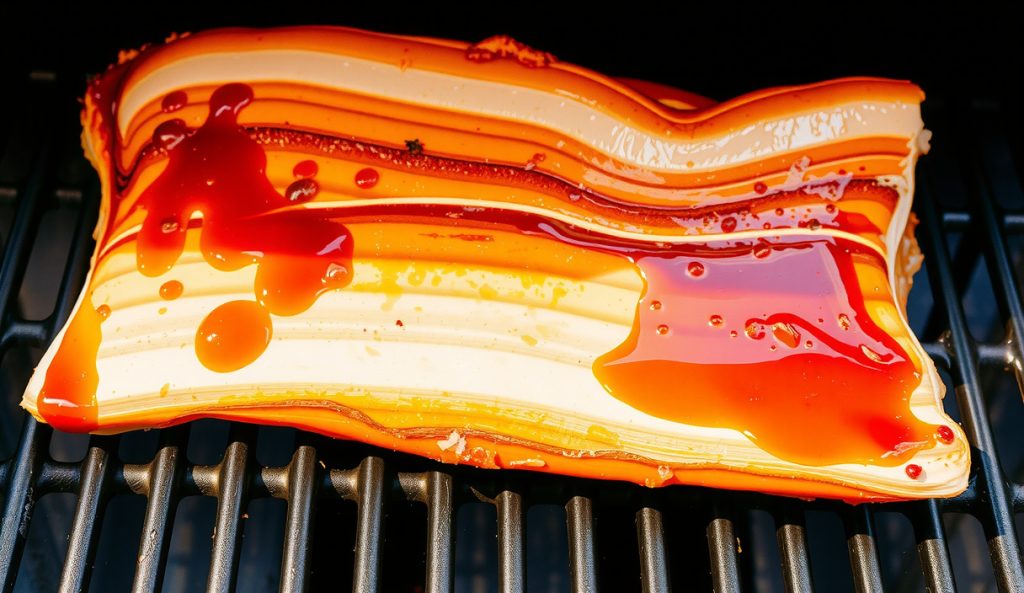
This hot-smoked glazed variant of Sous Vide Smoked Pork Belly replaces the cold-smoke finishing step with a 2-to-3-hour run in a hot smoker at 250°F, then finishes with a honey-soy glaze applied in the final 30 minutes. The 48-hour sous vide bath at 165°F still does all the structural work — collagen conversion, moisture retention, and connective-tissue breakdown — so the hot smoker is purely a surface-transformation tool. The result delivers rendered fat, a 3–5 mm smoke ring, and a lacquered mahogany exterior that reads as traditional barbecue, without the moisture risk of a smoke-only cook.
What changes in the hot-smoked glazed variant?
After the ice-bath chill, the belly moves directly into a smoker running at 250°F rather than a cold-smoke setup. At 250°F, subcutaneous and intramuscular fat renders actively — triglycerides transition from solid to liquid phase, basting the surface continuously and contributing to the lacquered final texture that cold-smoking cannot produce.
The smoke ring is the other key difference. Cold-smoking never generates a smoke ring because the nitric-oxide-fixation reaction requires surface temperatures above roughly 140°F to bind nitric oxide (produced by wood combustion) into surface myoglobin as nitrosomyoglobin. That reaction ceases once the surface climbs to approximately 170°F, locking the pink ring in place. Two to three hours at 250°F is sufficient to develop a 3–5 mm ring on a belly slab of standard thickness.
In the final 30 minutes of the hot-smoke phase, brush a honey-soy glaze — equal parts soy sauce and honey is a reliable starting ratio — every 10 minutes. The sugars in the glaze caramelize above 320°F at the surface through Maillard and pyrolysis reactions concentrated in the thin glaze layer, building a lacquered exterior without burning the underlying bark.
What stays exactly the same as the base recipe?
The 48-hour sous vide bath at 165°F, the vacuum-seal and seasoning protocol, and the ice-bath chill are all unchanged from the base method. The hot-smoke phase is a direct substitution for the cold-smoke finishing step only. The collagen conversion that defines this recipe’s texture and moisture profile happens entirely in the circulator — the smoker adds bark, smoke ring, and rendered fat, but it does not alter the internal structure the bath has already established.
When is the hot-smoked glazed finish the better choice?
This variant is the right call when the plate needs to read as unmistakably barbecue — rendered fat cap, visible smoke ring, sticky glaze — and when the audience expects that visual and textural language. It also suits cooks who prefer finishing on equipment they already own (an offset smoker, a pellet grill, or a kettle) rather than configuring a cold-smoke rig.
The moisture guarantee built into the sous vide process makes the 250°F hot-smoke window forgiving. Even if timing runs 20–30 minutes long, the pork belly will not dry out the way a conventionally smoked slab would, because the internal moisture and collagen structure were locked in during the circulator bath — not during the smoke phase.
Use the full method, equipment, and rub measurements from the original Sous Vide Smoked Pork Belly — 48-Hour.