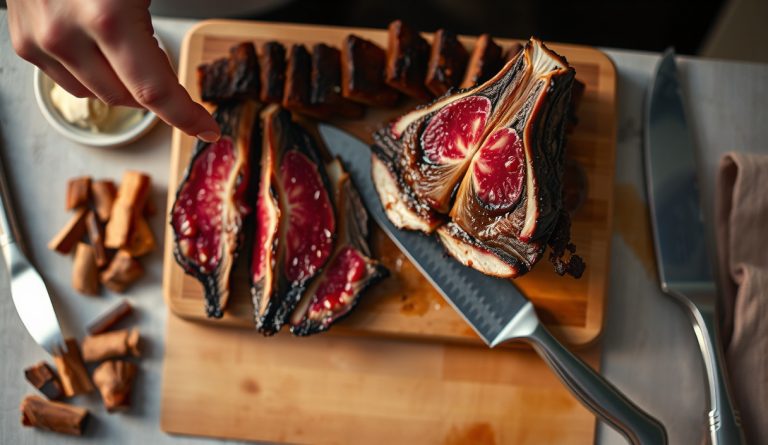
The smoker stage in the canonical recipe serves two purposes: it builds bark through Maillard chemistry and deposited smoke phenolics, and it provides the initial surface dehydration that defines Central Texas-style beef cheek. If you do not have a smoker, neither purpose is out of reach — they simply require different tools.
This braise-finish variation substitutes a cast-iron sear and a rapid pan-sauce reduction for the smoke stage. The bark and wood-smoke aromatic layer are not replicated, but the sous vide stage’s full collagen-conversion benefit is entirely preserved, and the cast-iron sear generates its own condensed Maillard surface with significant flavor depth.
What changes in the braise-finish variation?
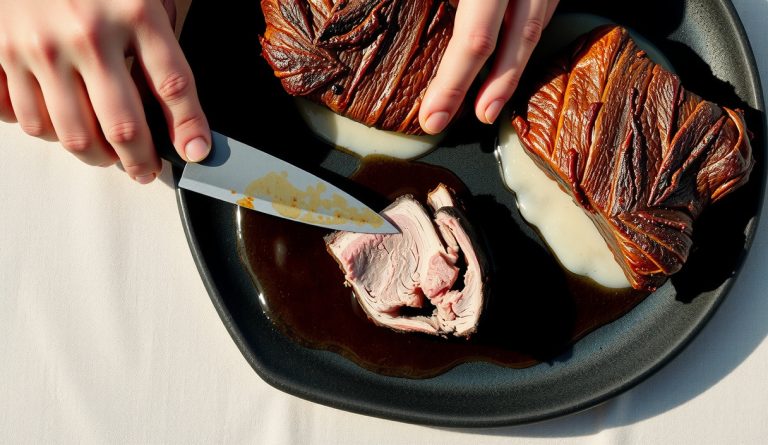
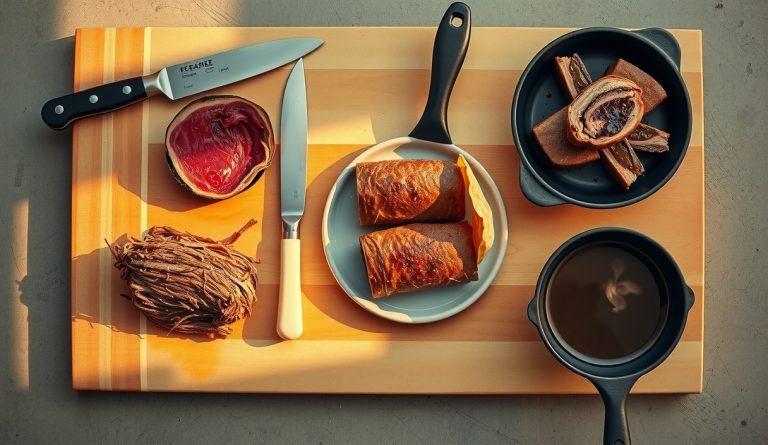
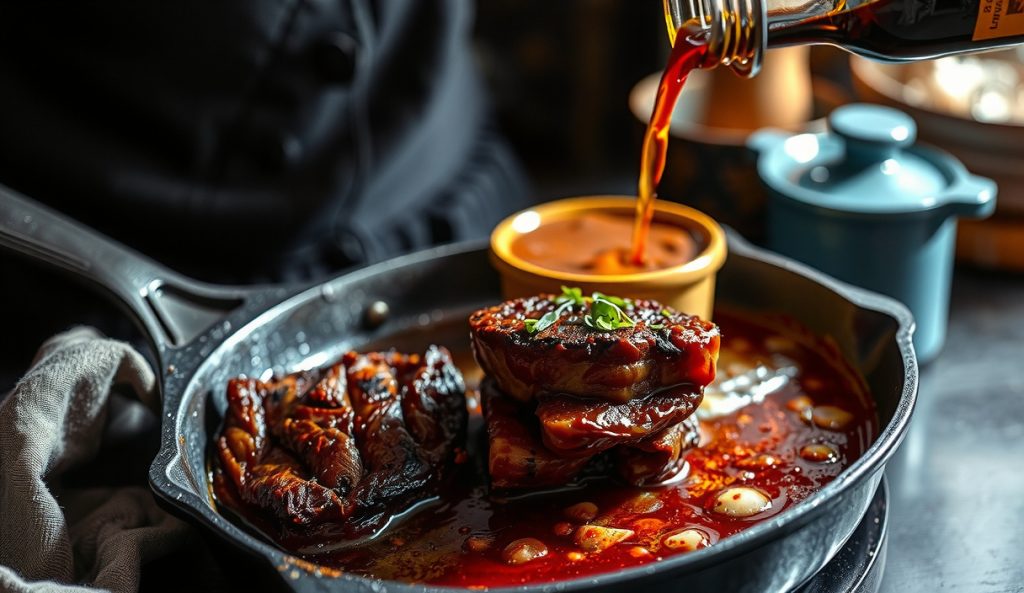
After removing the beef cheeks from the vacuum bag, pat the surface completely dry — residual moisture is the primary enemy of crust formation. Heat a cast-iron skillet with rendered beef tallow until the pan surface reaches at or above 450°F. Sear the cheeks 60 to 90 seconds per side. At this temperature, surface dehydration and Maillard browning occur simultaneously rather than sequentially, generating complex carbonyl and pyrazine compounds that approximate some of the depth bark development would otherwise produce over hours of smoking. The window is narrow: beyond 90 seconds at this heat, the beef cheek exterior begins to harden rather than crust.
Deglaze the pan with the reserved bag liquid — which carries dissolved gelatin, rendered fat, and concentrated beef proteins — plus a 60 ml splash of dry red wine. The ethanol in the wine solubilizes additional fat-soluble flavor compounds from the fond and accelerates reduction. Reduce over medium-high heat until the sauce coats the back of a spoon, which typically takes 4 to 6 minutes. The resulting pan sauce is silky from the gelatin already present in the bag liquid and requires no additional thickener.
What stays the same as the canonical recipe?
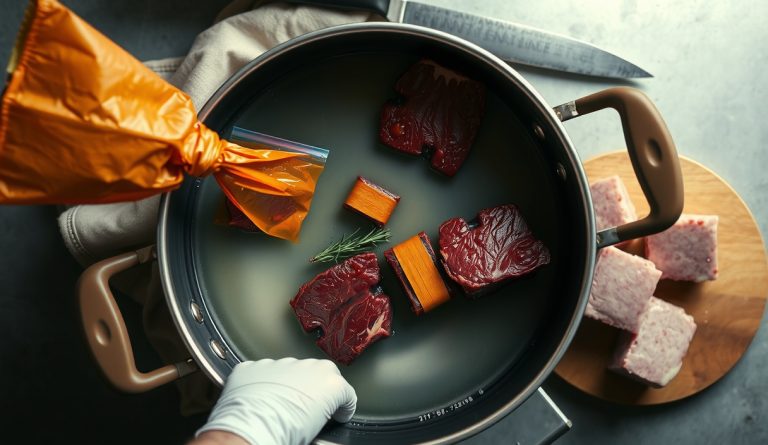
The sous vide parameters are identical to the canonical method. The 155°F / 36-hour stage is what converts the beef cheek’s dense collagen matrix to gelatin, and that conversion process is wholly independent of how the exterior is finished. The rub, bag preparation, and internal structural outcome are unchanged between the two variations.
When is the braise-finish variation the better choice?
This variation suits apartment kitchens, winter cooking without outdoor access, and any situation where a smoke-free result is preferred — including service in venues where smoke odor is a constraint. The braise-finish path is also faster once the 36-hour sous vide stage is complete and time is short. The pan sauce adds a plating element the canonical version does not include by default, making this variation a practical choice for seated dinner service.
Use the full method, equipment, and rub measurements from the original Sous Vide Smoked Beef Cheeks.