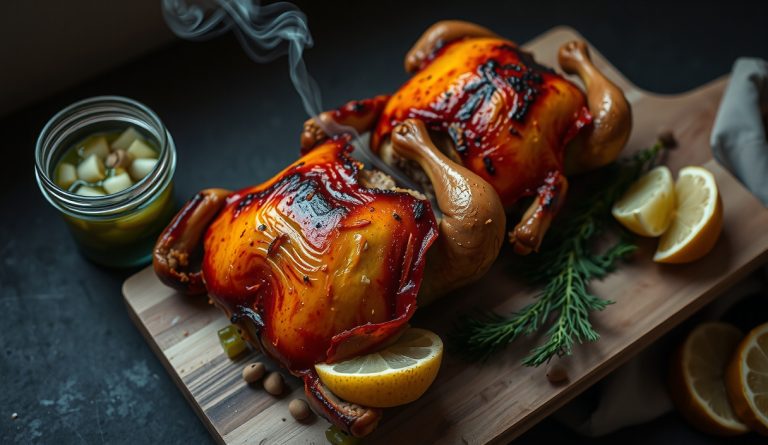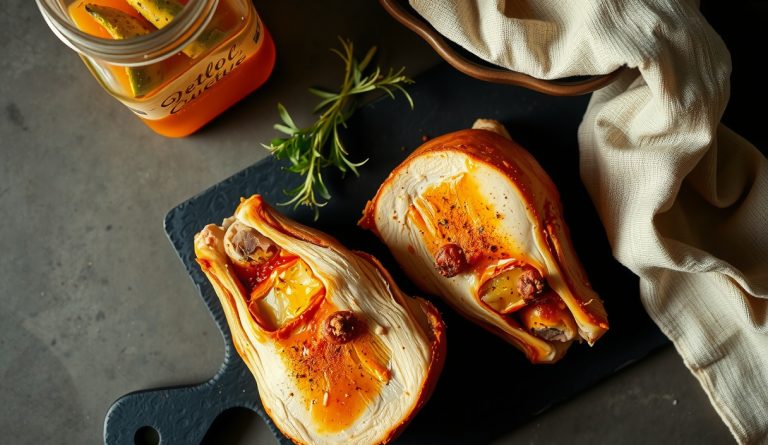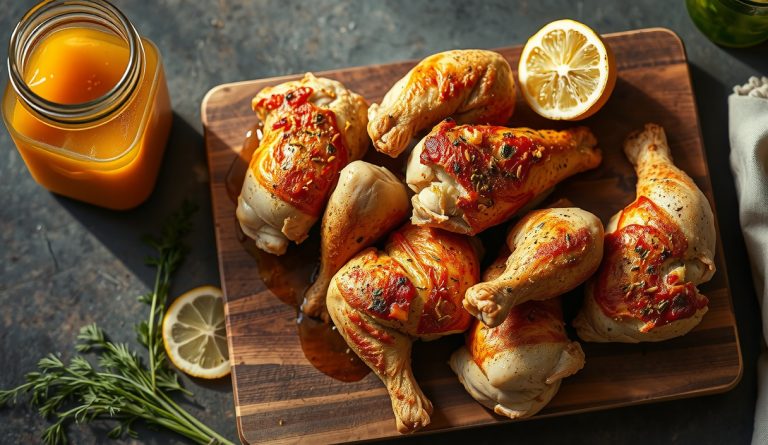
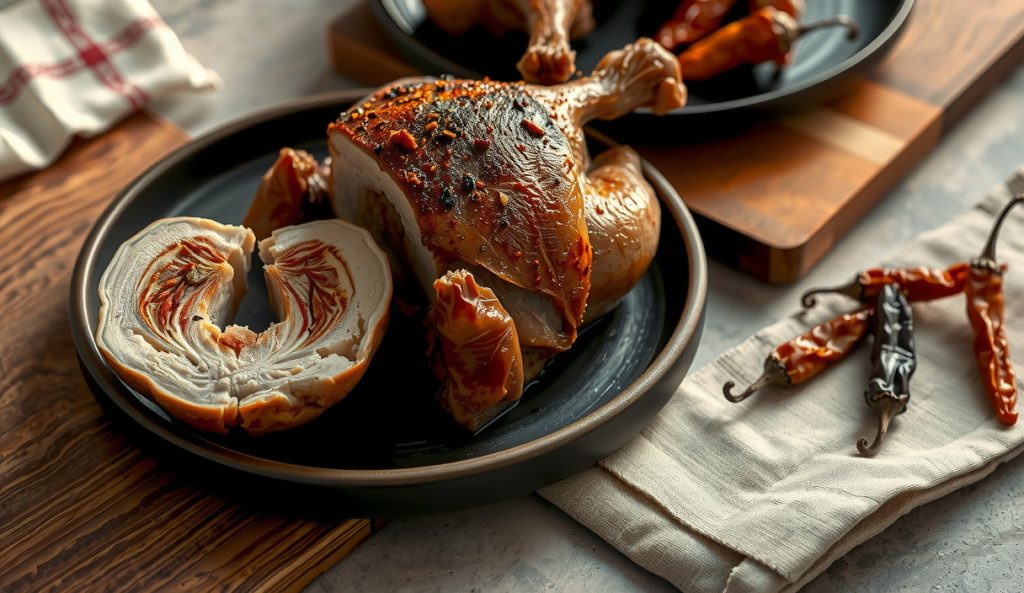
This variation is for cooks who want a residual chile presence in the finished bark without rebuilding the rub from scratch. Two dried chiles de arbol and one teaspoon of red pepper flakes go into the ferment crock alongside the cucumbers at the start of the initial ferment, infusing the brine with capsaicin and capsaicinoid compounds over the full fermentation window.
What changes in the spicy brine variation?
The modification happens at the fermentation stage, not at the smoker. Capsaicin and the related capsaicinoids are fat-soluble molecules with very low water solubility — roughly 10 mg/L under ambient conditions — which means the aqueous lactic acid brine carries them in modest concentration. When the chicken brines in this liquid, the capsaicinoids do not migrate meaningfully into the water-rich muscle tissue.
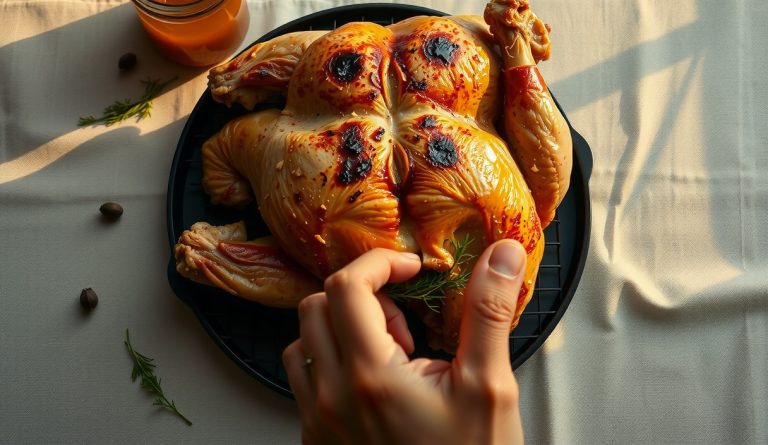
What the capsaicinoids do is coat the skin surface and the exterior protein layer. As the smoker renders the skin and drives off surface moisture, those compounds concentrate in the forming bark, producing a gentle, detectable heat that is localized to the crust. Do not expect the heat to penetrate to the bone or to build with successive bites the way a dry rub chile application would — this is an exterior effect by design, and the lactic acid fermentation character remains the dominant flavor note throughout.
What stays the same as the original recipe?
The salt concentration, fermentation duration, brine time, spatchcock geometry, smoker temperature, and target internal temperature all remain identical to the canonical method. The chile addition does not alter pH development or brine penetration rate — the lactic acid bacteria cultures operating on the cucumbers are not affected by the capsaicinoid load at these concentrations.
When is the spicy brine variation the better choice?
This variation suits situations where the audience expects some heat signal but the cook wants to avoid the textural disruption that ground chiles in a dry rub can introduce to bark formation. The spicy brine chicken is also useful when serving alongside other proteins — the bird reads as distinct without requiring a separate cook process or sauce program.
This variation is not the right choice when feeding guests with capsaicin sensitivity, because the bark heat, while mild, is present on every bite of skin.
Use the full method, equipment, and brine measurements from the original Fermented Pickle Brine Smoked Chicken.