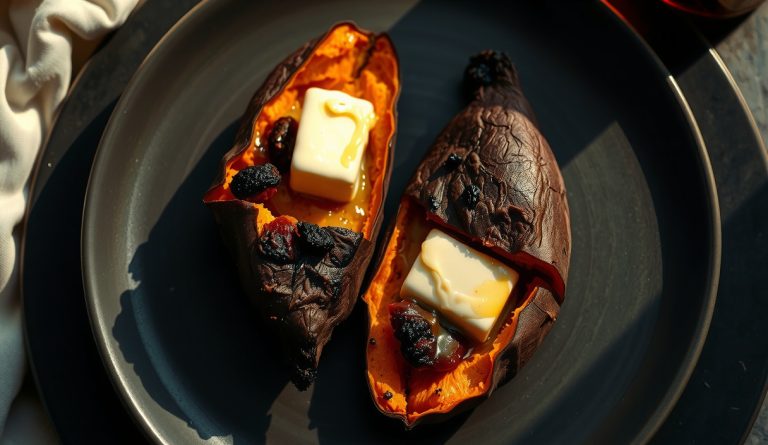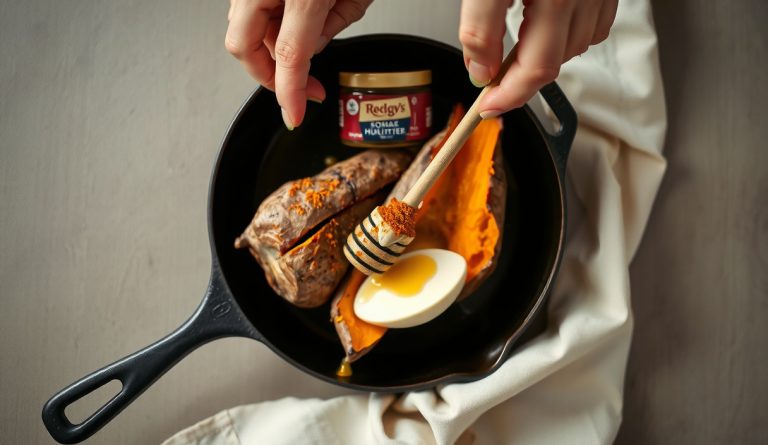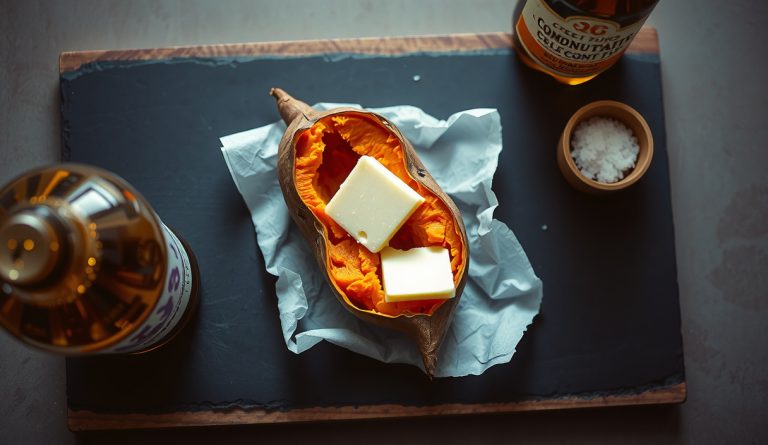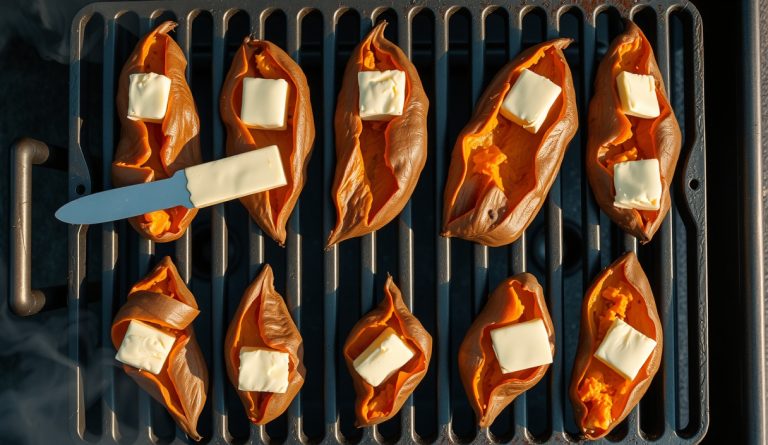
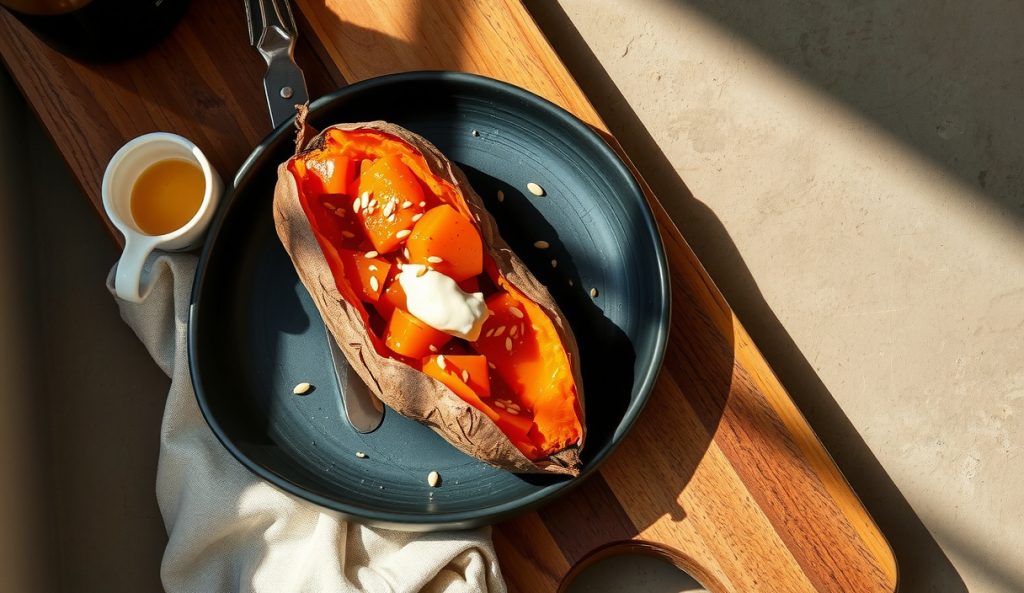
This variation replaces the bourbon-brown sugar compound butter with a miso-maple blend, pivoting smoked sweet potatoes from classic American barbecue sweetness toward a Japanese-influenced umami-sweet register. It suits anyone who finds the canonical version too dessert-adjacent, or who wants to serve smoked sweet potatoes alongside miso-glazed proteins or soy-forward sides without a flavor clash.
What changes in the miso-maple version?
Substitute 2 tablespoons of white shiro miso and 2 tablespoons of pure maple syrup for the brown sugar and bourbon in the compound butter. Everything else in the butter — the softened base, the incorporation method, the application timing — stays identical. Shiro miso is the mildest variety; its relatively low salinity and pale color won’t overwhelm the sweet potato’s natural sugars, but it delivers a pronounced glutamate-rich savoriness and lactic fermentation depth that brown sugar simply cannot replicate.
Mechanistically, miso also supplies its own reducing sugars and free amino acids from the fermentation process, meaning Maillard reactivity on the hot potato flesh surface is sustained and accelerates faster than with sucrose-based sweeteners. Maple syrup provides fructose and glucose in roughly equal measure alongside trace mineral compounds, contributing a woody aromatic note that bridges the smoke character and the miso’s earthiness without the ethanol volatility of bourbon.
What stays the same in this smoked sweet potato variation?
The smoking setup, target internal temperature of 205°F, compound butter application method, and resting protocol are all unchanged. This variation modifies only the flavor composition of the compound butter — the structural intent of slow smoke penetration and a rich, molten finishing butter remains intact.
When is the miso-maple compound butter the better choice?
Choose this variation when building a menu around East Asian or fusion flavors, when serving guests who avoid alcohol, or when you want the compound butter to act as a genuine savory accent rather than a sweet glaze. The miso-maple butter also performs well alongside smoked salmon, miso chicken thighs, or any application where a second bourbon-forward element on the plate would create redundancy.
Use the full smoking method, potato prep, and compound butter technique from the original Smoked Sweet Potatoes with Brown Sugar Bourbon Butter.