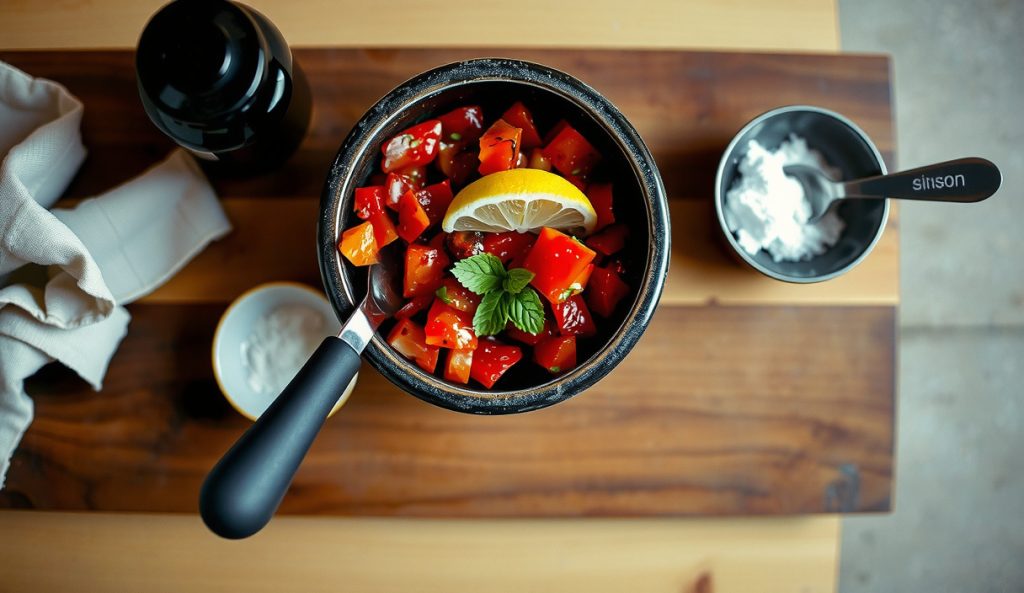
This adaptation is for cooks managing sodium intake without wanting to manage flavor loss. The strategy is not simply to remove salt — it is to replace the sensory work that salt does by deploying a synergistic umami pair that suppresses bitterness, enhances flavor salience, and increases perceived saltiness at a neuroreceptor level. The result is a salsa that tastes fully seasoned at a meaningfully lower sodium load.
What changes in the low-sodium adaptation?
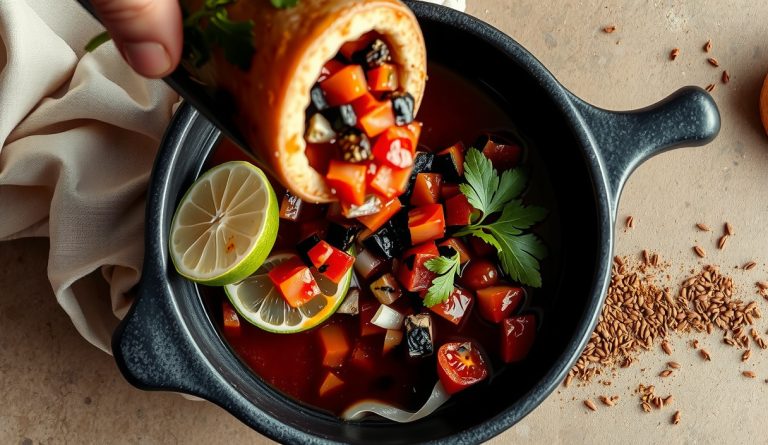
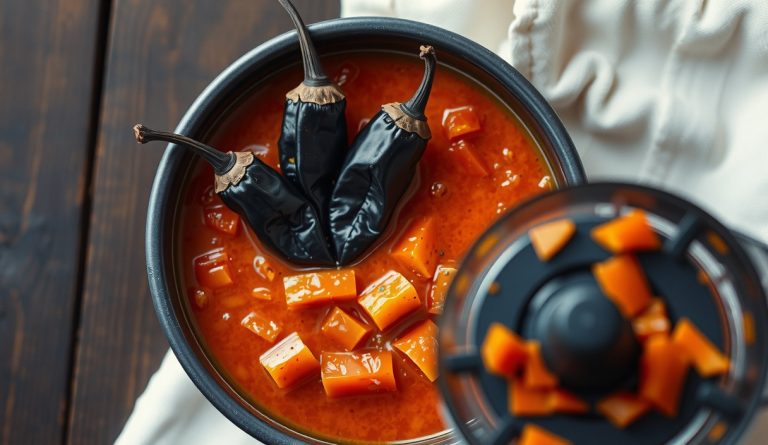
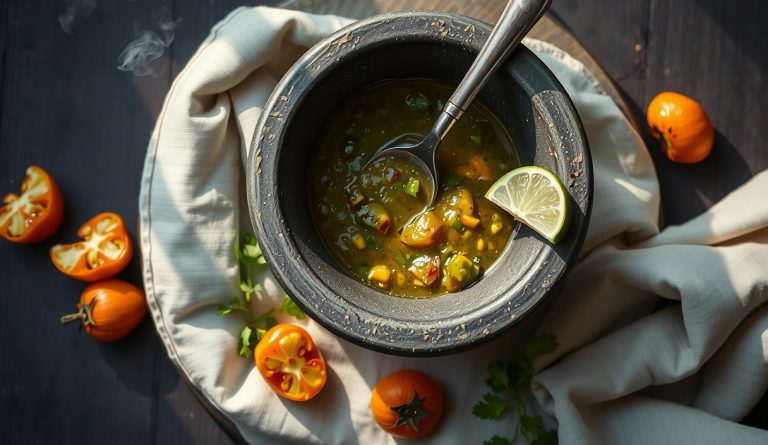
Reduce the kosher salt from its canonical quantity to 1/4 teaspoon. Add 1 tablespoon of fish sauce — Red Boat 40°N or any high-quality single-ingredient fish sauce — to the blender along with the charred vegetables before processing. Fish sauce is dense with free glutamate and inosinate monophosphate (IMP), two umami compounds that activate the T1R1/T1R3 taste receptor heterodimer. When glutamate and IMP are present together, the T1R1/T1R3 response is not additive — it is synergistic, with receptor activation increasing by a factor that significantly exceeds either compound acting alone. This heightened umami response suppresses bitter taste perception and amplifies the apparent intensity of the small amount of sodium still present, so the palate registers a fully seasoned salsa. Net sodium decreases by approximately 35% compared to the canonical recipe. The fish sauce itself contributes a trace of its own characteristic aroma at blending, but the smoky, acidic environment of the charred tomato base absorbs and integrates it completely by the time the salsa rests and cools.
What stays the same in this version?
The entire char and smoke process is unchanged. Aromatic quantities, blending method, the jalapeño heat level, and the fresh cilantro finish all remain at canonical proportions. The seasoning is adjusted only at the blender stage — nothing in the fire or smoke phase requires modification.
When is the low-sodium version the better choice?
This version is the right call for diners managing hypertension, following a physician-directed reduced-sodium diet, or cooking for guests with cardiovascular health considerations. It is also worth considering as the default batch build for large gatherings where you cannot predict individual dietary needs — the flavor difference from the canonical recipe is imperceptible to most palates, so there is no meaningful downside to using this version universally.
Use the full method, equipment, and rub measurements from the original Smoked Tomato Salsa Asada.