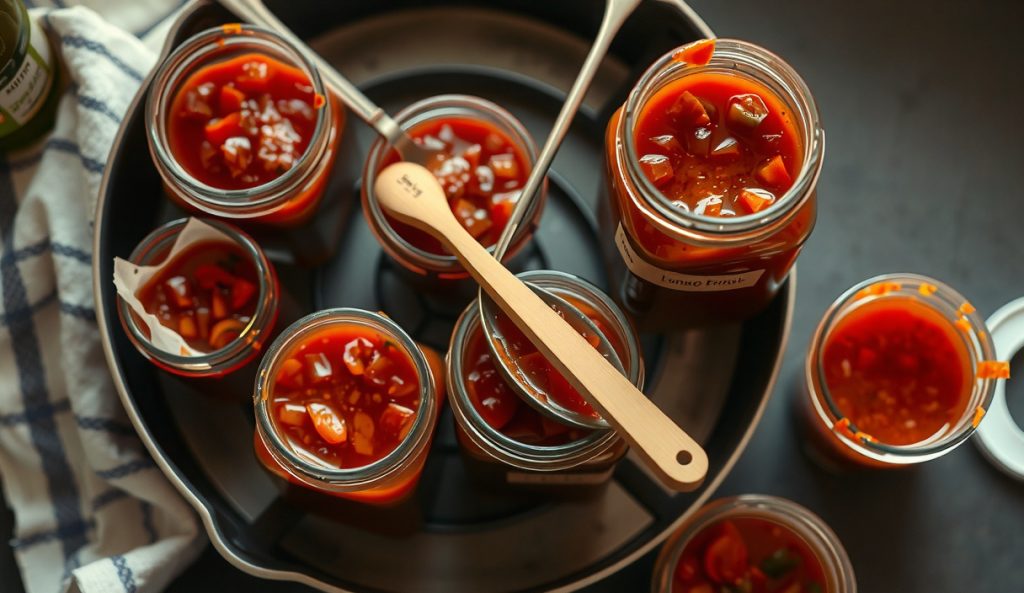
Batching smoked tomato salsa for preservation is a logical move — the smoke and char process is labor-intensive, and the salsa holds its character well over time. Preservation method matters here more than it does with most cooked salsas, because the char process introduces a variable that standard canning guidelines do not account for: pH drift. This variant covers both safe water-bath canning and optimal freezing, so you can choose the method that fits your kitchen and timeline.
What changes when you scale for canning or freezing?
For water-bath canning: the canonical smoked tomato salsa recipe is not safe for processing as written. The degree of char on the tomatoes and the ripeness of the fruit at the time of smoking can shift the pH of the finished salsa by up to 0.4 units in either direction — a range that can push the pH above the critical 4.6 threshold that separates safe acidified canning from botulism risk. To guarantee a pH at or below 4.0 in every jar, add 2 tablespoons of bottled lime juice (not fresh-squeezed) per pint of finished salsa.
Bottled lime juice is required because its titratable acidity is standardized and consistent. Fresh lime juice acidity varies by fruit, season, and ripeness and cannot be relied upon for canning safety calculations. Process the salsa in a tested, USDA- or NCHFP-approved salsa framework using the bottled lime juice addition as the acidification step. Do not reduce the onion, pepper, or garlic quantities below canonical levels without recalculating pH impact, as lower vegetable ratios affect buffering capacity.
For freezing: no pH adjustment is required. Portion the finished salsa into 1-cup increments in zip-lock freezer bags, press out all air before sealing, and lay flat to freeze. The low storage temperature arrests oxidative degradation of the phenolic compounds responsible for the salsa’s color and aroma depth, preserving flavor integrity for up to 4 months. Thaw overnight in the refrigerator and stir before serving — minor water separation is normal and corrects with brief stirring.
What stays the same between canning and freezing versions?
The full char and smoke process, all aromatics, and the blending method are unchanged whether you are canning or freezing the salsa. The acidification step for canning is added at the jar-filling stage — not during cooking — so the flavor profile as you taste it from the blender is identical to the canonical recipe.
When is the batch-and-preserve approach the better choice?
This approach suits large-batch smoking sessions where firing the smoker for a single salsa yield is inefficient. If you are already running a long smoke for brisket or pork shoulder, preparing a 4x or 6x batch of smoked tomato salsa in parallel is a high-return use of the ambient smoke environment. The freezing route is the lower-friction option for most home cooks; the canning route is worth the added precision if shelf-stable pantry inventory is the goal.
Use the full method, equipment, and rub measurements from the original Smoked Tomato Salsa Asada.