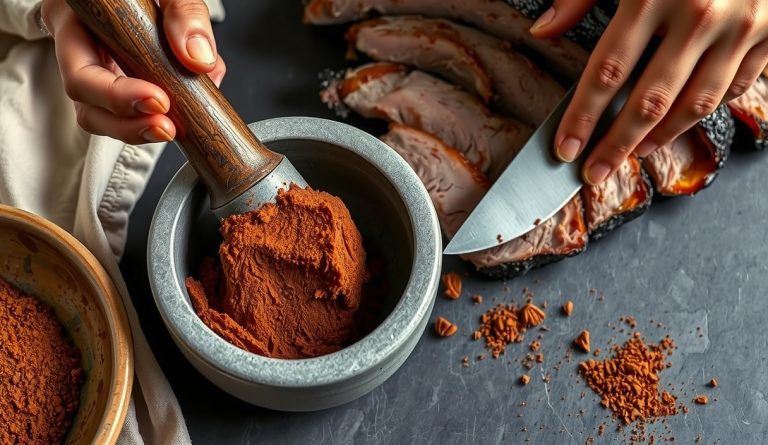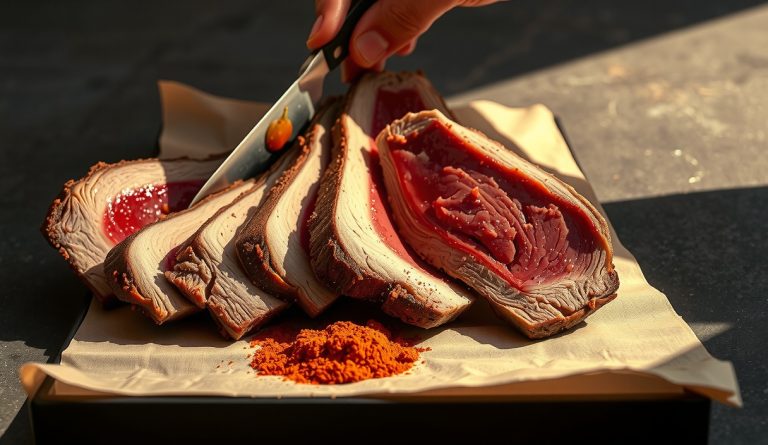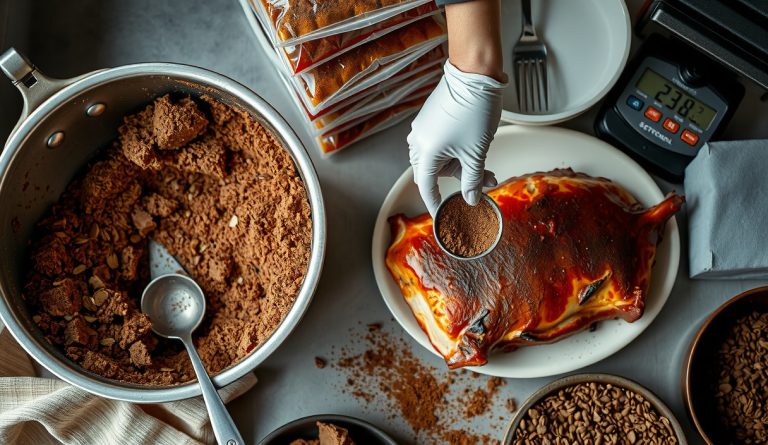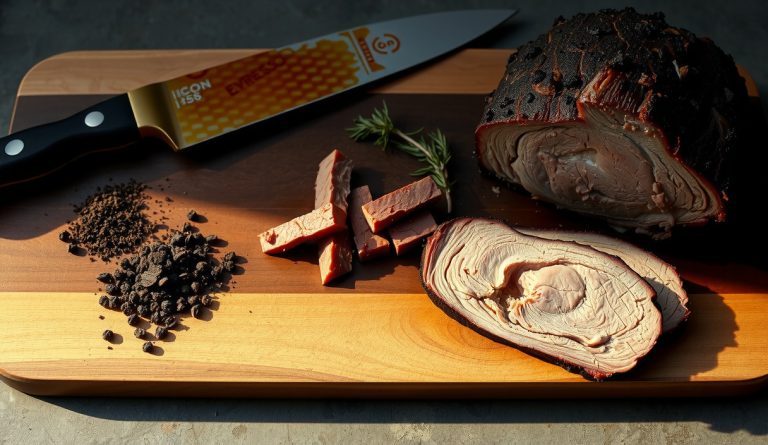
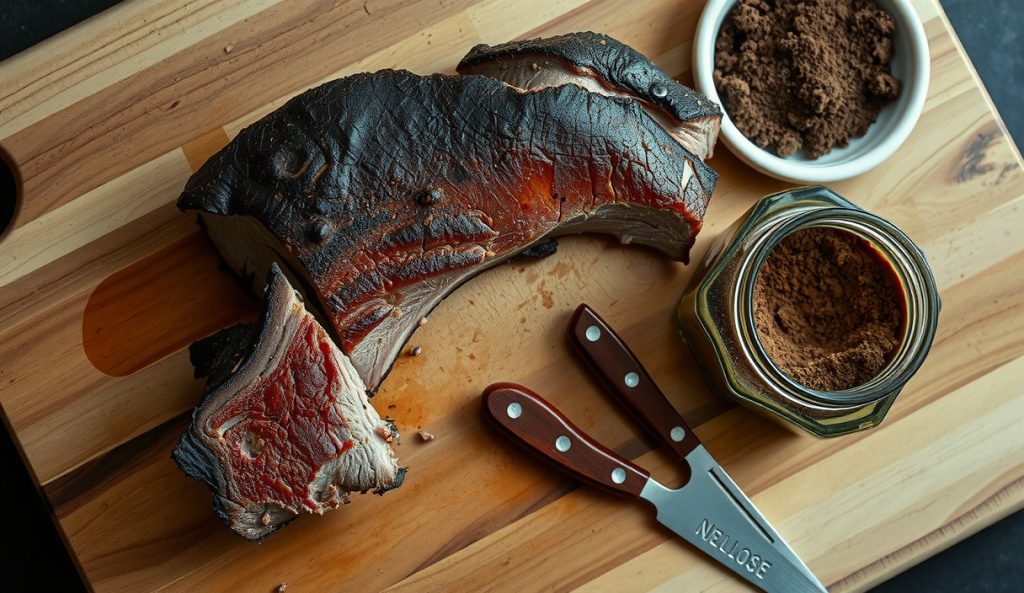
Removing sugar from a rub formula normally collapses bark quality. Allulose sidesteps that problem. Allulose is a rare monosaccharide — specifically a C-3 epimer of fructose — that provides essentially zero net metabolizable carbohydrates while participating actively in the Maillard browning cascade. The result is a coffee-cocoa brisket rub that remains fully compatible with ketogenic dietary requirements and still generates a deep, lacquered crust.
What changes when you swap in allulose?
Replace the brown sugar with an equal weight of fine-ground allulose — match by weight, not volume, because particle density differs. Allulose enters Maillard condensation reactions with amino acids at surface temperatures around 230°F, roughly 10–15°F lower than the onset threshold for sucrose under the same humidity conditions. This means the coffee-cocoa brisket bark will begin developing and darkening earlier in the cook than it does with the canonical brown-sugar formula. The crust is not burning — it is simply browning ahead of schedule relative to visual expectations set by the brown-sugar build.
To compensate for that earlier browning onset, reduce the smoker setpoint from the canonical temperature to 245°F. After the third hour, shift from bark-color assessment to internal temperature as the primary progress indicator. Allulose-based bark reaches visual completion — deep mahogany, firm to the touch — while the internal meat temperature may still be well below the collagen denaturation range of 160–180°F where connective tissue transitions from solid gelatin to liquid. Wrapping on bark appearance alone at this setpoint risks an undercooked interior.
What stays the same in the allulose version?
All other ingredients — espresso, cocoa, ancho, smoked paprika, salt, garlic — remain at their canonical weights. The flavor chemistry of the crust, including pyrazine-phenol synergy with wood smoke, is unchanged. Only the browning kinetics shift when allulose replaces brown sugar; every other variable in the coffee-cocoa rub formula holds constant.
When is the allulose keto build the better choice?
This allulose build is the correct choice when serving guests following ketogenic or low-carbohydrate protocols, or when a single brisket must fit across multiple dietary restrictions at the same table. The substitution is also advantageous in high-humidity cooking environments where sucrose-based rubs resist browning — allulose’s lower Maillard activation threshold can recover bark quality in conditions that defeat standard formulas.
Use the full method, equipment, and all non-sugar rub measurements from the original Coffee-Cocoa Brisket Rub.