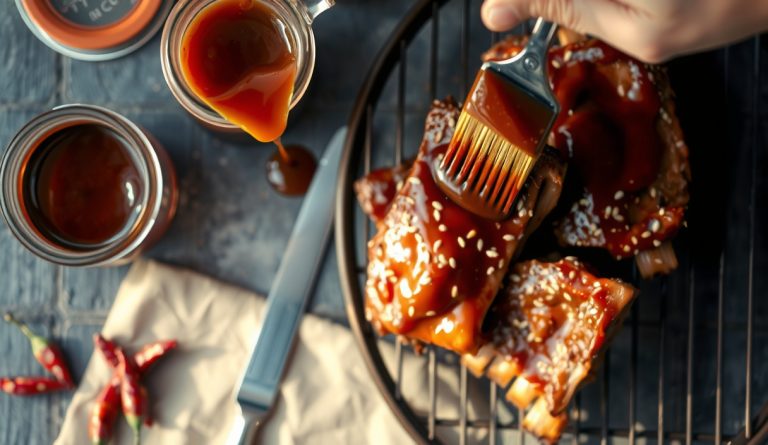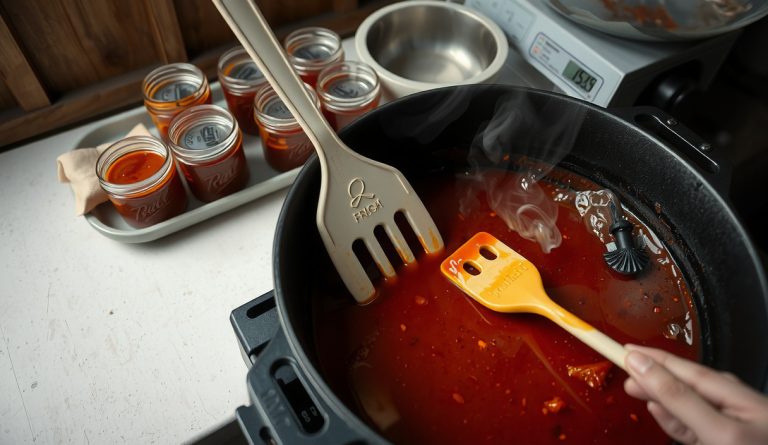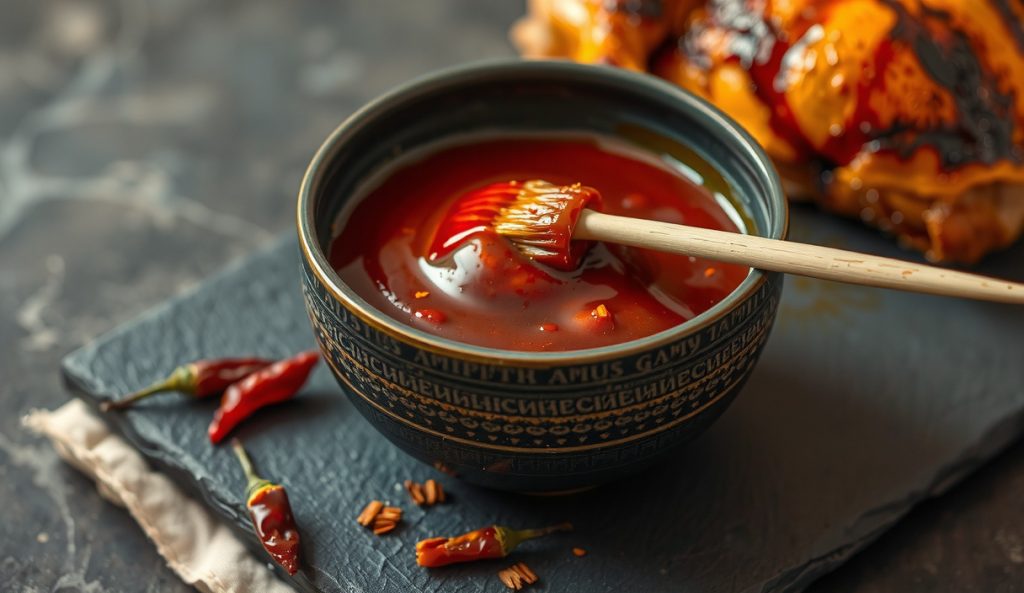
The canonical gochujang sauce delivers heat that builds gradually — a characteristic of fermented chili pastes where capsaicinoids are partially bound to lipid and protein matrices from the fermentation process. If you want fire that lands upfront, the fix is a small addition of gochugaru: coarsely ground Korean red pepper flakes that carry free, unbound capsaicin and a distinctly fruity, sun-dried chili character that gochujang alone cannot provide.
This extra-spicy version is built for proteins with significant intramuscular or subcutaneous fat — chicken thighs, duck breast, skin-on pork belly — where the rendering fat acts as a capsaicin buffer, spreading heat intensity across each bite rather than concentrating it on the palate. The result is genuinely hot food that remains eminently eatable.
What changes in the extra-spicy version?
Add 1–2 teaspoons of gochugaru to the sauce at the same point you add the gochujang — early in the simmer, so the flakes hydrate fully and release their pigment evenly into the sauce body. Start with 1 teaspoon if your gochujang is already a high-Scoville paste; use 2 teaspoons if you are working with a milder commercial gochujang or if your audience can handle serious heat.
The heat mechanism is additive rather than multiplicative. Gochujang provides TRPV1 agonist compounds distributed across a fermented matrix, releasing slowly over chewing and swallowing. Gochugaru contributes free capsaicin and dihydrocapsaicin that bind the TRPV1 receptor almost immediately on contact, producing an upfront heat onset measured in seconds rather than the delayed finish of gochujang alone. The fruitier, less fermented aroma of gochugaru also brightens the sauce’s nose, counterbalancing the deeper, slightly sour complexity of gochujang.
What stays the same in the base recipe?
Everything else holds: the gochujang base quantity, soy sauce, sesame oil added off-heat, the 90–95°C reduction ceiling, and the final texture target. The extra-spicy sauce still glazes and caramelizes on a hot grill the same way, and the umami backbone from gochujang and soy is completely unchanged by the gochugaru addition.
When is the extra-spicy version the better choice?
Choose this variant when cooking for an audience that actively seeks heat, when working with proteins that need assertive seasoning to cut through fat — duck legs, skin-on thighs, pork belly strips — or when you want the heat to register immediately as a counterpoint to a sweet char from a hot grill rather than arriving late on the finish. Upfront capsaicin impact is particularly effective when the grill is running above 230°C and the glaze caramelizes in under 2 minutes per side.
Use the full method, equipment, and base measurements from the original Korean Gochujang BBQ Sauce.