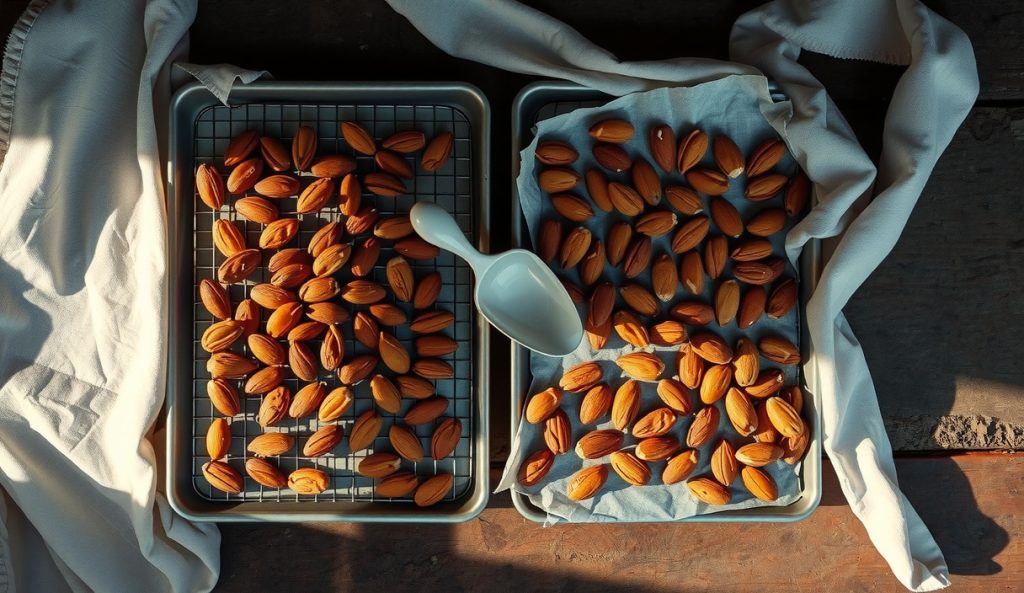
The maple-cayenne smoked almond formula scales linearly up to and beyond 3 pounds without reformulation — the coating-to-nut ratio stays constant, and no leavening, hydrocolloid, or emulsifier is involved that would behave differently at volume. The single constraint that emerges at larger scales is physical, not chemical: rack depth.
What changes when you scale up the batch?
For batches beyond 3 pounds, the primary adjustment is rack management, not formula adjustment. The coating-to-nut ratio holds at approximately 1 tablespoon of maple syrup per 4 ounces of almonds — scale this linearly regardless of batch size and the coating behaves identically every time.
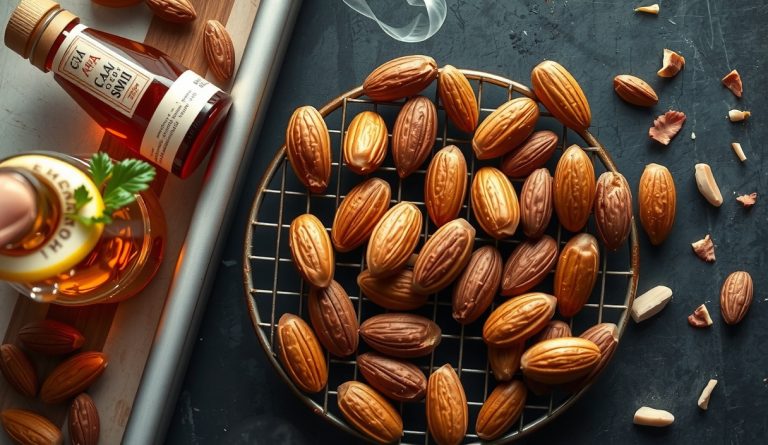
What does not scale without intervention is the single rack. Almonds stacked more than one layer deep create a microenvironment where the interior layer is insulated from direct smoke contact and from the convective airflow that drives moisture off the surface. The result is steaming on the interior nuts, an uneven sugar glass, and patchy smoke penetration across the batch.
The solution is straightforward: use two racks positioned with adequate vertical clearance inside the smoker, or run two sequential batches. When running simultaneous racks, rotate their positions — top to bottom, front to back — at the first stir interval to equalize heat and smoke exposure across both layers.
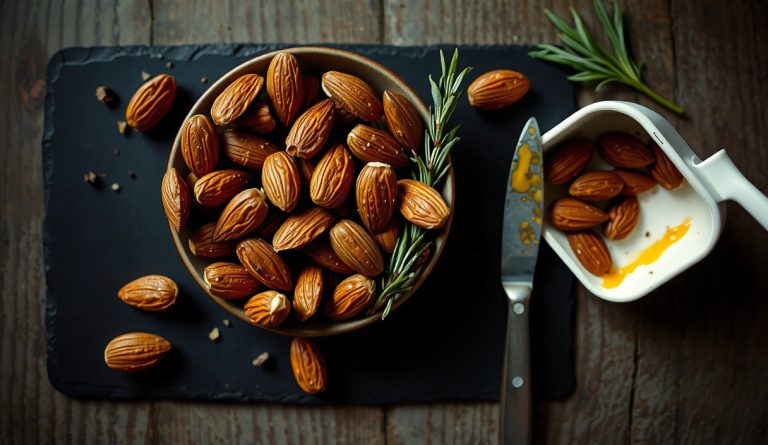
A second consideration at large scale is coating application. Do not attempt to toss 3-plus pounds of almonds in the same bowl at once. Work in two separate bowls to ensure even coating distribution before spreading the almonds onto the racks.
What stays the same regardless of batch size?
Temperature (225°F), smoke wood selection, the two-interval stir method, total time range, and all flavor ingredients scale without modification. The visual cues for doneness — deep amber sugar glass, dry surface, no visible wet spots — apply equally to a half-pound batch and a three-pound batch.
Cooling time before serving or packaging remains at least 20 minutes regardless of volume. Cutting that window short collapses the sugar glass and causes the almonds to clump together as the coating re-softens on contact with packaging.
When is large-batch scaling the right call?
Large-batch scaling is the right approach for batch cooking ahead of a party, filling multiple gift jars, or stocking a snack station where the canonical single-batch quantity runs out too quickly. The marginal time investment of a second rack or a second sequential run is small relative to the quality difference between properly spaced almonds and a crowded, unevenly smoked batch.
- Coat in two separate bowls when total batch weight exceeds 3 pounds.
- Run two racks with adequate vertical clearance, or run two sequential single-rack batches.
- Rotate rack positions at the first stir interval when running simultaneous racks.
- Hold the 225°F smoker temperature and 20-minute minimum cooling time at every scale.
Use the full method, equipment, and base coating measurements from the original Maple-Cayenne Smoked Almonds.