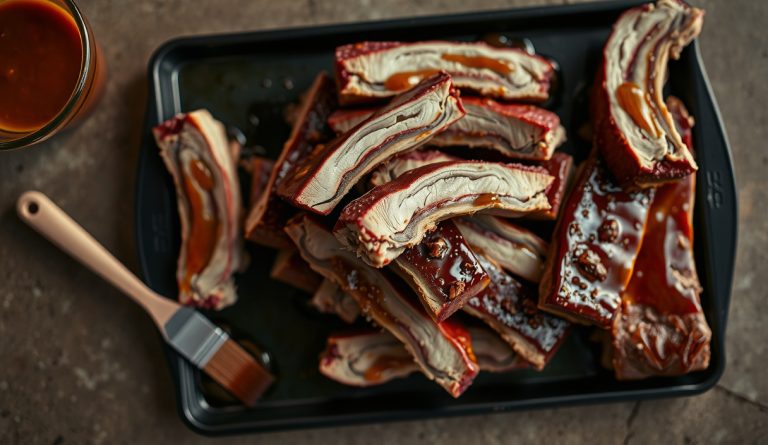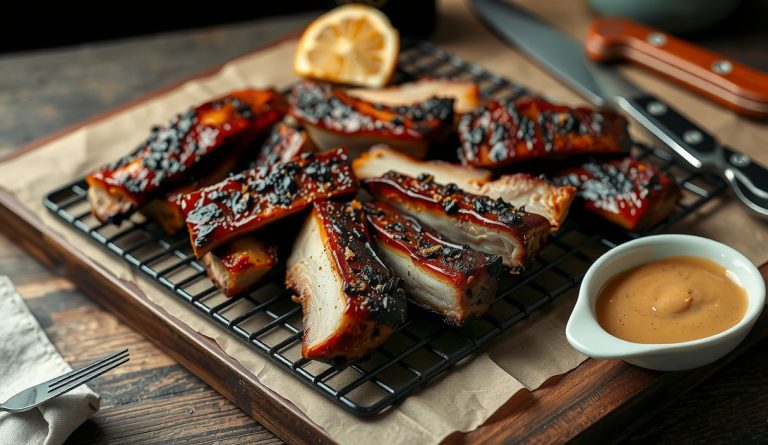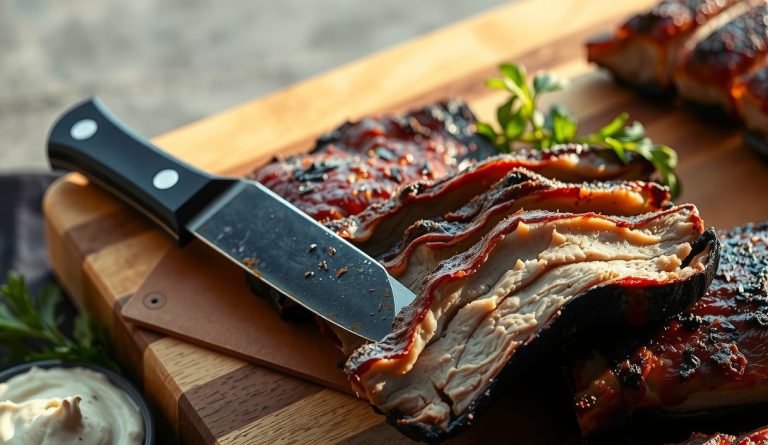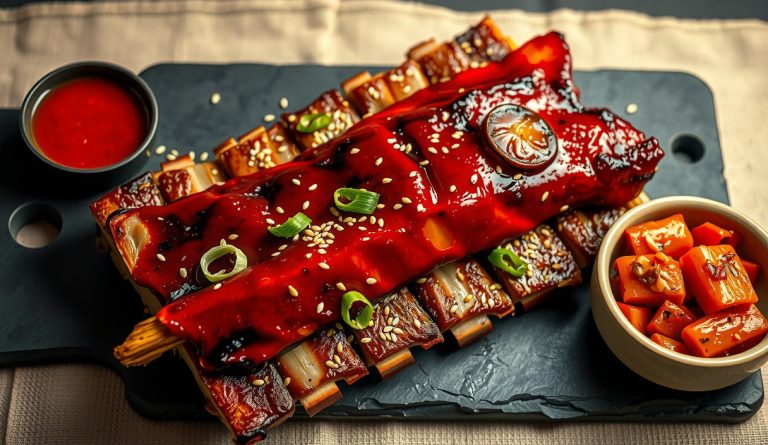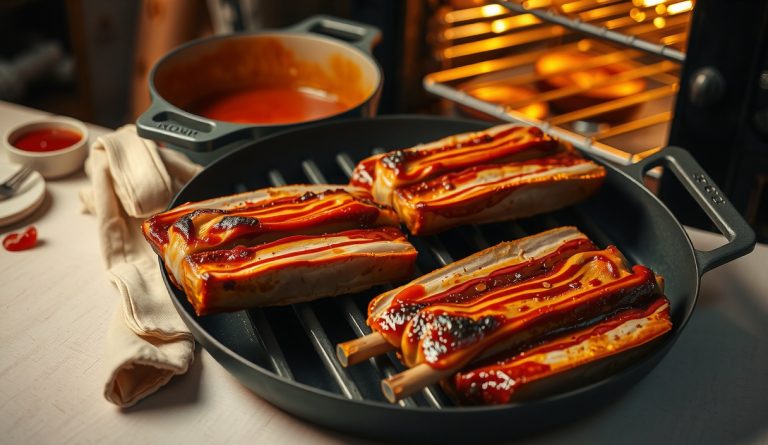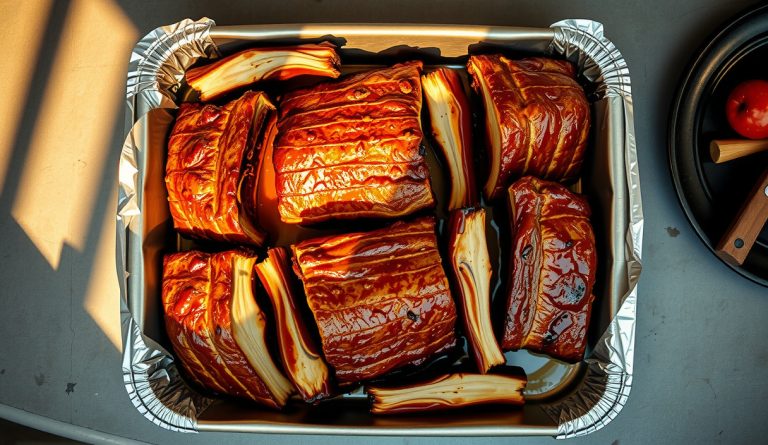
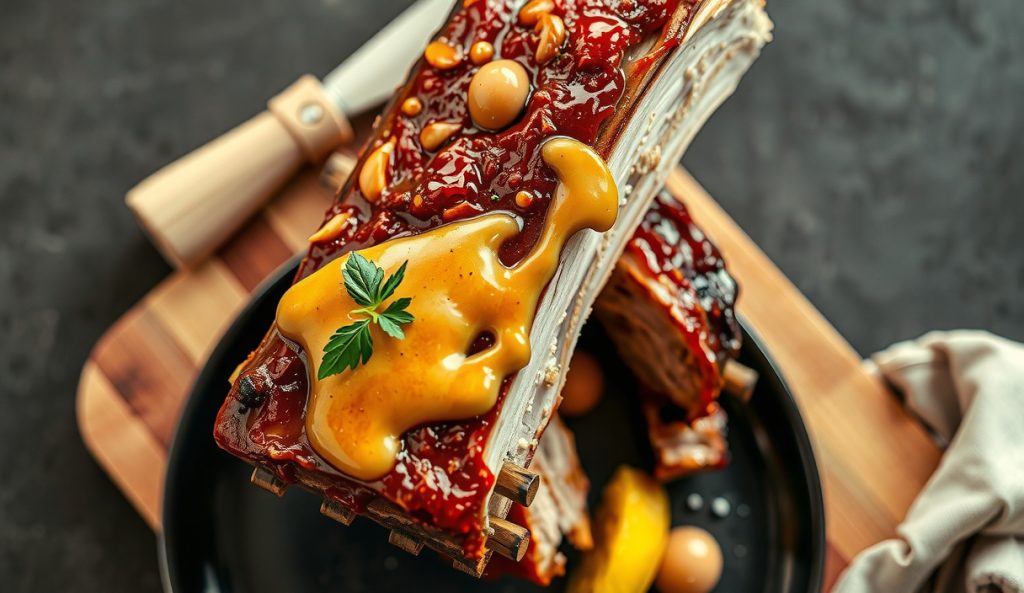
Reducing sodium in a smoked rib recipe is not simply a matter of using less salt and hoping for the best. The dry brine serves structural purposes — it draws moisture to the surface, partially dissolves, and is reabsorbed to season the interior of the meat. Drop the salt quantity too fast or too abruptly and you sacrifice the osmotic equilibration benefit entirely. This low-sodium variation preserves that benefit by reducing the salt amount to 1 teaspoon total and compensating with extended brine time, keeping internal seasoning effective while cutting total sodium meaningfully.
What changes in the low-sodium version?
Reduce the dry brine to 1 teaspoon of salt distributed across all the ribs, and extend the brine period to 24 hours. The longer window allows full osmotic equilibration at the lower ionic concentration — the salt gradient works more slowly but still drives meaningful interior penetration given sufficient time. Use a no-salt-added or certified low-sodium BBQ sauce for both the braise liquid and the finishing glaze. Apple juice contributes negligible sodium and requires no adjustment to quantity or timing.
One mechanism worth noting: the slight reduction in ionic strength modestly lowers osmotic pressure at the meat surface during the smoke phase, which can increase surface moisture loss by a small margin before the braise seals things in. This effect is minor in practice and is effectively neutralized once the country-style ribs enter the foil-sealed braise environment. The braise liquid still functions as a full moisture reservoir regardless of the reduced salt load — the collagen-to-gelatin conversion that keeps the interior moist is driven by time and temperature, not by salt concentration.
What stays exactly the same?
Smoke temperature, braise structure, foil pan setup, apple juice quantity, and internal temperature targets are all unchanged from the canonical recipe. The spice rub ratios — pepper, garlic powder, paprika, and any additional aromatics — remain identical, because none of those components contribute meaningful sodium. Cook time and the finishing glaze step are the same as the original method.
When is the low-sodium variation the right choice?
This variation is the right call when cooking for guests managing hypertension, kidney disease, or any condition requiring dietary sodium restriction, and when you still want to serve a finished, sauced rib rather than a plainly seasoned protein. The low-sodium country-style ribs also work well for households that want to reduce habitual salt intake across the board without abandoning the full smoke-and-braise cook process or accepting a lesser result on the plate.
Use the full method, equipment, and rub measurements from the original Smoked Country-Style Pork Ribs.