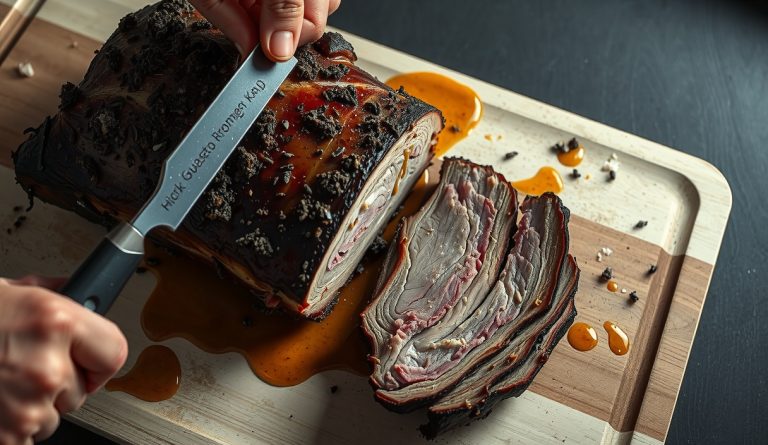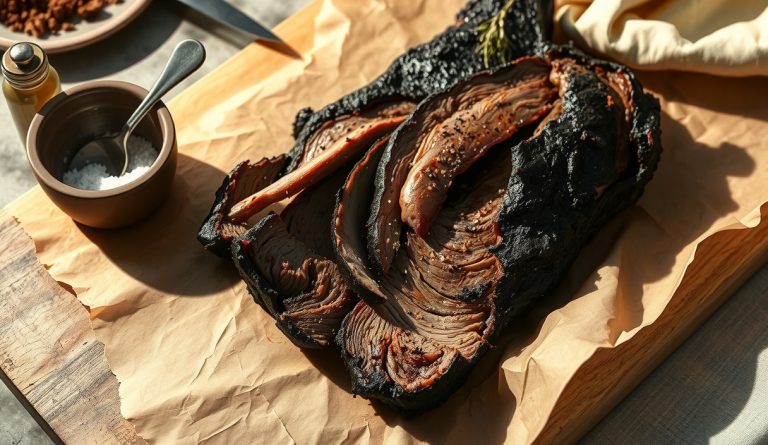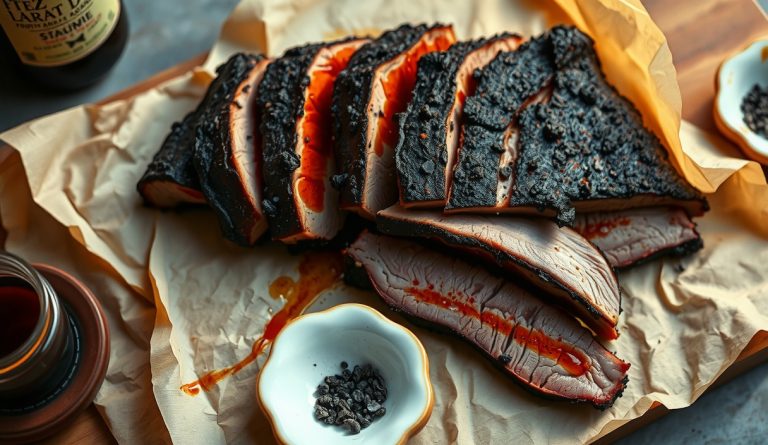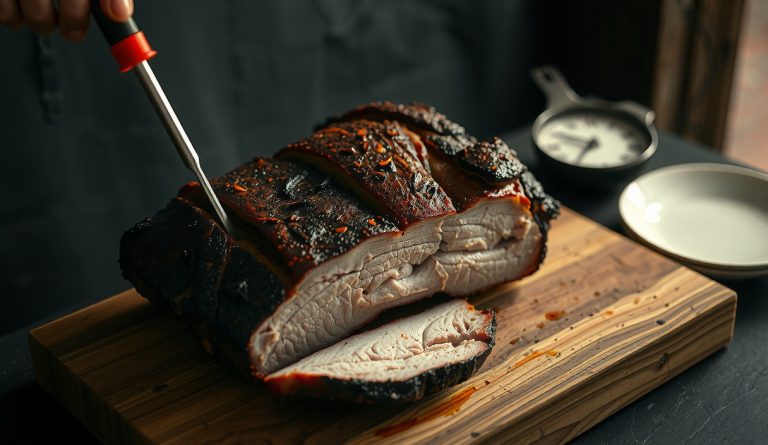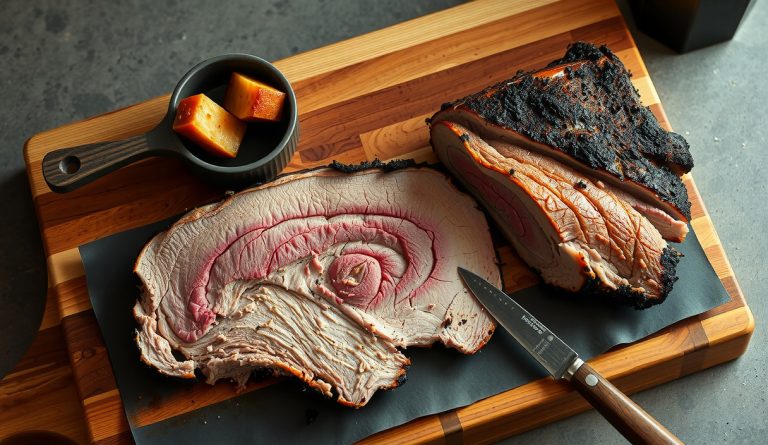
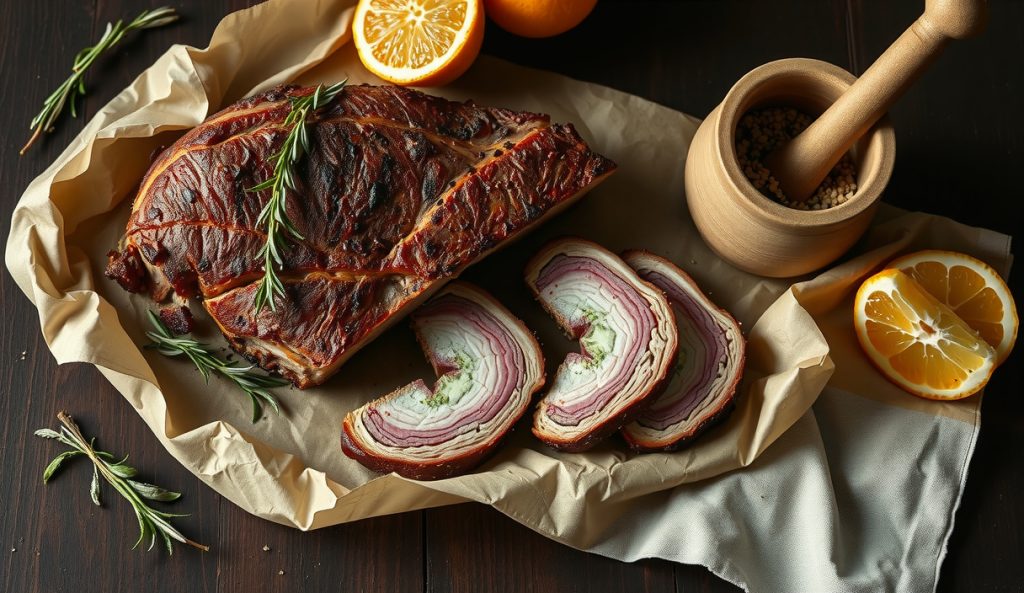
In almost every low-sodium BBQ adaptation, salt is a seasoning that can be trimmed without structural consequence. In Central Texas brisket, it is not. The kosher salt in the canonical 50/50 rub is performing at least three simultaneous functions: it denatures surface proteins to improve bark adhesion, it draws moisture outward to initiate the dry-brine cycle that redeposits dissolved proteins on the exterior, and it is one of only two flavor compounds on a piece of beef that will cook for sixteen hours. Cutting it requires understanding what you’re actually losing and compensating with real mechanisms, not optimism. This adaptation reduces sodium by roughly 50–60% while preserving as much bark integrity and depth as the physics allows.
What changes
Reduce salt, don’t eliminate it. Drop the rub ratio from 50/50 salt-to-pepper by weight to roughly 25/75 — one part salt to three parts pepper. At a standard application rate on a 14lb packer, this reduces sodium from approximately 2,200mg per 6oz serving to around 800–900mg. Below this threshold, bark formation becomes noticeably compromised because surface protein denaturation — the mechanism that creates the Maillard-reactive, sticky protein matrix that crust adheres to — relies on ionic disruption from salt. Going further diminishes returns sharply.
Potassium chloride as a partial substitute. You can replace up to 50% of the remaining salt by weight with a potassium chloride-based salt substitute (Nu-Salt or NoSalt). KCl activates the same salty taste receptor (ENaC) as sodium chloride at comparable concentrations, but it carries a metallic, slightly bitter aftertaste at high doses — a threshold most tasters notice above roughly 40% substitution. At 30–40% substitution of the reduced salt fraction, the bitterness is below the detection threshold for most people when masked by the aggressive pepper and smoke. Do not use KCl at full substitution; the bitterness becomes prominent after a long smoke when other volatile aromatics have dissipated.
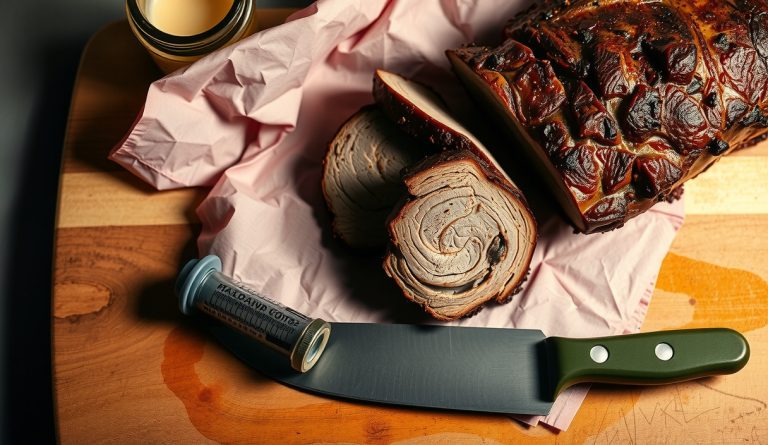
Compensating flavor mechanisms. With less salt, the rub needs to work harder on other axes. Add 1 teaspoon of finely ground dried porcini mushroom powder per cup of pepper — glutamates amplify perceived savoriness and partially compensate for the reduced salt-driven flavor intensity without adding sodium. A light wipe of the brisket surface with unsalted beef tallow before applying the rub improves bark adhesion mechanically, partially substituting for the protein-denaturation work that reduced salt no longer performs as aggressively. Post-wrap, a splash of unsalted apple cider vinegar on the butcher paper adds brightness that reads as seasoning depth.
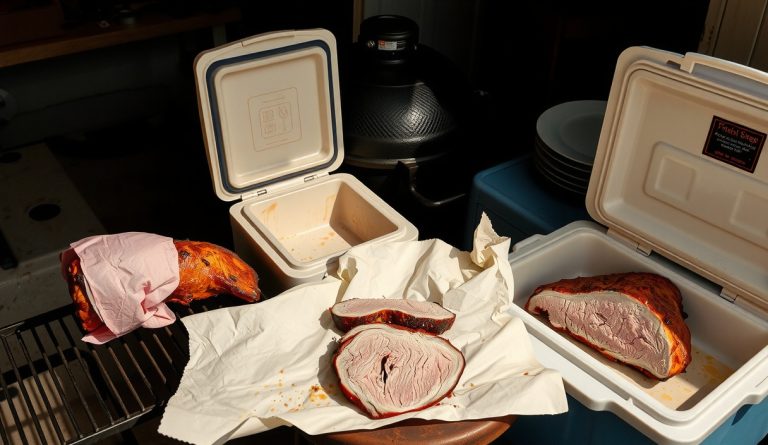
Honest expectations for the bark. The crust on a low-sodium brisket will be slightly less hard-set and slightly less deeply colored than the canonical version. The Maillard reaction still proceeds — it is driven by temperature and reducing sugars in the meat surface, not by salt — but the surface protein matrix that holds the bark together is less thoroughly denatured, making it marginally more fragile during the wrap and rest. Handle the wrapped brisket gently and extend the faux-Cambro rest to the full two-and-a-half hours to allow the bark to firm as it cools.
What stays the same
The cook temperature (225°F), the post-oak smoke, the wrap trigger (170°F internal, butcher paper only), and the rest protocol are all unchanged. Collagen hydrolysis kinetics, fat rendering, and smoke uptake are entirely independent of sodium concentration; the point will still yield that gelatin-rich, butter-soft texture at 200–205°F internal regardless of how much salt is in the rub.
When this is the better choice
This version is the right call for a table that includes guests managing hypertension, heart failure, or chronic kidney disease at the sodium-restriction stage — and for any cook who wants to demonstrate that low-sodium BBQ is a science problem with real solutions, not a flavor sacrifice. The brisket’s fat content means it is satiating and deeply flavored from sources (rendered fat, smoke, pepper, glutamates) that carry no sodium penalty.
Full timing, temperatures, and technique are at Central Texas Brisket — Salt-and-Pepper Bark; apply the rub modifications above while following every other step exactly as written.