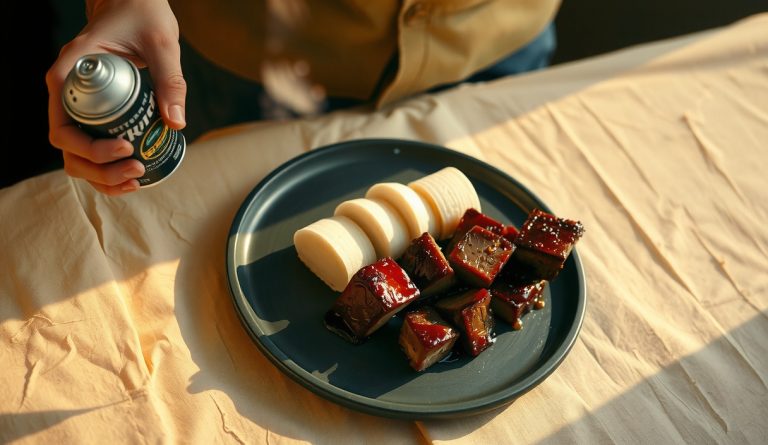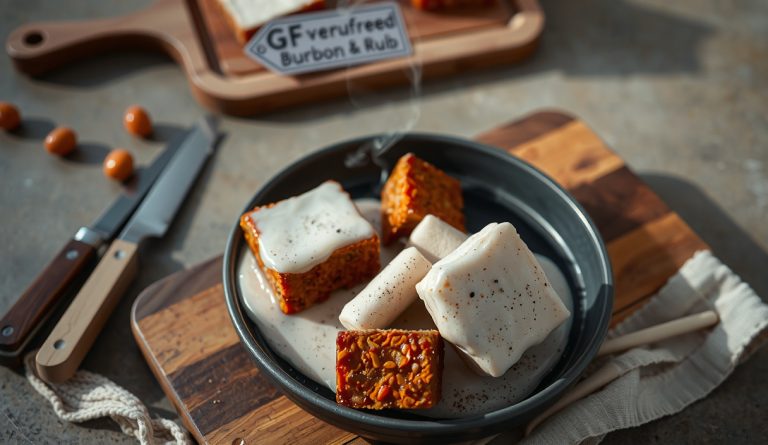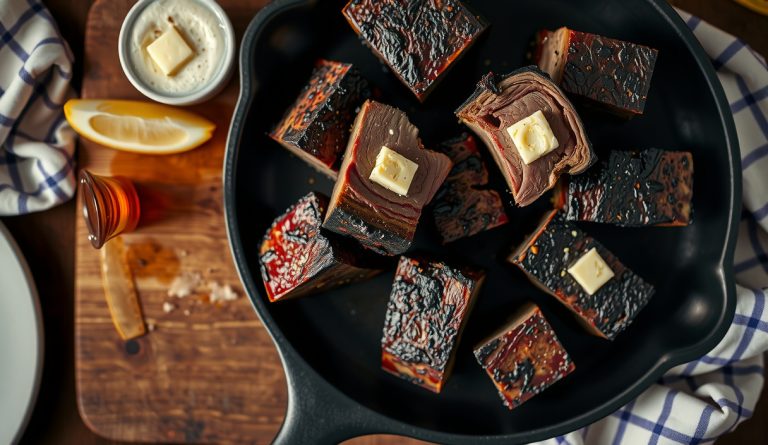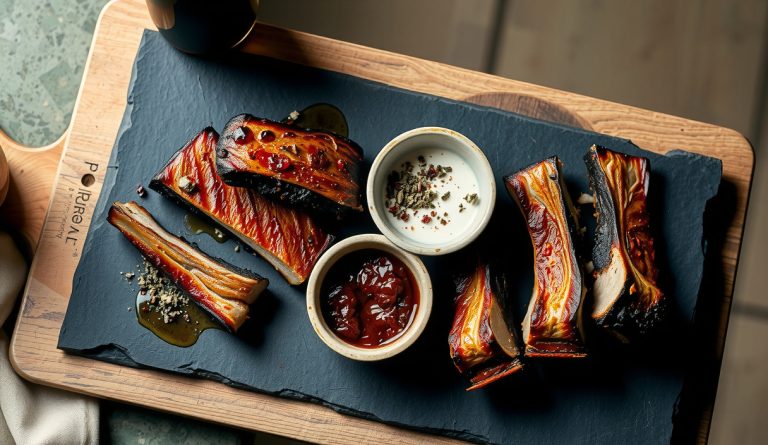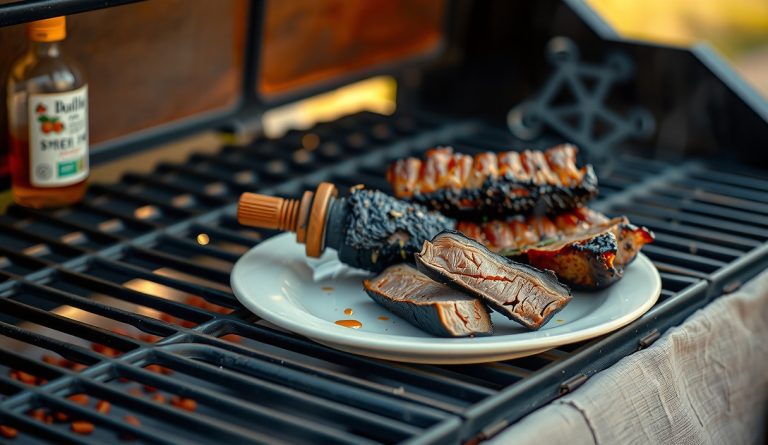
Competition cooks and catering runs demand volume without variance. Burnt Ends with Cherry-Bourbon Foam scales predictably to three full brisket points — 12–15 lb total trimmed weight. The dry rub, braising liquid, sauce, and foam base all scale linearly at that quantity. The single hard constraint is the foam siphon: overcharging a siphon to save a canister swap degrades foam structure in ways that are difficult to recover from at service.
What changes when scaling up?
Scale the dry rub, braising liquid, sauce, and foam base 1:1 by weight or volume — the ratios are stable, and no inflection point exists where ingredient interactions shift at these quantities. For the foam, charge no more than 500 mL of liquid per N2O cartridge, regardless of siphon body size. The xanthan gum network that suspends cherry-bourbon foam bubbles depends on a consistent gas-to-liquid ratio during discharge. When one cartridge must aerate more than 500 mL, dissolved gas pressure per unit volume drops, producing coarse bubbles with mean diameters too large for the xanthan film to hold. Those bubbles collapse within 60–90 seconds on a warm plate — unacceptable at competition or plated catering service.
When using a 1 L siphon body, charge sequentially with two N2O cartridges: seat and fully discharge the first before seating the second. Split any foam batch exceeding 500 mL across multiple siphons and chill each independently. Label siphons with dispatch order and pull each from refrigeration no more than 10 minutes before service to maintain foam viscosity at an acceptable level.
What stays the same as the single-point canonical?
Cook temperature, smoke wood, the two-phase cook structure, internal temperature targets, and resting protocol are identical to the single-point canonical recipe. Larger total brisket mass extends overall cook time slightly due to smoker thermal load, but the per-point benchmarks — bark set, internal temp, and probe-tender feel — are unchanged and should govern pull timing rather than any fixed clock.
When is the scaled version the better choice?
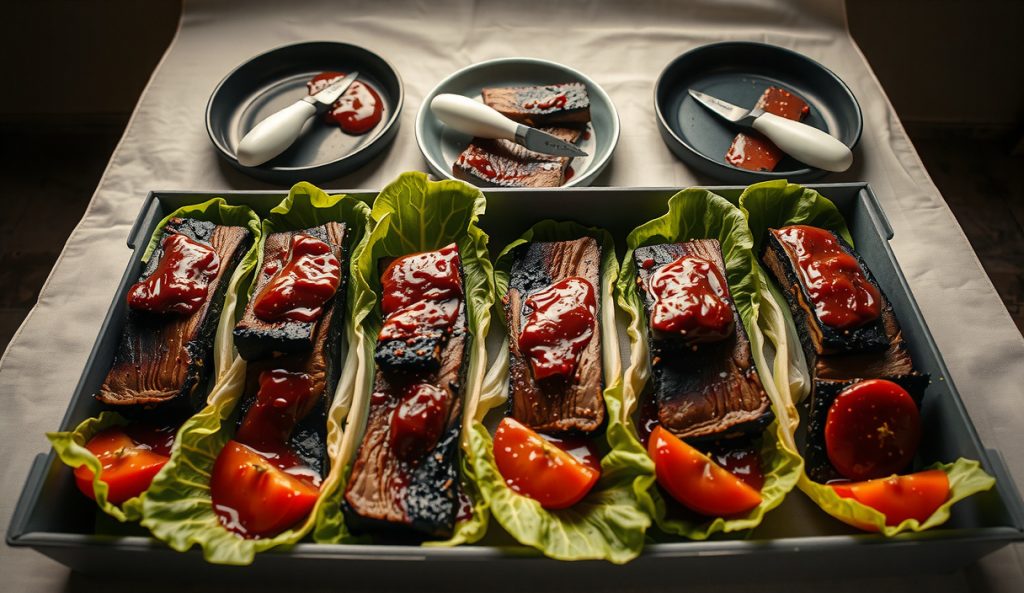
Use this scaled approach for KCBS or backyard competition turn-in boxes where the cherry-bourbon foam is a presentation differentiator, or for catering runs of 40–80 covers where a single brisket point yields insufficient portions. The siphon-split discipline is especially critical at outdoor competitions, where elevated ambient temperatures shorten foam hold times below the 60–90 second collapse threshold even before any siphon overcharging occurs.
Use the full method, equipment, and rub measurements from the original Burnt Ends with Cherry-Bourbon Foam.