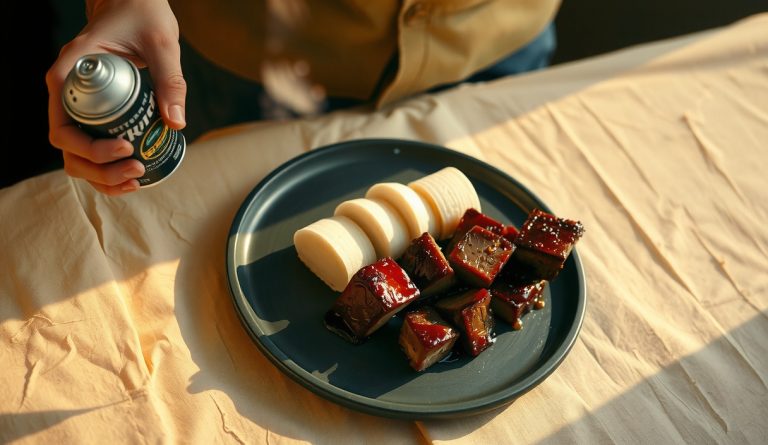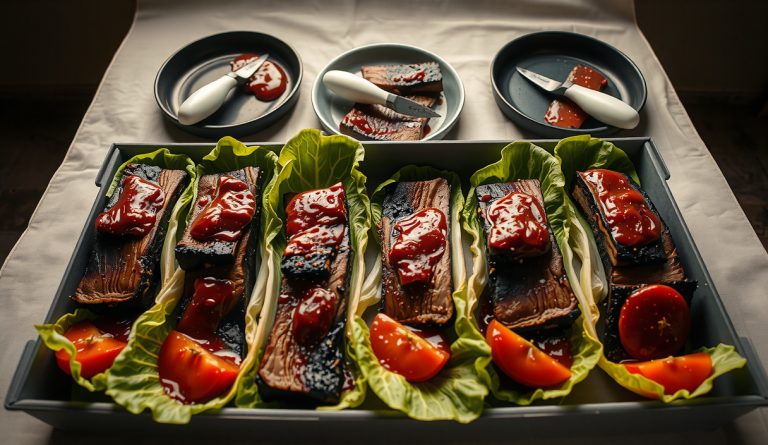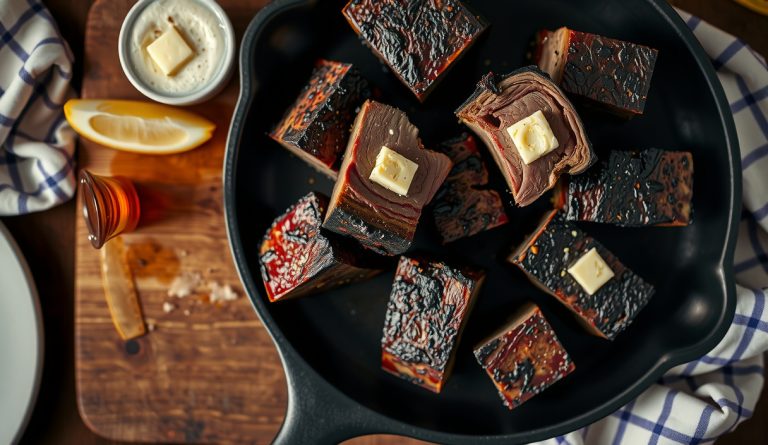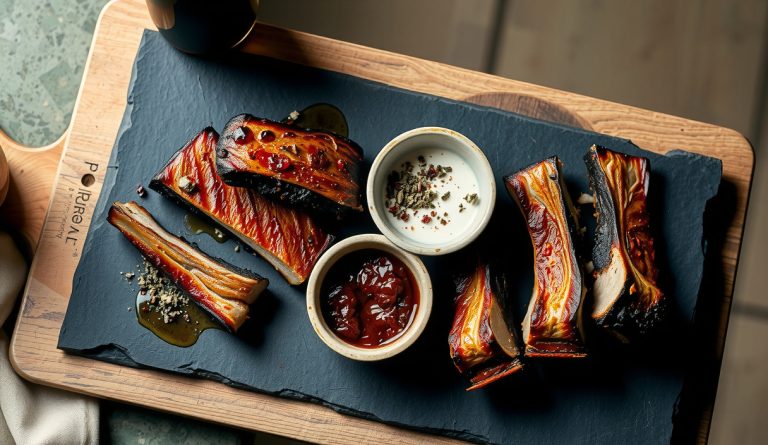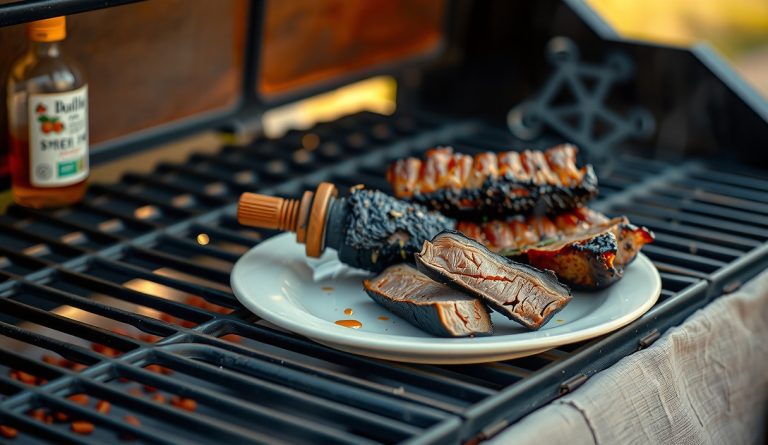
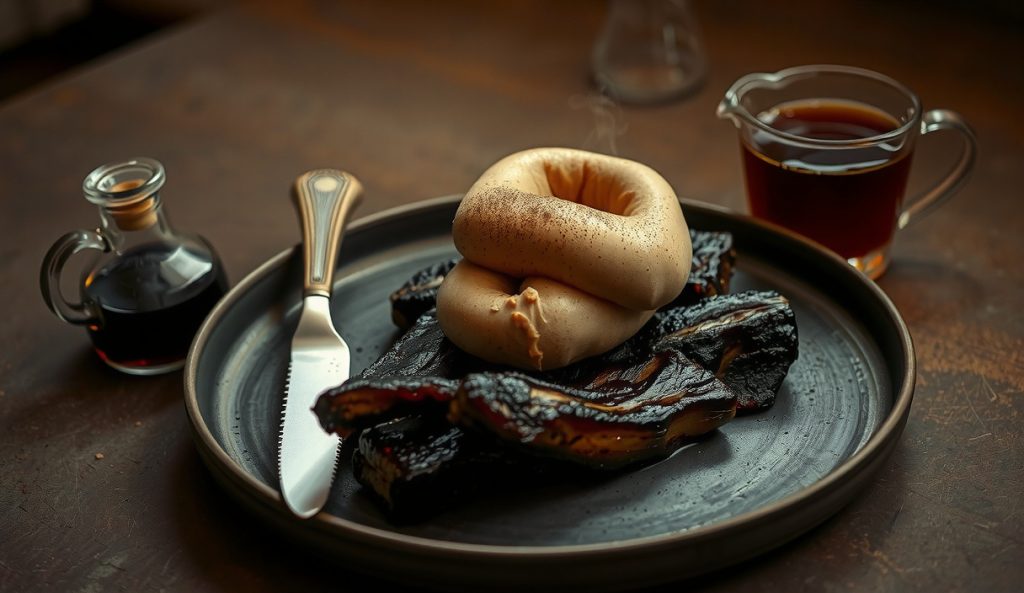
When burnt ends come off the smoker with a particularly assertive bark — dense crust, long cook, heavy smoke ring — the sweetness of a cherry-bourbon foam can feel like it competes rather than complements. The espresso-bourbon variation rebalances that equation. By swapping cherry juice concentrate for cold-brew espresso concentrate and replacing kirsch with dark rum, the espresso-bourbon foam meets the bark on its own terms: bitter, roasted, and oak-forward.
What changes in the espresso-bourbon variation?
Replace the 120 mL of cherry juice concentrate with 120 mL of cold-brew espresso concentrate, and substitute dark rum for the kirsch in equal measure. Cold-brew espresso contributes 2-acetylpyrazine — the Maillard-derived heterocyclic compound that reads as roasted grain — alongside furaneol, a lactone also present in bourbon’s oak-aging profile. Those two compounds create a chemical bridge between the foam and the spirit that cherry, a high-anthocyanin fruit acid, does not provide. The result is a foam that smells and tastes like an extension of the bark rather than a garnish placed on top of it.
Because espresso concentrate carries significant inherent bitterness — primarily from chlorogenic acids and caffeine — reduce the brown sugar in the sauce by 25% to prevent the overall plate from tipping toward over-sweetness. The xanthan gum percentage and N2O charge remain identical to the original build. Cold-brew concentrate has a viscosity close enough to cherry juice that the hydrocolloid network behaves the same way, meaning foam stability and mean bubble diameter are unaffected by the swap.
What stays the same in the espresso-bourbon build?
The full dry rub, the two-phase cook structure (smoke then braise), the internal temperature targets, and the siphon charging protocol all carry over without modification. The foam’s xanthan concentration, chilling requirement, and dispensing technique are identical to those in the canonical cherry-bourbon build. No adjustments to timing or equipment are needed.
When is the espresso-bourbon foam the better choice?
Choose the espresso-bourbon variation when working with brisket points that have had extended smoke exposure — anything beyond 10 hours over strong wood such as oak or hickory — or when the bark is notably dark and bitter-forward on its own. The espresso-bourbon foam also serves guests who find fruit-based garnishes on beef incongruous, and fits service contexts such as tasting menus or competition plates where every component should reinforce a single roasted, savory narrative rather than introduce a contrasting sweet-fruit note.
Use the full method, equipment, and rub measurements from the original Burnt Ends with Cherry-Bourbon Foam.