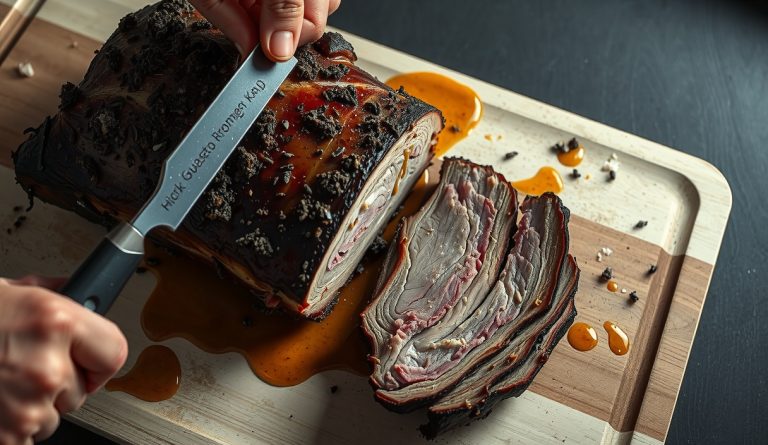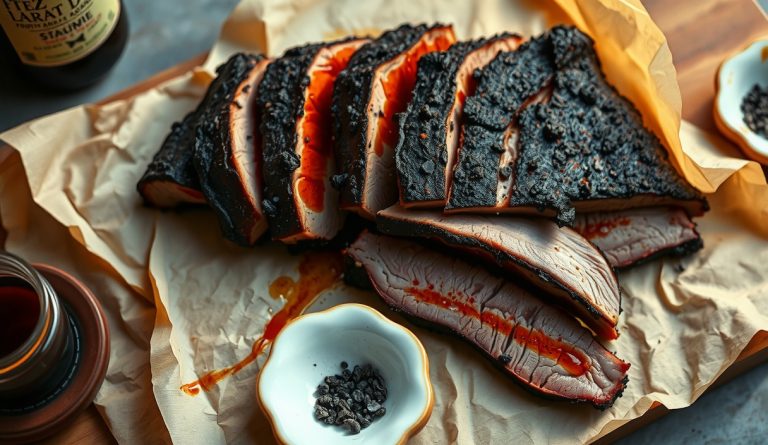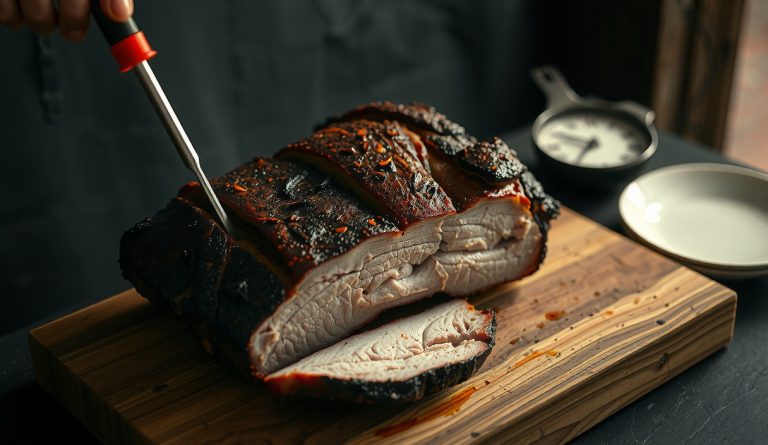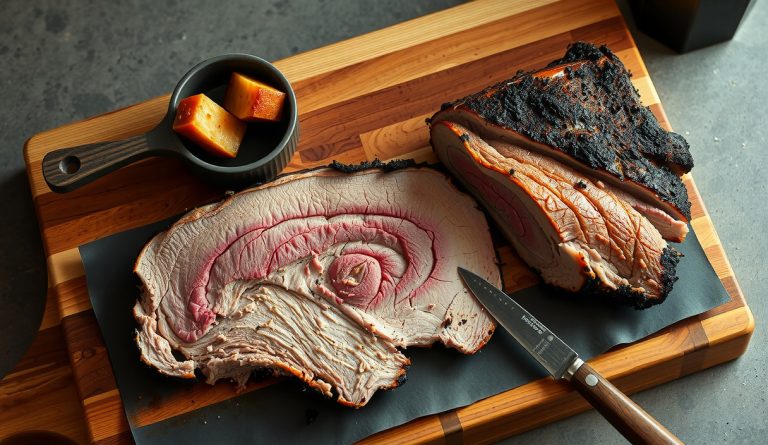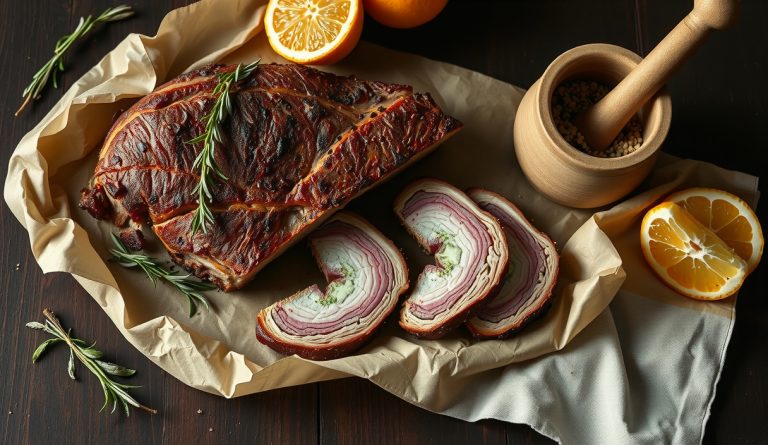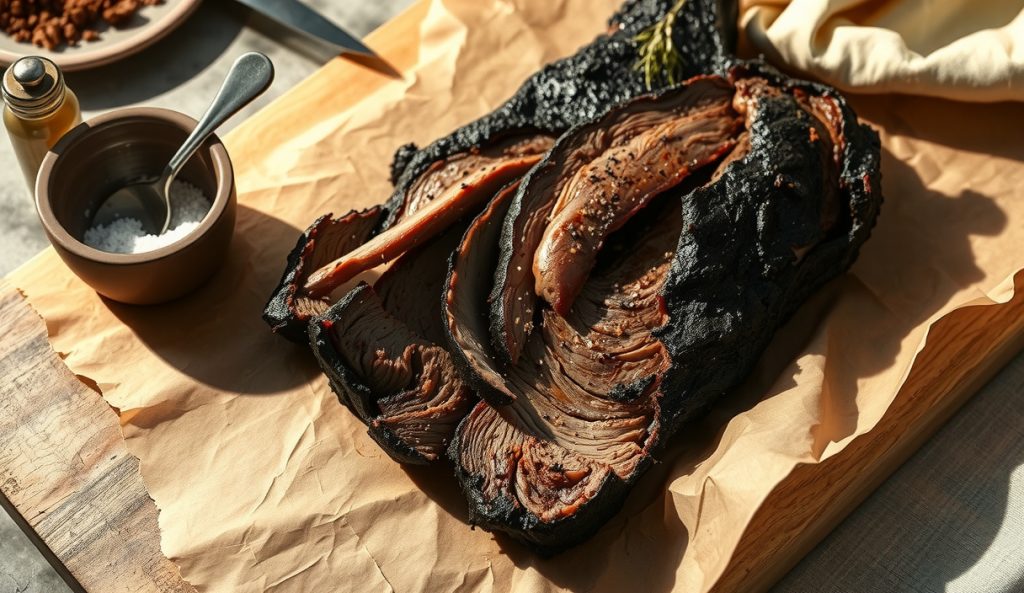
The 50/50 salt-and-pepper Dalmatian rub is the defining constraint of Central Texas barbecue — not minimalism for its own sake, but a deliberate choice to let beef and smoke carry the flavor profile without interference. A small, controlled addition of garlic powder sits close enough to the Texas canon that most Central Texas pitmasters will tolerate it, and the chemistry provides a clear rationale beyond flavor preference. This variation is not a gateway to a fully spiced rub; it is a single, measured modifier with a specific mechanism.
What changes when you add garlic powder to the Dalmatian rub?
Add garlic powder at a maximum of 10% of the total rub weight — for a 100g batch, that means 45g coarse kosher salt, 45g coarse black pepper, and 10g garlic powder. Garlic powder contains reducing sugars and amino acids that lower the Maillard reaction’s effective activation energy slightly compared to a pure salt-and-pepper surface. At a 225°F cook, the exterior browning cascade initiates a little earlier and produces marginally more color depth by the time the brisket reaches wrap temperature. The flavor contribution is savory and allium-forward without introducing sweetness, which would shift the brisket’s profile toward Kansas City territory.
Beyond 10% garlic powder by weight, the brisket’s bark accumulates enough additional reducing sugars that the crust can trend toward a darker, slightly bitter char rather than the clean, mahogany bark that defines Central Texas style. More critically, once ingredients beyond this trio — paprika, cumin, brown sugar, chili powder — enter the rub, the cook is building a different regional rub with its own tradition and logic. That is a legitimate choice, but the result is no longer a variation on Central Texas brisket; it is a different recipe.
What stays the same as the canonical Central Texas method?
Application method, rub coverage, cook temperature, wrap timing, pull temperature, and rest protocol all remain identical to the canonical recipe. The change is confined entirely to the rub formulation. Smoke wood selection — post oak — and target internal temperatures are unchanged.
When is the garlic-powder variation the better choice?
This variation is best suited for cooks who find the purist Dalmatian rub slightly flat on younger beef with less developed fat marbling, where garlic powder’s enhanced Maillard contribution can compensate for a surface that browns more slowly. It also serves as a useful bridge rub for guests accustomed to more complex spice profiles — the garlic addition is familiar without abandoning the lean, smoky Central Texas character. If the beef is well-marbled prime or wagyu, the canonical 50/50 rub is likely sufficient on its own.
Use the full method, equipment, and rub measurements from the original Central Texas Brisket — Salt-and-Pepper Bark.