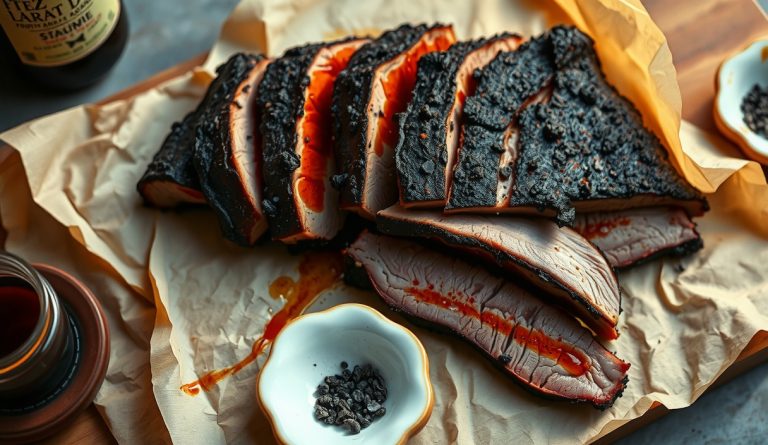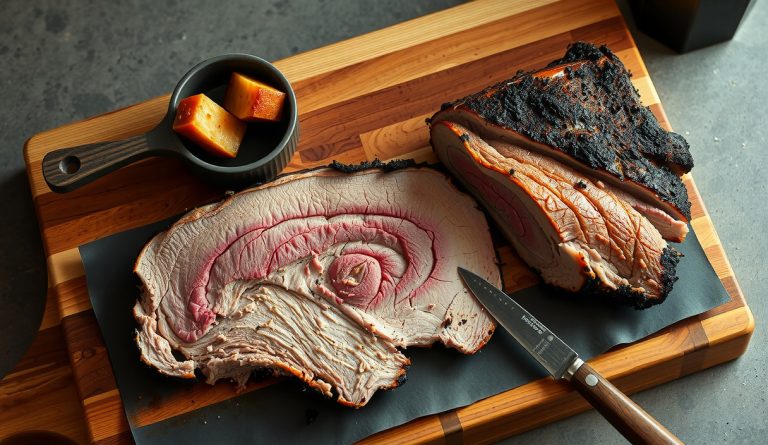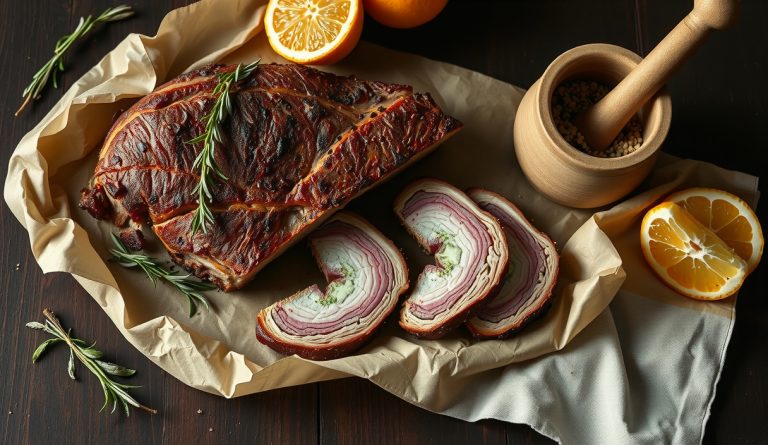
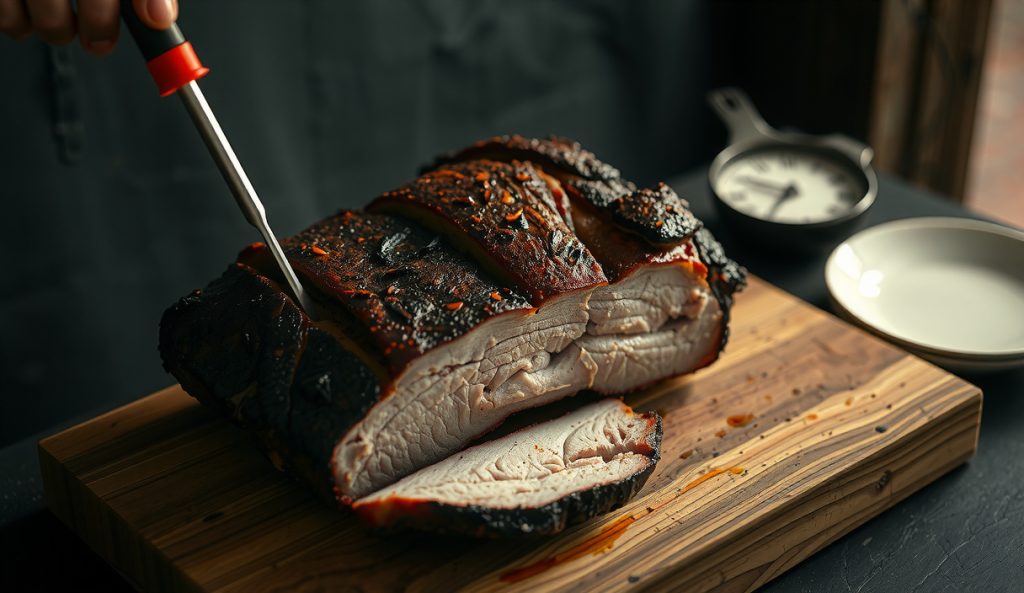
The hot-and-fast brisket method is not a shortcut that sacrifices quality — it is a recalibrated timeline that demands tighter attention at every stage. By running the smoker between 275°F and 300°F, you compress a sixteen-hour cook into eight to ten hours while still clearing every physiological and chemical threshold the brisket requires. The trade-off is a narrower margin for error: thermal events arrive faster, and the window between perfectly probe-tender and overdone shrinks from a comfortable hour to a matter of minutes.
What changes when you cook brisket hot and fast?
The core physics of the cook remain non-negotiable: collagen hydrolysis to gelatin requires sustained internal temperatures above 160°F for an extended period, and the stall is still caused by evaporative cooling as intramuscular moisture migrates to the surface. What changes is the rate at which those events arrive. At 275°F–300°F, the brisket reaches the stall faster and the stall window is compressed, so wrap timing shifts to roughly 165°F internal — a few degrees earlier than the canonical 170°F target — to arrest evaporation before the surface dries out.
The higher ambient temperature means radiant and convective energy inputs are elevated throughout the entire cook, so the evaporative stall resolves more quickly once the brisket is wrapped in butcher paper. Tighter monitoring of the internal probe is essential: the same temperature climb that takes two or more hours in a low-and-slow environment can arrive in under an hour at 300°F.
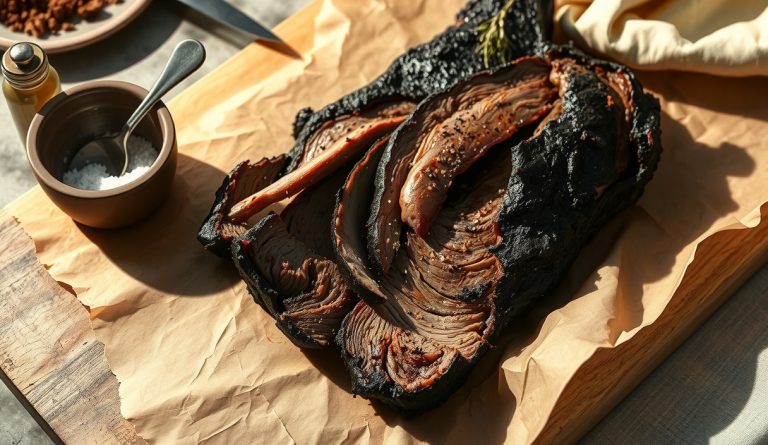
Bark development deserves specific attention in a hot-and-fast cook. The Maillard reaction begins in earnest around 280°F on a dry meat surface, but total bark depth is also a function of cumulative time at temperature. A hot-and-fast cook delivers fewer total hours of surface drying and smoke deposition, so the bark is typically thinner and slightly less complex in color. Some pitmasters compensate by using denser wood splits to increase smoke concentration during the shorter window, or by removing the butcher paper wrap for the final thirty minutes to re-crisp the bark before pulling. Neither move is mandatory, but both are worth testing on your specific rig.
What stays the same no matter the cook speed?
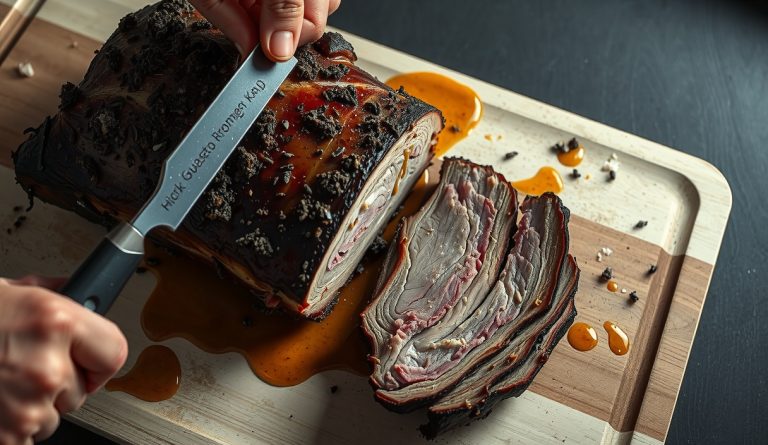
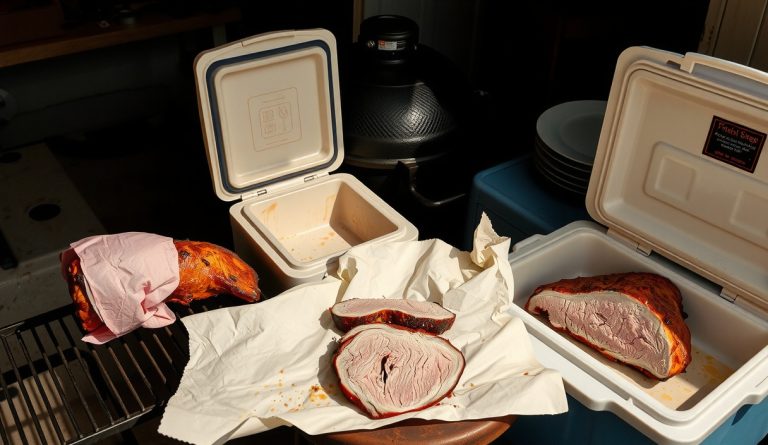
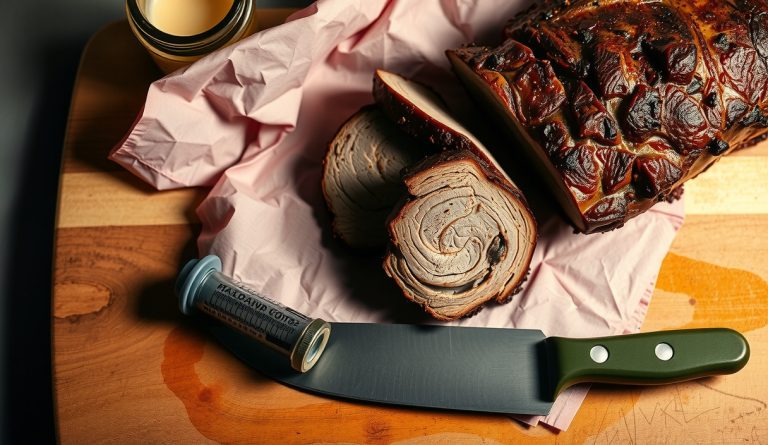
The 50/50 salt-and-pepper Dalmatian rub, the fat-cap-up orientation, the butcher-paper wrap (not foil), and the probe-tender pull test at 200°F–205°F internal all carry over from low-and-slow without modification. Rest time in a faux Cambro — minimum one hour, ideally two — remains critical because carryover equilibration and gelatin redistribution happen during the hold regardless of how fast the cook ran.
When is hot-and-fast brisket the better choice?
Hot-and-fast is the right call when you are cooking same-day for a dinner service, when overnight cooks are not practical, or when your smoker holds 275°F–300°F more consistently than it holds 225°F. The method is also a sound choice for cooks managing multiple proteins on one smoker where a lower temperature would extend every cook unmanageably.
If you have sixteen hours and full scheduling flexibility, the canonical low-and-slow approach produces marginally deeper bark — but hot-and-fast brisket is a legitimate method, not a compromise. The brisket clears every necessary threshold; the cook simply runs on a compressed clock that demands sharper attention.
Use the full method, equipment, and rub measurements from the original Central Texas Brisket — Salt-and-Pepper Bark.