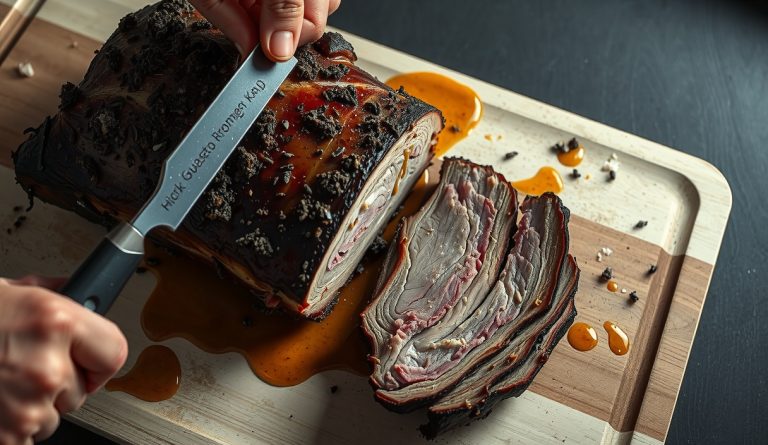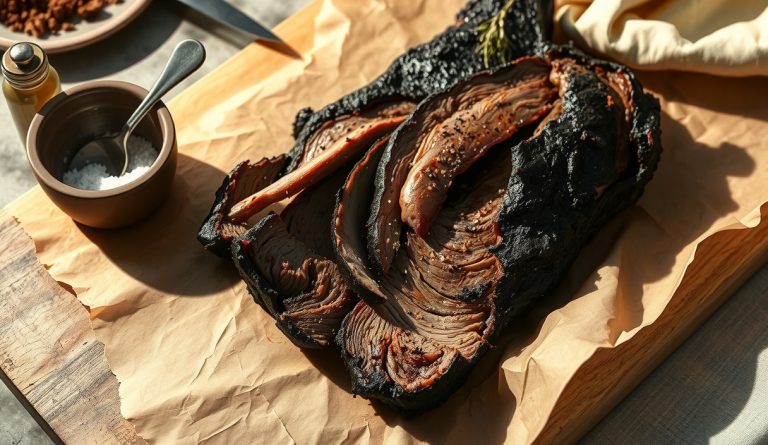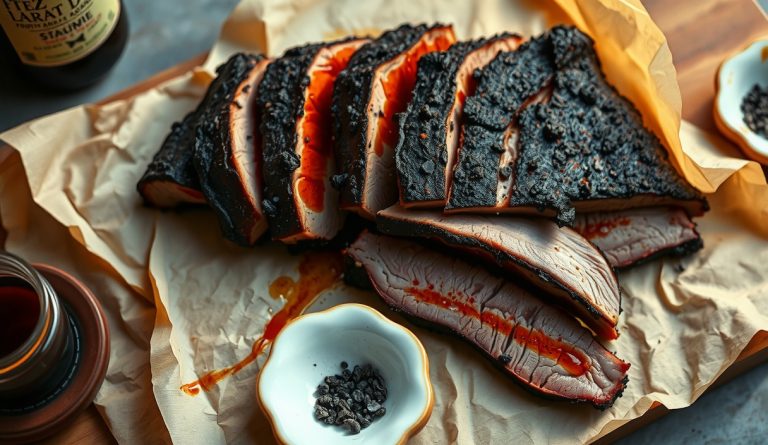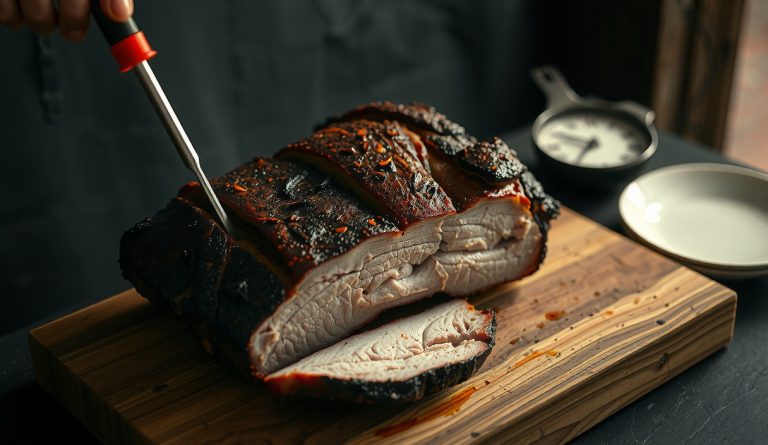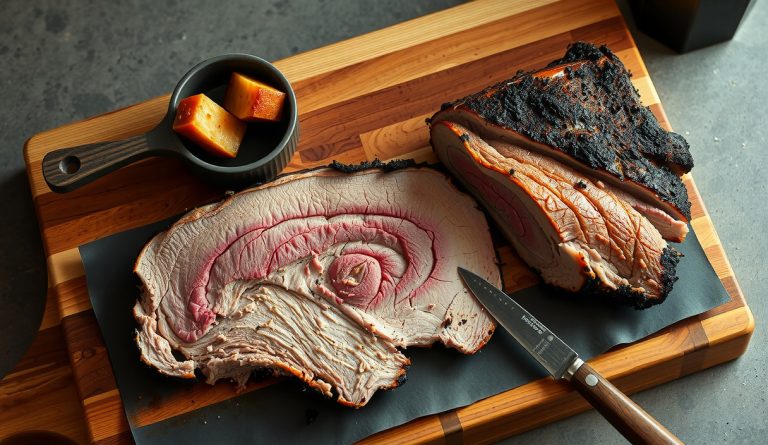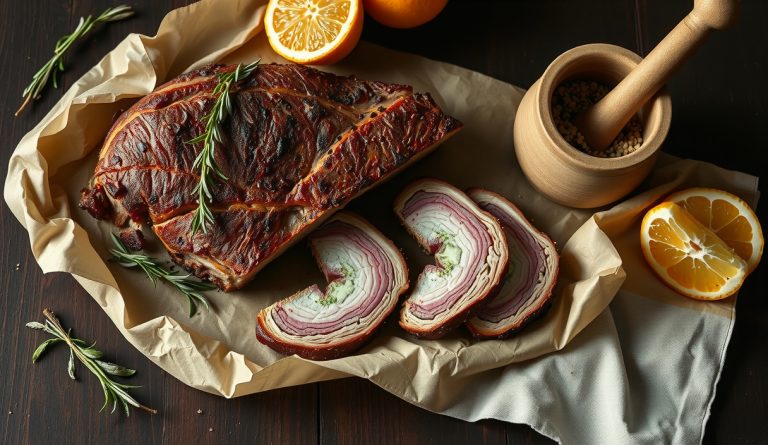
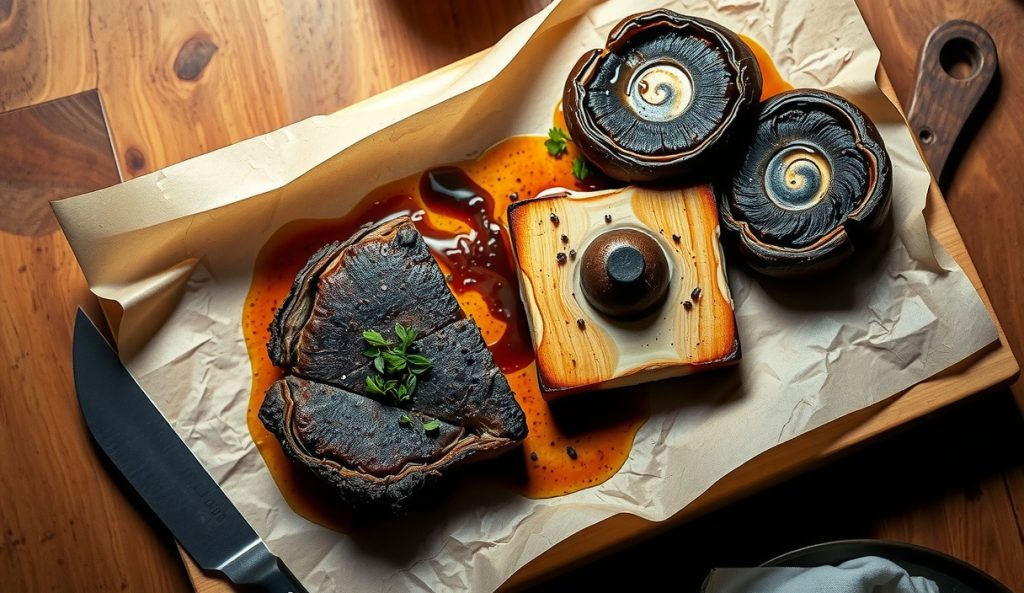
This is not a substitute for Central Texas brisket. Brisket is brisket — a biomechanically complex piece of beef with collagen, intramuscular fat, and myofibrillar protein that no plant ingredient replicates fully. What this companion dish offers is a seat at the same table: something that can receive the canonical salt-and-pepper rub and post-oak smoke, develop genuine Maillard browning, and deliver a meaty, smoke-saturated bite that belongs in the same meal without pretending to be something it is not. The vehicle is king oyster mushrooms (Pleurotus eryngii) — specifically large, thick-stemmed clusters cut into 1.5-inch rounds and smoked low-and-slow under the same conditions as the brisket itself.
What makes king oyster mushrooms the right analog?
The analog: king oyster mushroom rounds. King oyster stems have a dense, fibrous cell-wall architecture composed primarily of chitin and beta-glucan — a structural matrix that, unlike portobello caps (which are largely water-filled and collapse quickly under heat), holds its geometry through a multi-hour smoke. The large stem diameter of 2–3 inches on commercial specimens allows you to slice 1.5-inch rounds that mimic a brisket slice in surface area and visual weight. Select the largest stems available and refrigerate them uncovered for 12–24 hours before the cook to reduce surface moisture — this pre-desiccation step is the vegetable equivalent of the overnight dry-brine in the canonical recipe, and it is the single most important texture decision you will make.
The rub — same formula, adjusted application. Apply the canonical 50/50 kosher salt and coarsely cracked black pepper rub by weight directly to all cut surfaces of the mushroom rounds. Mushroom cell walls are hydrophilic — the salt will pull free moisture rapidly within 20 minutes, creating a tacky surface that dramatically improves smoke-particle adhesion in the same way the dry-brine cycle improves bark adhesion on the brisket. Press the rub firmly onto all faces; it will bind. Let the seasoned rounds sit at room temperature for 30 minutes before going onto the grate.
The cook: 225°F over post-oak, 2.5–3 hours. Place the rounds cut-face-up on the grate for the first 90 minutes — this exposes the porous interior surface to direct smoke contact, which has a dramatically higher phenolic-compound absorption rate than the exterior skin. Flip at 90 minutes and continue until the exterior surface is deeply mahogany, slightly tacky, and the rounds have reduced to roughly 60% of their starting thickness. There is no internal temperature target for king oyster mushroom rounds because mushrooms have no collagen hydrolysis phase; the textural target is a firm but yielding bite with a chewy bark layer — not collapse, not raw crunch. Do not wrap; the steam created by wrapping will undo the surface concentration of smoke compounds and collapse the cell-wall structure built over three hours.
What king oyster mushroom rounds honestly deliver and do not deliver. The rounds will accumulate genuine Maillard browning — the Strecker degradation pathway operates on amino acids in fungal tissue just as it does in beef — real smoke-ring-adjacent phenolic penetration, and a savory depth from glutamic acid, since mushrooms are among the richest natural sources of free glutamate. King oyster mushroom rounds do not deliver rendered intramuscular fat, gelatin from collagen hydrolysis, or the specific textural contrast between a brisket flat and point. Serve them alongside the brisket for a longer, more inclusive table, or as a standalone centerpiece dressed with a few drops of good extra-virgin olive oil and a hit of lemon zest post-smoke.
What stays the same as the canonical Central Texas brisket recipe?
The rub formula (50/50 salt and pepper by weight), the wood (post-oak), and the cook temperature (225°F) are identical to the canonical recipe. The thin-blue-smoke discipline matters here at least as much as it does with brisket: bitter creosote from white smoke deposits on mushroom surfaces even faster than on beef, because the open cell-wall matrix of king oyster mushrooms absorbs combustion byproducts indiscriminately.
When is this companion dish the better choice?
This companion is the right addition when the table includes vegetarians or flexitarians who want to participate fully in the ritual of Central Texas barbecue — the long smoke, the post-oak aroma, the salt-and-pepper bark — without the beef. The combination of Maillard browning, post-oak phenolics, and free glutamate in king oyster mushrooms also produces a flavor profile that serious omnivores will eat without reluctance, making the dish a genuinely excellent plate independent of any dietary framing.
The full brisket science, timing, and technique are at Central Texas Brisket — Salt-and-Pepper Bark; run both the brisket and the mushroom rounds on the same smoker, same wood, same temperature, and serve them from the same cutting board.