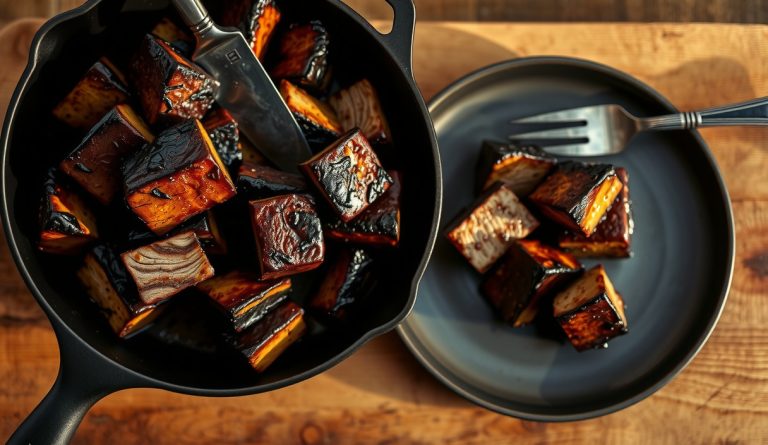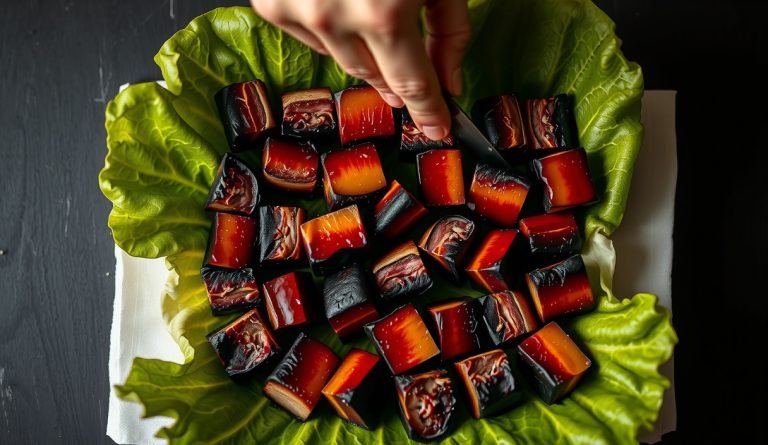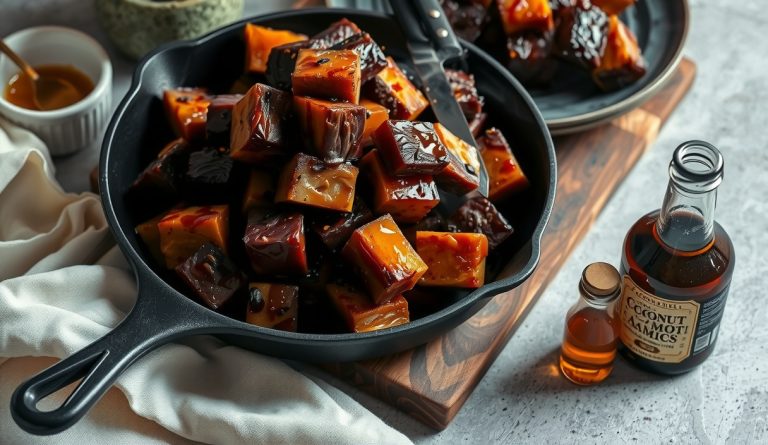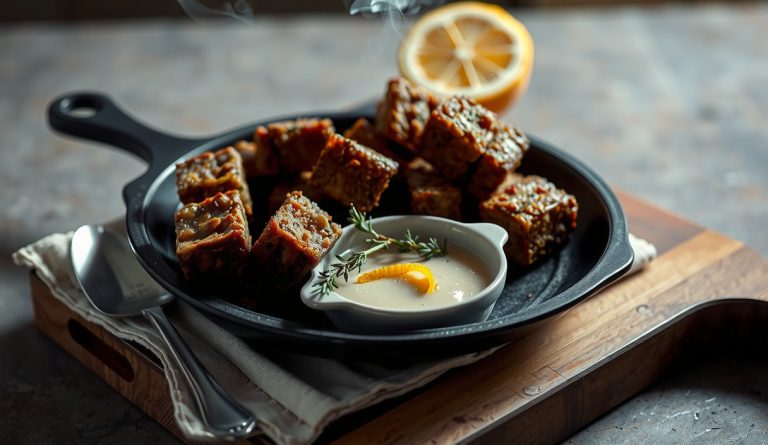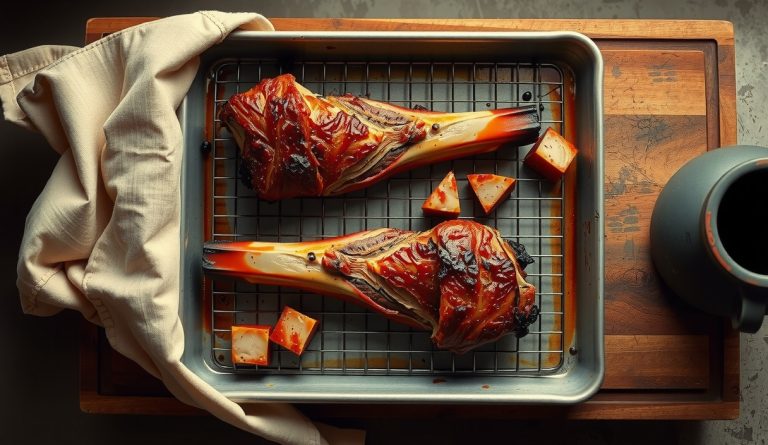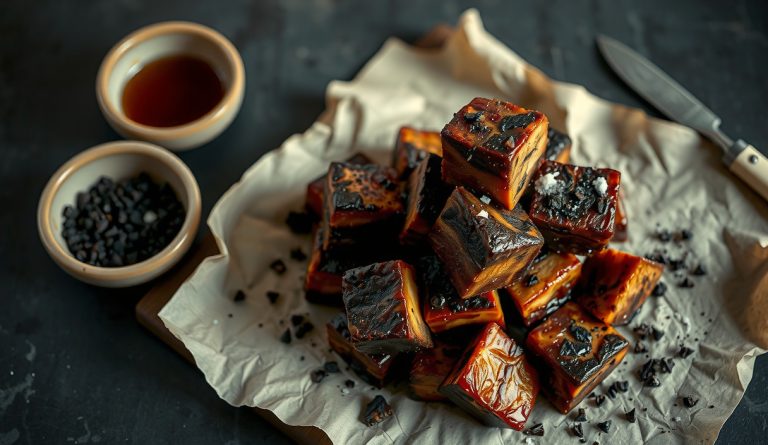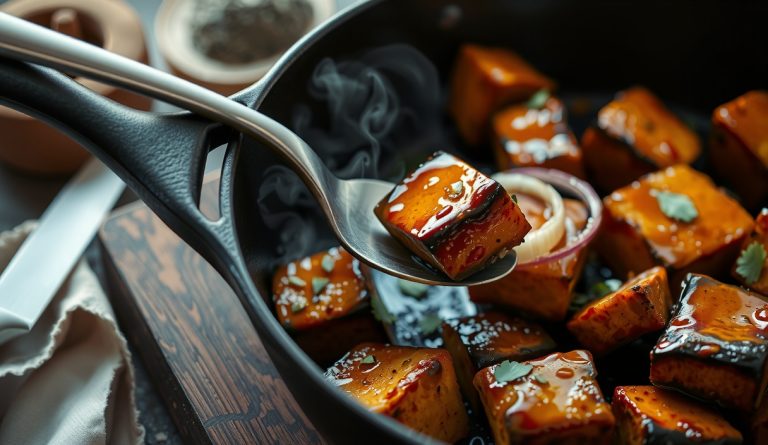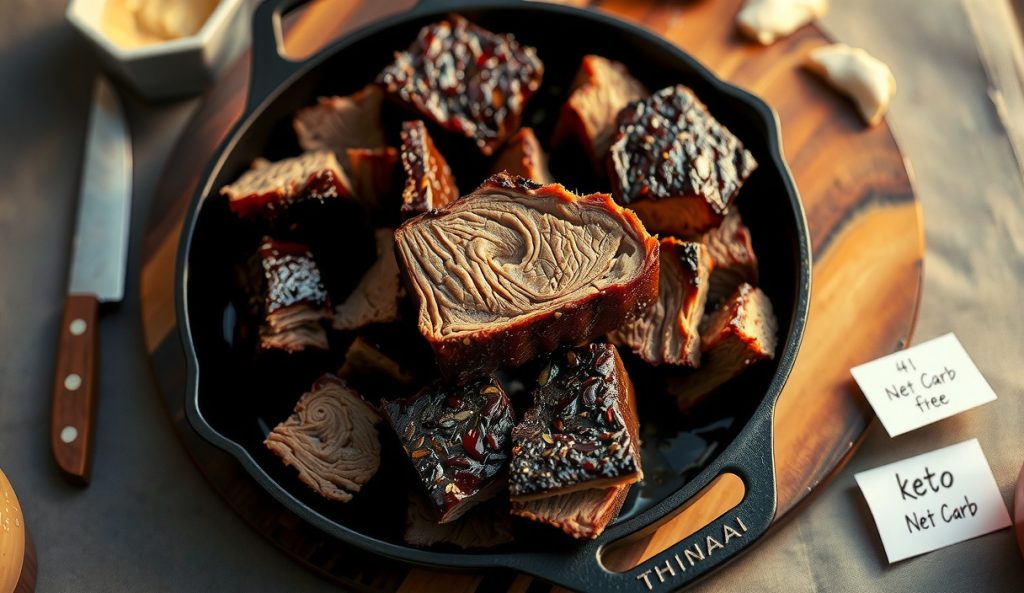
Kansas City Burnt Ends are already built on fat and collagen — the brisket point’s dense marbling and connective tissue are inherently keto-friendly fuel. The one serious carbohydrate problem is the KC-style glaze: a sucrose-and-ketchup sauce that carries 15–20g of sugar per two-tablespoon serving. Strip that sugar intelligently and the entire double-bark process survives intact.
What exactly changes in the keto version?
The glaze sauce: Replace every gram of sucrose, brown sugar, molasses, and honey in the KC-style sauce with a blend of allulose (70%) and a monk-fruit/erythritol blend (30%). This ratio matters for the Maillard chemistry in the cube-return phase. Allulose is a rare sugar with negligible metabolic impact (~0.4 kcal/g, not counted toward net carbs) and, critically, allulose participates in the Maillard amino-carbonyl condensation cascade at almost identical temperatures to fructose — meaning the second bark still builds dark, sticky, and lacquered at 275°F. Pure erythritol would not: its low reactivity in Maillard chemistry produces pale, grainy surfaces and leaves a cooling sensation on the palate as it recrystallizes. Use allulose as the primary browning agent; the monk-fruit/erythritol blend provides sweetness depth without the cooling aftertaste at high concentrations.
Ketchup base: Standard ketchup contains roughly 4g sugar per tablespoon. Substitute a no-sugar-added ketchup (Primal Kitchen or equivalent, ~0g sugar) or build a base from tomato paste, cider vinegar, and a touch of smoked paprika. Tomato paste concentrates the glutamates and lycopene that give KC sauce its body without the corn-syrup load. Confirm the Worcestershire sauce is a low-sugar variant — standard Worcestershire carries molasses; a reduced-sugar or coconut-aminos-based substitute keeps the umami without the carb hit.
The braise liquid: If the canonical recipe includes any sweetened liquid in the braise pan — apple juice, sweet tea, or cola are common KC variants — replace it with unsalted beef stock plus a splash of cider vinegar. The acid holds pH in the 3.8–4.2 range that brightens the gelatin reduction and keeps the lacquer glossy without adding carbohydrates.
Net-carb delta: The canonical sauce and glaze together contribute roughly 18–22g net carbs per generous serving. The allulose-based keto version lands at approximately 3–4g net carbs per serving, derived from residual tomato solids and vinegar. The brisket point itself is 0g net carbs. Rendered tallow from the deckle fat adds zero-carb, high-satiety fat to every cube.
What stays exactly the same in this keto version?
Every hour of the process is unchanged: the 250°F initial smoke to 203°F internal temperature, the butcher-paper wrap through the stall, the cube-and-return at 275°F, the covered braise, and the final uncovered bark-building phase. The collagen hydrolysis kinetics, fat render, smoke phenol deposition, and second-bark Maillard cascade all operate independently of whether the reducing sugars are fructose or allulose — the thermal physics and chemistry are identical.
Who should choose the keto burnt ends over the original?
This version is the right call for anyone managing blood glucose, following a strict ketogenic therapeutic protocol, or simply preferring the savory-smoke register of burnt ends over the candy-sweet KC style. The reduced sugar load lets the post-oak phenols and beef-fat umami read more clearly on the palate without the sucrose veil.
Follow the full timing, temperature, and wrapping method at the original Kansas City Burnt Ends recipe — only the sauce formula changes.