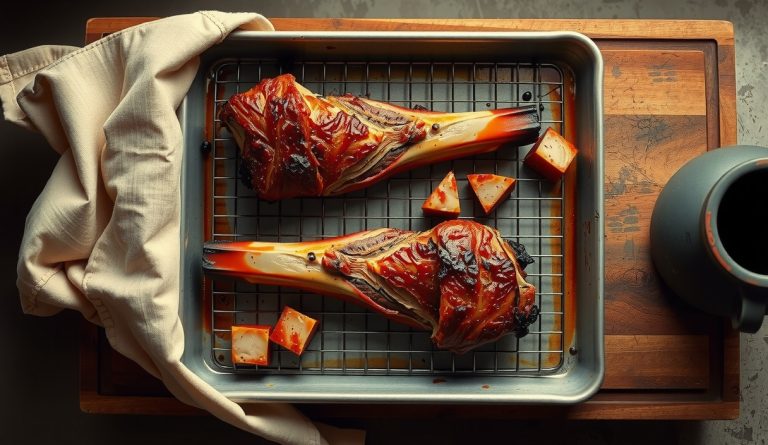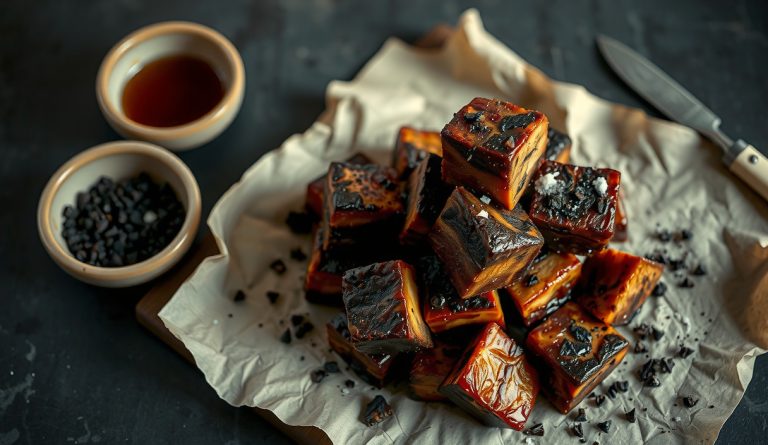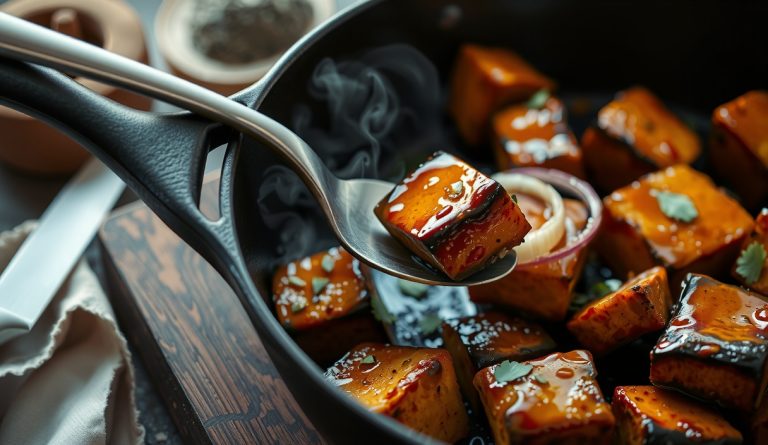
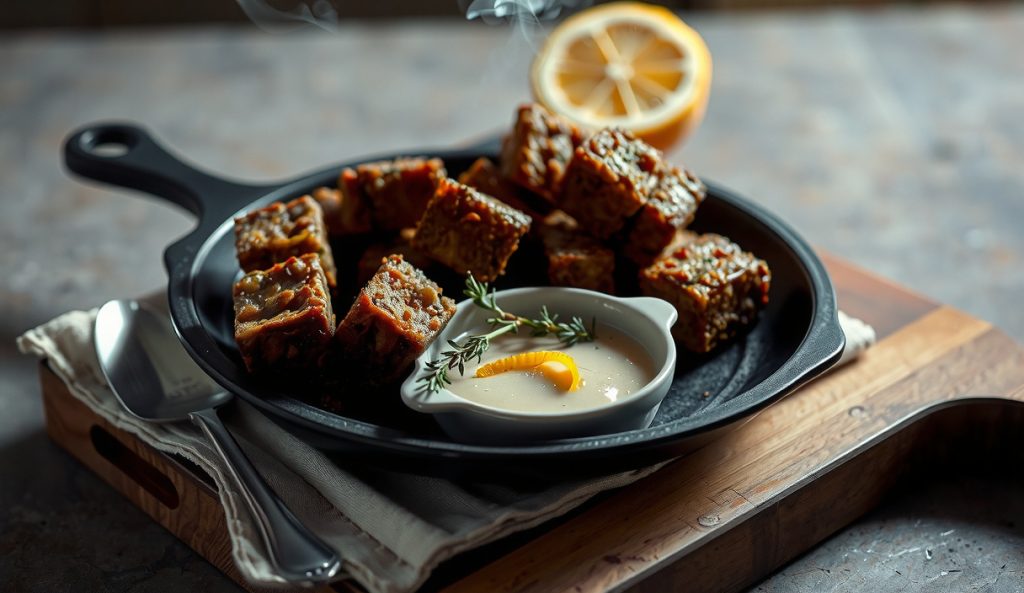
Salt performs three distinct functions in Kansas City Burnt Ends — osmotic brining, protein denaturation, and bark formation — and understanding each one reveals exactly how much sodium you can cut without losing the cook. This low-sodium variant targets roughly 40% of the canonical sodium load while preserving the double-bark structure that defines the dish.
What changes when you cut sodium from burnt ends?
The dry rub: Salt’s first role in the rub is osmotic — it draws surface moisture out of the brisket point, dissolves into a concentrated brine, and gets reabsorbed, denaturing surface proteins and improving moisture retention during the long cook. Its second role is bark formation: the dehydrated, protein-dense crust that constitutes the first bark relies partly on salt-mediated protein cross-linking. Reduce kosher salt in the rub by 60% — from a typical 2 tablespoons per pound down to roughly 3/4 tablespoon per pound.
To partially compensate for the reduced osmotic drive, apply the reduced rub 24 hours before cooking rather than the canonical standard rest. The longer equilibration time allows deeper salt penetration at lower concentration. Fill the flavor gap with smoked paprika, ground ancho, black pepper, garlic powder, and dried thyme — none of these contribute meaningful sodium, but all participate in Maillard and pyrolysis reactions at pit temperatures, building crust complexity independent of salt.
Potassium chloride: A 50/50 blend of kosher salt and a potassium-chloride salt substitute (Nu-Salt or Morton Salt Substitute) restores some ionic strength for protein denaturation. The tradeoff is real: potassium chloride carries a detectable metallic-bitter edge, particularly noticeable above 0.8% concentration in the finished product. Keep total KCl contribution below 30% of your total chloride load to stay beneath most people’s bitterness threshold.
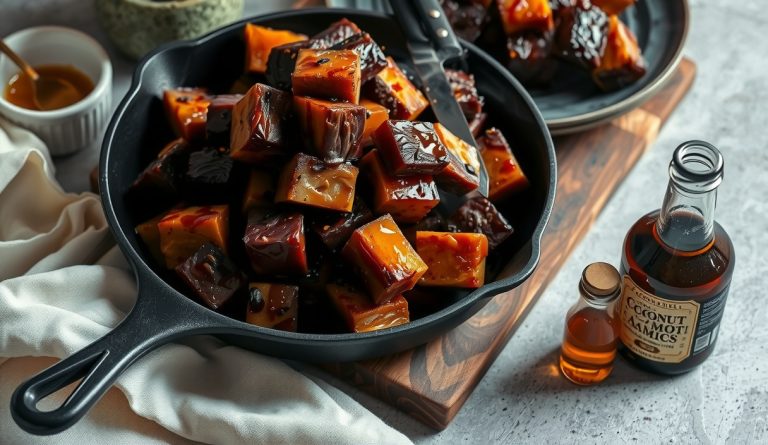
The KC sauce and Worcestershire: Standard Kansas City-style barbecue sauce carries 300–500mg sodium per two-tablespoon serving from added salt and Worcestershire alone. Use a no-salt-added ketchup base, omit added salt from the sauce entirely, and substitute coconut aminos for Worcestershire — coconut aminos deliver approximately 90mg sodium per teaspoon versus approximately 170mg for standard Worcestershire, and contain no barley malt. Add an extra teaspoon of cider vinegar to the sauce: acidity compensates perceptually for reduced saltiness by stimulating different taste receptor pathways.
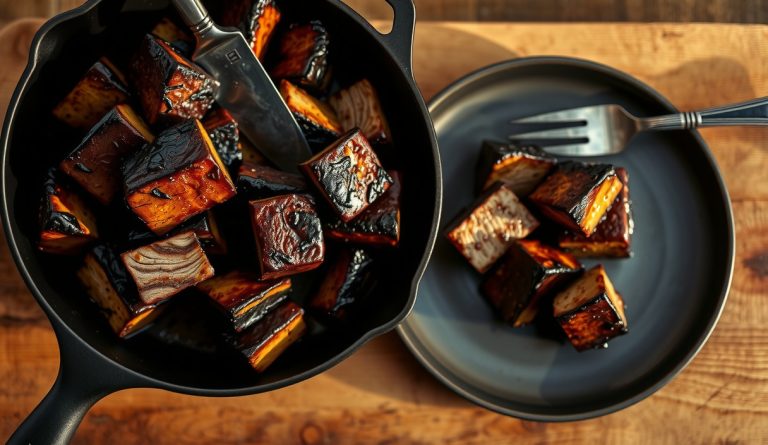
Bark management: Lower salt means the first bark on the brisket point will be marginally less dense and crusty. Compensate by running the initial smoke at the higher end of the canonical temperature window — closer to 250°F throughout — to maximize Maillard reaction time on the exterior. During the uncovered second-bark phase, lean harder into post-oak smoke exposure: phenolic smoke compounds bond to the protein matrix and contribute structural complexity that partially substitutes for salt-driven crust formation.
What stays the same in this low-sodium version?
The full 10–12 hour initial smoke, butcher-paper wrap through the stall, 203°F internal temperature target, cube size, braise phase timing, and 275°F second-bark window are all unchanged from the canonical preparation. Collagen hydrolysis and intramuscular fat render are temperature-and-time phenomena entirely independent of sodium content — the burnt-ends cubes will still emerge gelatinous, unctuous, and structurally correct regardless of the sodium reduction.
Who is this low-sodium burnt ends recipe for?
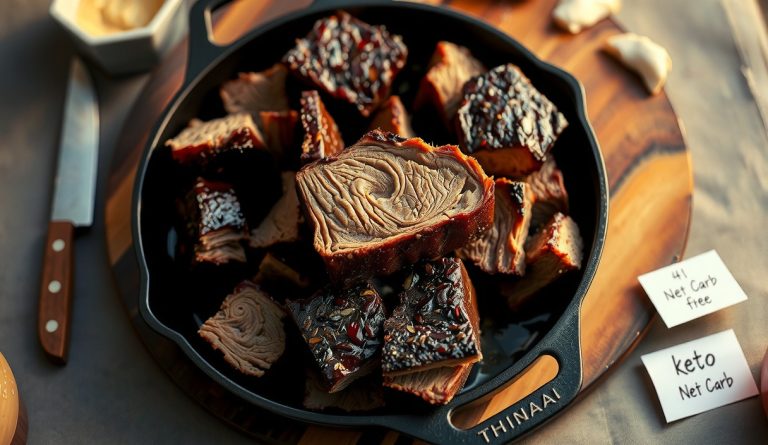
This is the version for guests managing hypertension, heart failure, or CKD sodium restrictions, or for anyone who wants the full burnt-ends experience without the 1,200mg-per-serving sodium burden a canonical preparation can carry. The smoke penetration and rendered fat complexity of the brisket point are generous enough to carry the dish even with the sodium significantly reduced.
All temperatures, wrapping technique, and the double-bark timing sequence are described in full at the original Kansas City Burnt Ends recipe.