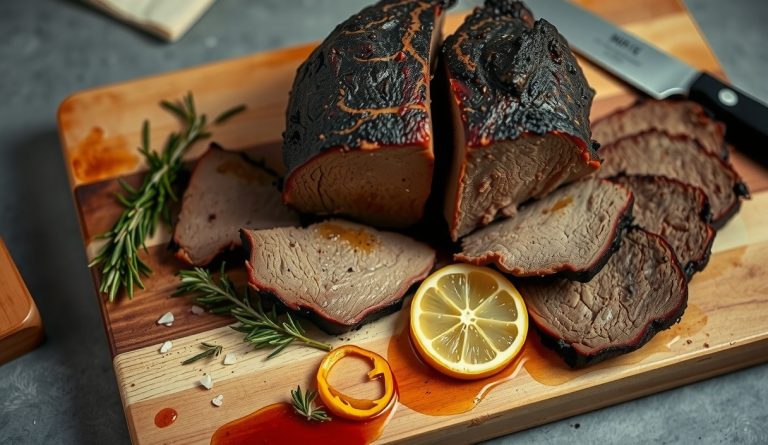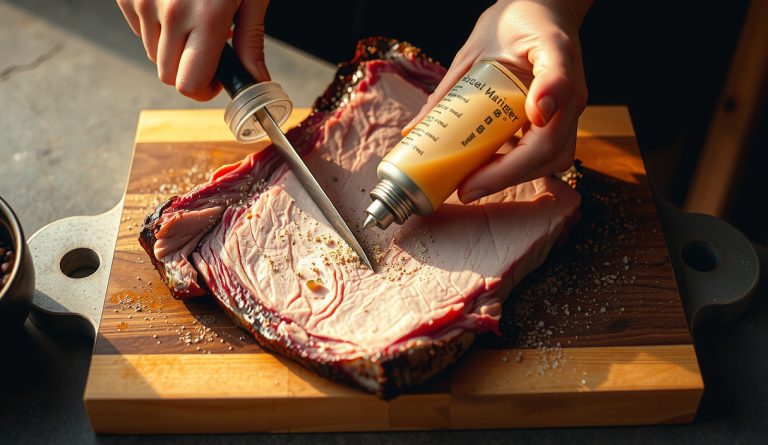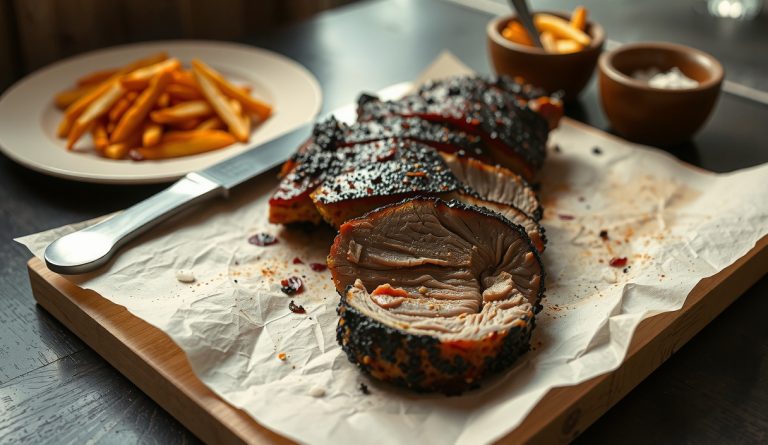
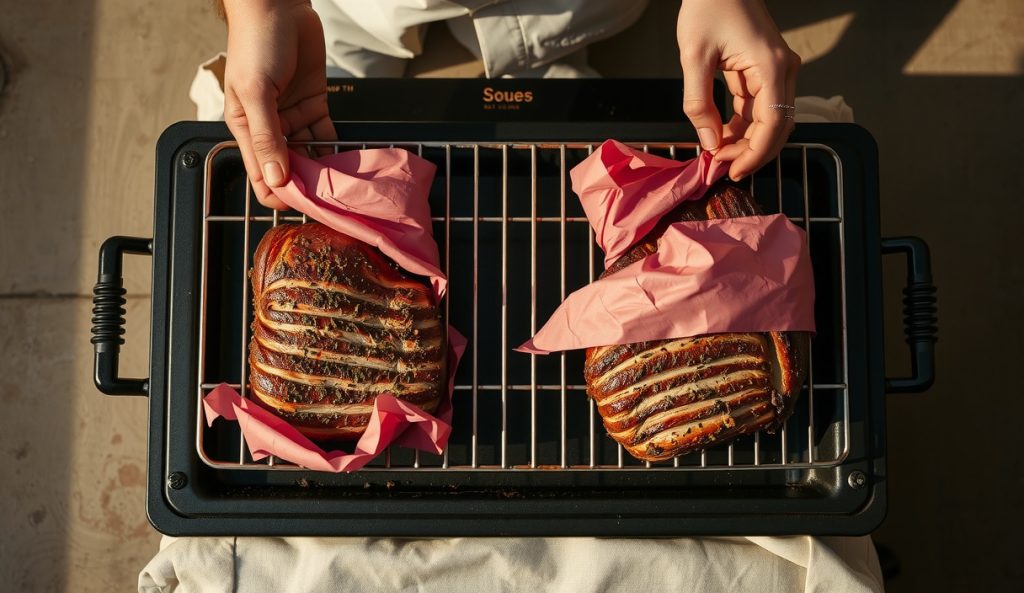
Scaling a brisket cook from one packer to two — whether for a competition or a large gathering — introduces variables that do not exist at single-brisket scale: differential radiant heat exposure between grate positions, compounded steam pressure when multiple large cuts are wrapped in proximity, and the logistical challenge of coordinating independent stalls across two pieces of meat that will almost certainly differ in weight, fat distribution, and connective tissue density.
This competition-scale variation addresses those variables directly. The rub formula scales cleanly by weight; the placement and wrapping protocols require deliberate, geometry-aware adjustment.
What changes when you scale to two briskets?
Scale all rub quantities linearly by total meat weight. If the canonical rub is formulated per pound of brisket, double every quantity for two full packers of equivalent size. Linear scaling is correct here because rub coverage is a surface-area function — and for two separate briskets rather than one larger mass, you are simply doubling surface area, so doubling the rub matches coverage exactly.
On a large offset or barrel smoker, stagger brisket placement so the thinner flat end of one brisket does not sit directly above or adjacent to the thicker point of the other. Radiant heat from the point of the lower brisket creates a localized thermal zone that accelerates cooking in whatever sits above it. Misaligned placement results in one flat overcooking while its own point is still several degrees behind target. Rotate both briskets 180° at the wrap point to equalize cumulative heat exposure from the firebox-side versus exhaust-side differential.
Wrap each brisket independently in butcher paper — never tent or wrap both briskets together. When two large cuts share a steam environment, moisture released from each accumulates around both, creating a wetter, hotter microclimate than either brisket generates alone. This accelerates collagen-to-gelatin conversion faster than intended and can push both pieces through the stall and into overcooked territory before internal temperature probing catches up. Independent wraps preserve individual control over each brisket’s final phase.
What stays exactly the same at competition scale?
Cook temperature, target internal temperatures, resting protocol, and the full rub composition are unchanged at competition scale. Each brisket is treated as a canonical cook running in parallel — the only modifications are rub quantity (doubled for two packers), placement strategy, and wrapping discipline. The low-sodium rub architecture is maintained at the same KCl-to-herb ratio per pound as the single-brisket method.
When is the competition-scale method the right choice?
This variation is the correct approach any time you are cooking more than one full packer simultaneously — competition, catering, holiday service, or a large family event where a single brisket will not cover the guest count. The placement discipline outlined above is especially critical for pitmasters using an offset with a notable firebox-to-exhaust heat gradient, where grate position is the primary tool for compensating for temperature variance across the cook surface.
Use the full method, equipment list, and per-pound rub ratios from the original Low-Sodium Smoked Brisket — Herb-Forward.