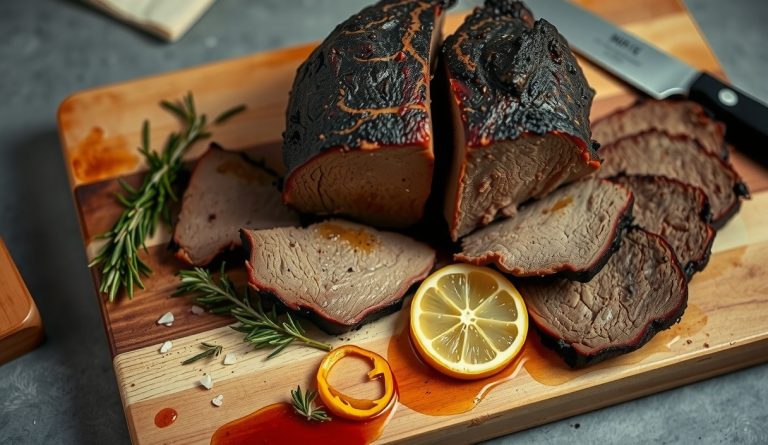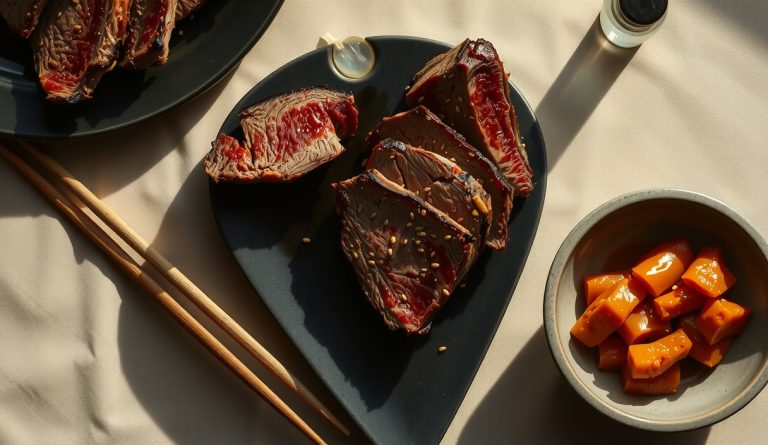
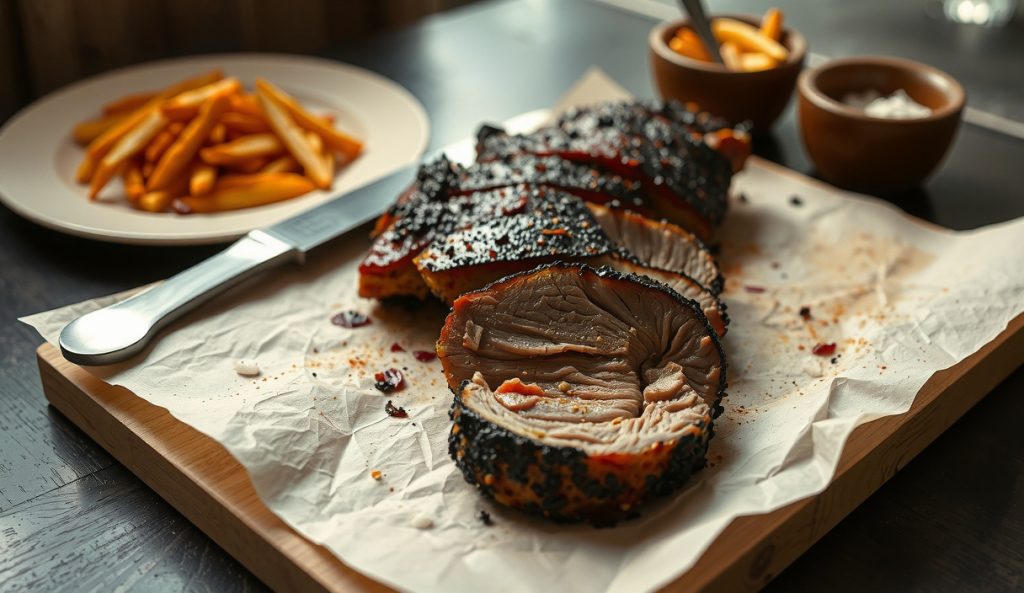
Aaron Franklin’s coarse-pepper-and-salt philosophy is the most scrutinized rub doctrine in American barbecue, and for good reason: when smoke quality is high, nothing more is needed. This variation applies that same minimalist logic to the low-sodium canonical — swapping standard kosher salt for a potassium chloride blend and retaining only coarse black pepper. The result is a brisket that prioritizes smoke penetration and fat-rendered bark over herbal complexity.
This approach suits pitmasters who have their fire and smoke dialed — consistent 225–250°F chamber temperatures, clean blue-gray smoke from well-seasoned post oak or white oak, and a reliable wrapping instinct. If your smoke produces any gray or white billow, the stripped rub will expose it immediately. There is nowhere to hide here.
What changes in the Texas Minimalist variation?
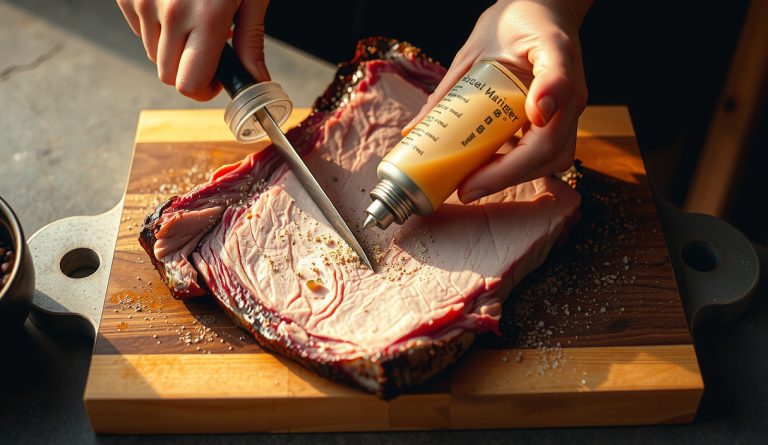
The Texas Minimalist rub removes the herb crust entirely — no rosemary, thyme, or garlic powder — and also removes the cocoa powder and paprika from the base rub. What remains is equal parts KCl blend (by weight) and very coarsely cracked black pepper, approximately 16 mesh or cracked by hand with a mortar rather than ground. Apply the rub in the same volume as the canonical rub, pressing firmly into the fat cap and lean surfaces.
Expect slightly less developed Maillard color on the bark. Cocoa and paprika in the canonical rub contribute reducing sugars and chromogenic compounds that accelerate the browning cascade; without them, bark color forms more slowly and skews toward a deep charcoal-gray rather than near-black. Flavor-wise, the coarse pepper provides both textural contrast and the monoterpene aromatics — primarily alpha-pinene and limonene from the pericarp — that would otherwise compete with or complement the herb layer. On a properly fatted packer brisket, the rendered fat cap develops a cracked-pepper crust that is structurally and aromatically self-sufficient.
What stays the same from the canonical recipe?
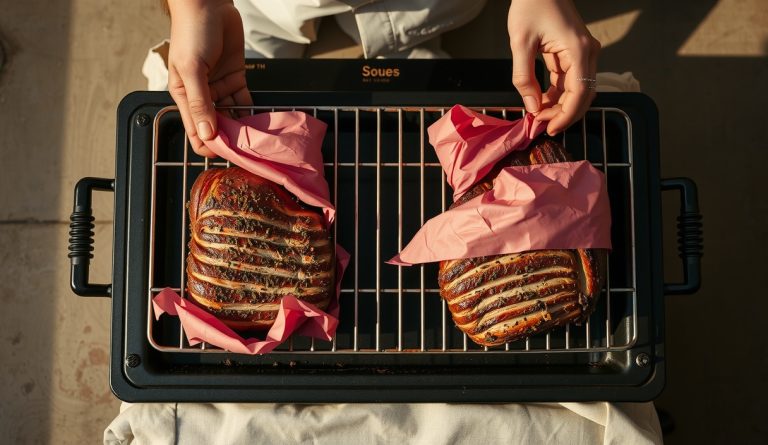
Cook temperature, wrap timing, rest protocol, and the full butcher paper wrap technique are unchanged from the canonical low-sodium brisket. The brisket is still targeted to an internal temperature of 200–205°F at the thickest point of the flat, then rested for a minimum of one hour — unwrapped — before slicing. The low-sodium constraint is fully maintained: the KCl blend replaces NaCl at the same weight ratio used in the base recipe.
When is the Texas Minimalist method the better choice?
Choose this variation when serving guests who want a cleaner, more austere beef-forward profile without herbal or spice interference — or when you are specifically trying to showcase the quality of a prime-grade packer brisket and your smoke source. The minimalist rub also works well for competition practice rounds where isolating and evaluating smoke and meat variables independently of a complex rub is the goal.
- Guests or diners on strict low-sodium diets who want maximum flavor clarity
- Prime-grade packer briskets where beef and fat quality deserve the spotlight
- Practice cooks designed to isolate smoke, fire management, and meat variables
Use the full method, equipment, and base rub weight measurements from the original Low-Sodium Smoked Brisket — Herb-Forward.