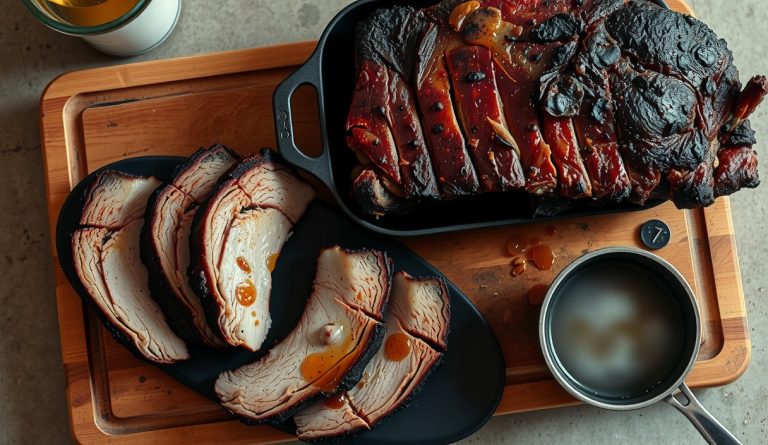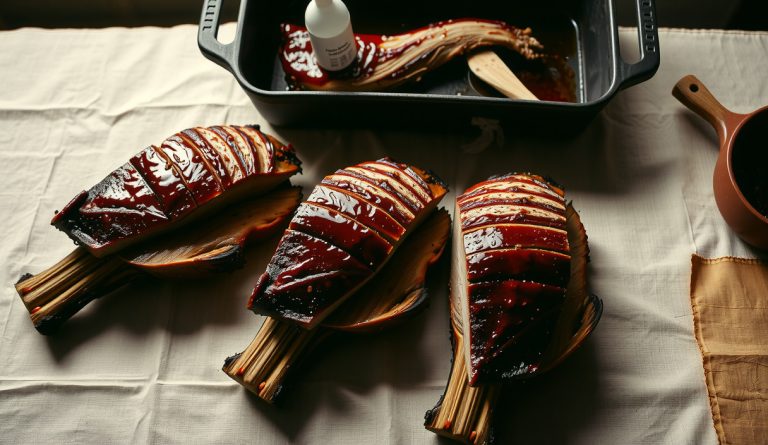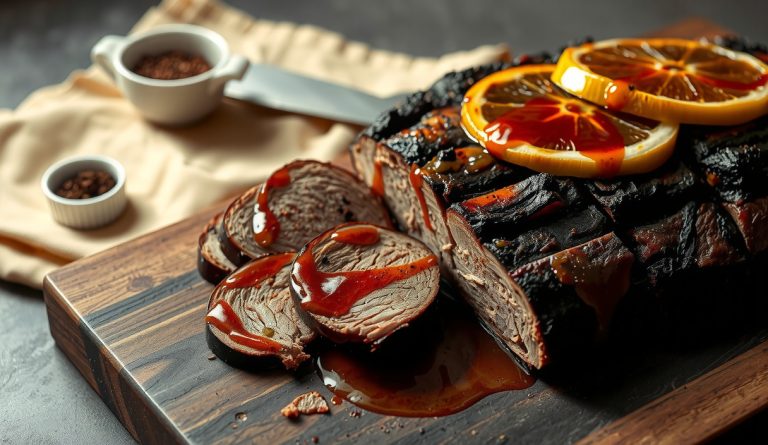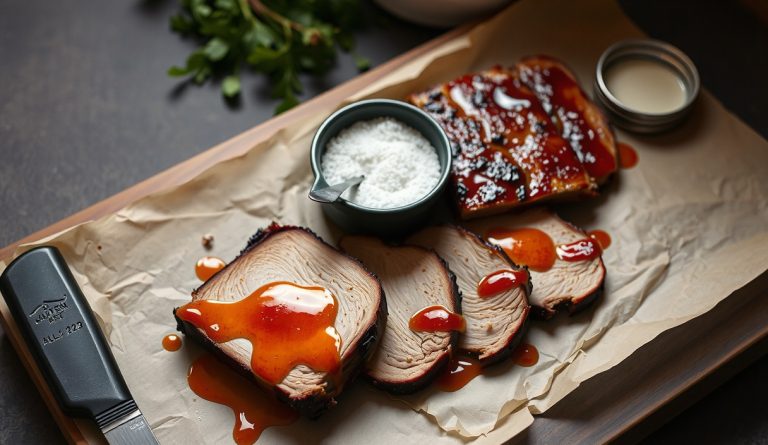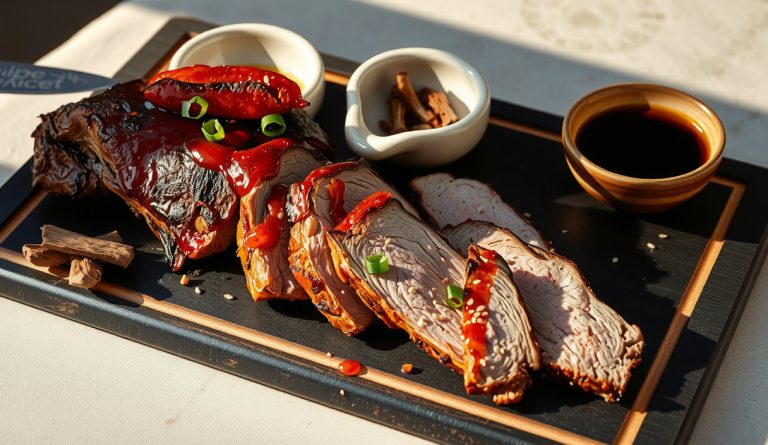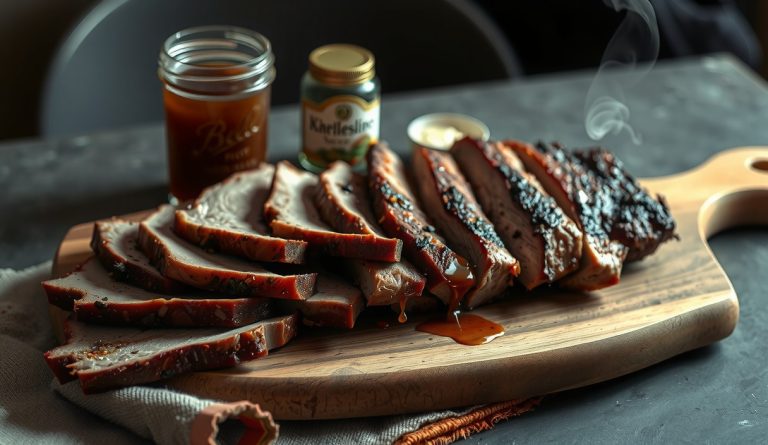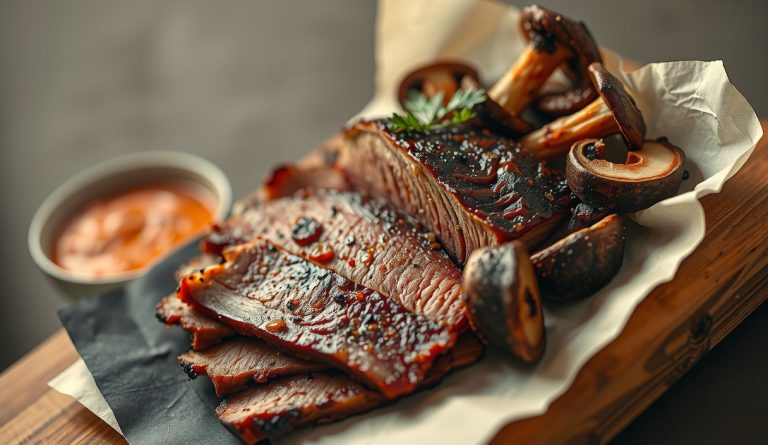
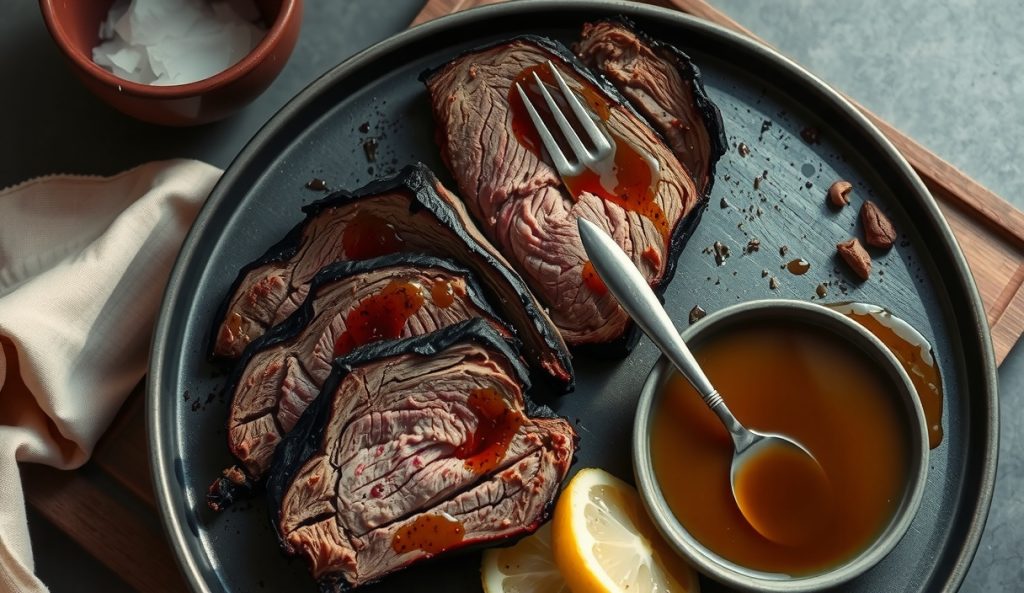
Smoked Brisket with Bone-Broth Glaze occupies a rare and fortunate position among BBQ recipes: its signature technique — reducing bone broth to a viscoelastic gelatin concentrate — requires zero sugar to achieve adhesion or viscosity. The collagen hydrocolloid does the work that corn syrup does in most competition glazes. The keto adaptation is therefore less a dramatic overhaul and more a disciplined audit of the rub and any side components that typically accompany brisket, plus a clear accounting of the few carbohydrate grams that remain.
What needs to change — and why?
The rub — managing residual carbs. A pure salt-and-pepper Texas rub carries essentially zero net carbs. The risk enters with common rub additions: granulated onion contributes roughly 1g net carb per teaspoon, brown sugar is excluded entirely, and paprika adds trace carbs at typical quantities. For this recipe, hold the rub to coarse kosher salt, 16-mesh black pepper, and a measured half-teaspoon of smoked paprika per pound of meat — total rub carbs land under 2g net for a full packer brisket.
If you want caramelized surface sweetness without sugar, a very light dusting of allulose — 1 to 2 tablespoons across the whole brisket — integrates cleanly. Allulose browns and caramelizes via Maillard-adjacent reactions at surface temperatures above 250°F. Erythritol, by contrast, resists browning and can produce a cooling mouthfeel and crystalline texture on a bark surface as it re-solidifies. Monk-fruit/erythritol blends are acceptable in the rub if you accept slightly reduced browning depth.
The bone-broth glaze — already keto, but verify the broth. The canonical reduction produces a glaze whose carbohydrate content derives entirely from trace glycosaminoglycans in the collagen — negligible at under 1g per serving. However, some commercial bone broths add fruit juice, honey, or cane sugar for palatability. Read the label and select a broth with 0g sugar per serving. A homemade 24-hour knuckle-and-foot broth is definitively sugar-free and produces a richer gelatin yield. The reduction ratio and glaze application method require no modification.
The plate — replacing starchy sides. Traditional brisket accompaniments — white bread, potato salad, baked beans, and sweet pickled onions — are the primary carbohydrate load at a BBQ table. Replace the bread slice with butter-lettuce leaves or large endive spears for wrapping. Swap potato salad for a celery-root-and-caper remoulade dressed in full-fat mayo and apple-cider vinegar. Replace baked beans with smoked bacon-wrapped jalapeños or a creamy sautéed cabbage. Dill pickles — not bread-and-butter — add brightness with under 1g net carb per spear. The brisket itself — point and flat combined — runs approximately 0g net carbs and 28–35g fat per 5oz serving, making it structurally ideal for a ketogenic macro split.
Net-carb delta. A canonical serving with a standard sweet rub, commercial glaze, and bread can carry 15–25g net carbs. This adapted plate — clean rub, verified broth glaze, lettuce wrap, dill pickle — sits at 2–4g net carbs per serving, a reduction of roughly 85–90%.
What stays exactly the same — does keto change the cook?
The keto adaptation does not change the smoke protocol in any way. The entire cook — 250°F chamber temperature, oak wood, stall management at 160–170°F, probe-to-203°F finish, 45–60 minute rest, and glaze application onto set bark — is unchanged. Fat renders identically, collagen hydrolysis kinetics are unaffected by rub sugar content, and the gelatin mechanics of glaze adhesion operate the same regardless of sweetener choice. Keto is a macro-accounting decision; the physics of a twelve-hour brisket cook do not care.
When is the keto version the better choice?
When the table includes guests maintaining ketosis, managing blood-glucose response, or simply preferring a savory-dominant brisket with no sweetness competing with the smoke and umami depth of the glaze, this version is arguably truer to the canonical recipe’s design intent than any sugar-forward adaptation would be. The bone-broth glaze was never engineered around sugar — removing sugar reveals the recipe, not diminishes it.
All timing, temperature, and smoke-management details live at the original Smoked Brisket with Bone-Broth Glaze recipe — the science there applies without modification.