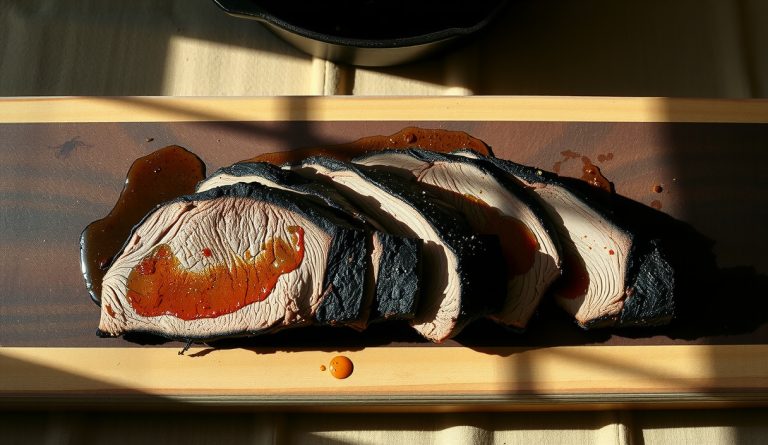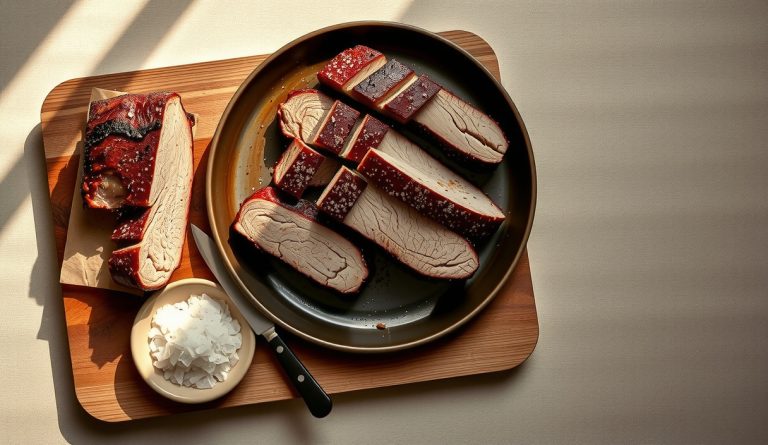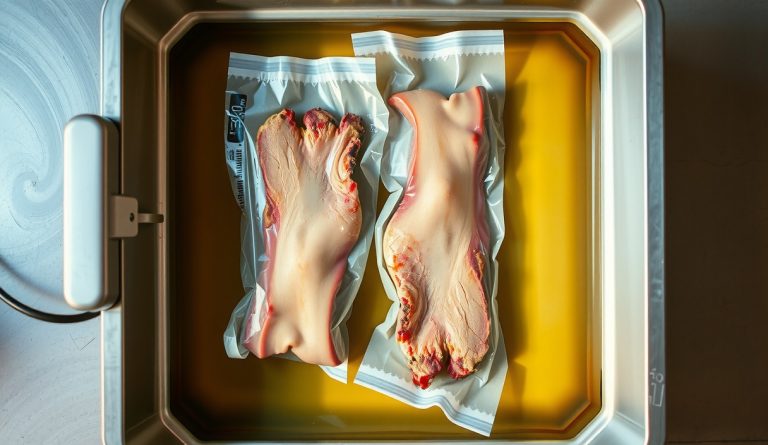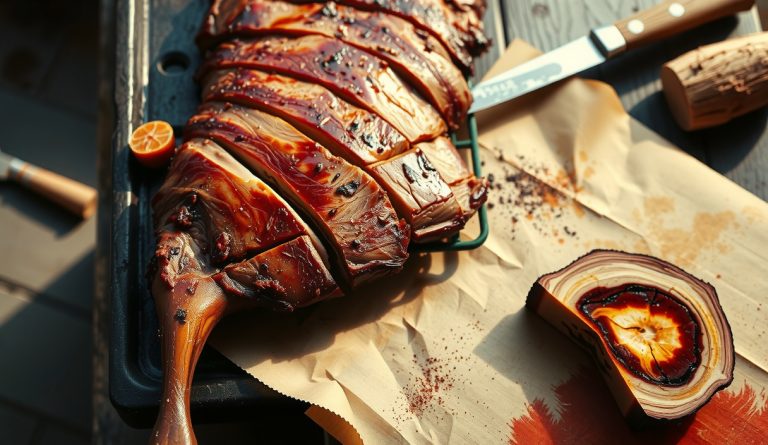
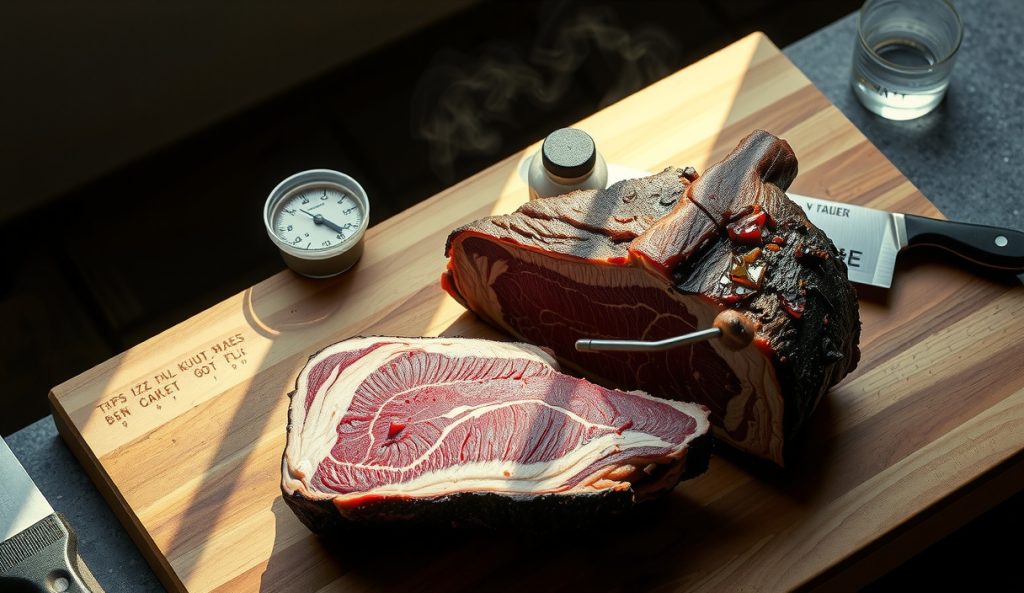
A full packer brisket — flat and point still attached — is a fundamentally different geometry than a trimmed flat. The point is thicker, denser with intramuscular fat, and sits at a different angle in the bag. Applying the canonical flat protocol to a full packer produces a point that is overdone at the edges and a flat that is underdone at its thickest cross-section. Wagyu flats introduce a separate variable: exceptionally high intramuscular fat that responds to temperature differently than commodity USDA Choice beef.
What changes when you cook a full packer or Wagyu brisket?
For a full packer brisket, raise the sous vide bath to 155°F and extend the hold to 36 hours. The increased time is required because the flat’s thicker sections — particularly where the flat transitions into the point — need more sustained heat to drive complete collagen hydrolysis uniformly throughout the cut. Collagen-to-gelatin conversion follows first-order kinetics: at a fixed temperature the rate is constant, so thicker geometry simply requires more clock time to reach the same degree of hydrolysis. The point, with its higher intramuscular fat content, is more forgiving of the extended window and will not suffer from the additional hours the flat requires.
For Wagyu specifically — whether a flat or a full packer — the dense marbling means the brisket interior can approach a butter-soft texture at 155°F that some tasters find too yielding for sliced service. For a firmer, more traditionally structured slice, raise the bath temperature to 158°F and reduce the hold to 24 hours. The higher temperature accelerates collagen hydrolysis while the shorter window limits the degree of fat liquefaction, producing a slice that holds its shape on the cutting board without sacrificing Wagyu’s characteristic richness.
What stays the same between the standard flat and these variations?
The sear protocol, rub formula, and resting logic carry over from the base recipe without modification. Whether finishing a full packer or a Wagyu flat, the cast-iron sear still runs hot, fast, and fat-cap-down first. The goal — a lacquered bark over a yielding interior — does not change with the cut or the fat grade.
When is the packer or Wagyu variation the better choice?
Choose this variation when sourcing a full packer brisket for a large event and you do not want to break the primal down before cooking, or when you have invested in Wagyu and want bath parameters matched to its fat profile rather than applying commodity-beef defaults. This approach is also the right call when you want to serve both point and flat from a single cook and need both sections to arrive at optimal texture simultaneously.
Use the full method, equipment, and rub measurements from the original Sous Vide Then Seared Brisket Flat.