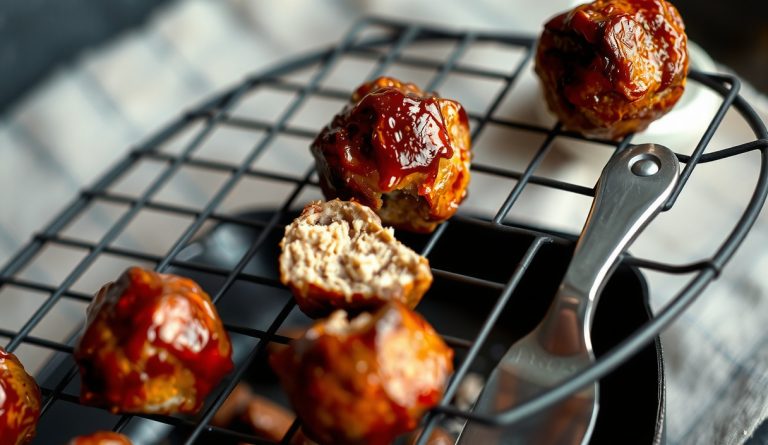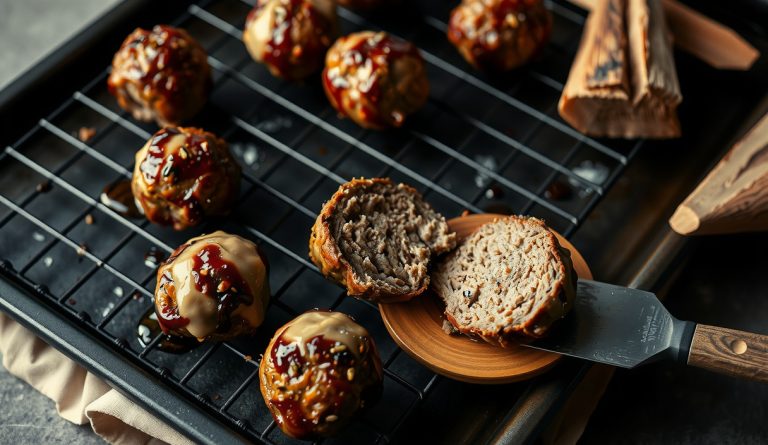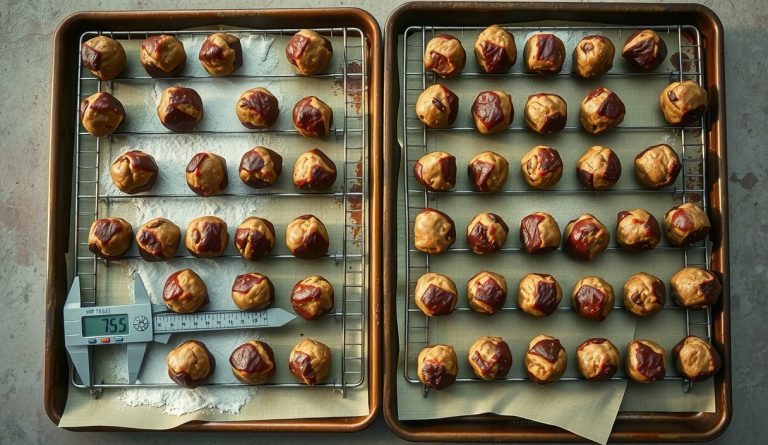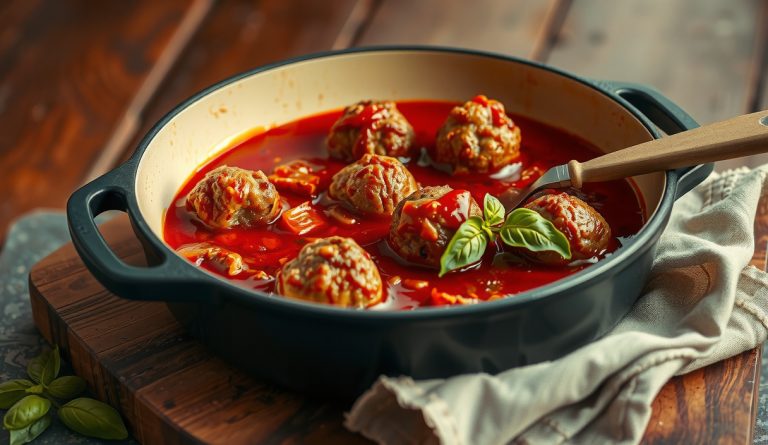
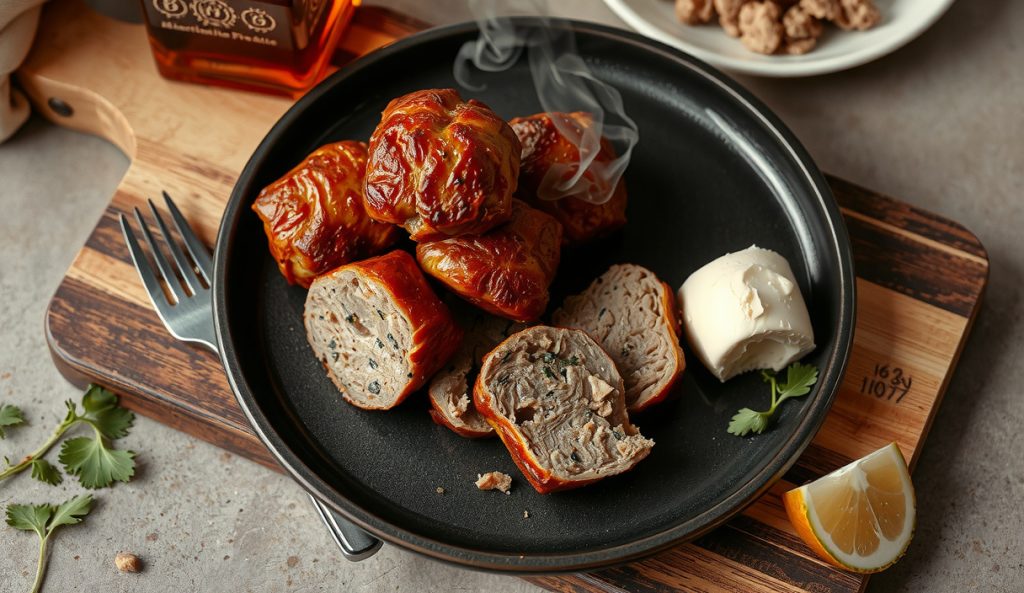
The parmesan in the canonical smoked meatball recipe does two things simultaneously: it contributes free glutamates for umami depth and introduces whey proteins that tighten the meatball’s crumb through thermal cross-linking at 158–163°F. Removing parmesan without a considered swap produces a noticeably looser, flatter-tasting meatball. This dairy-free variation replaces that single ingredient with two components that cover both functions independently — nutritional yeast for glutamate load and Maillard activity, white miso for ionic strength and secondary umami.
What changes in the dairy-free build?
Substitute the parmesan with 2 tablespoons of nutritional yeast and 1 teaspoon of white miso paste. Nutritional yeast carries a dense free-glutamate load and an amino acid profile — particularly lysine and arginine — that participates actively in Maillard browning during the smoke phase. The surface flavor development produced by parmesan’s browned milk proteins is largely replicated through this different biochemical pathway, delivering comparable crust character without any dairy.
The white miso contributes ionic strength, effectively functioning as a calibrated salt source, and adds a secondary umami layer through glutamate-IMP synergy: the miso’s glutamates pair with the naturally occurring inosinate in ground beef to produce a flavor intensity that exceeds either compound alone. The combined effect of nutritional yeast and white miso closely mirrors the dual role parmesan plays in the original formula.
Expect a very slightly softer crumb in the finished dairy-free meatball. Whey proteins begin denaturing around 158–163°F and form a secondary structural network inside the mix; without them, the rice starch gel and egg protein carry the full structural load. The difference is subtle at the target internal temperature of 160°F but becomes more noticeable if the meatballs are held hot for extended periods. Pull them promptly and rest for five minutes before serving.
What stays the same as the original recipe?
Everything else in the canonical smoked meatball build remains unchanged: the rice flour percentage, the egg binder ratio, the 225°F smoke temperature, the 160°F pull target, and the apple wood selection. The mixing technique — combining wet and dry ingredients separately before a single gentle fold — still applies and is especially important in this dairy-free version, since overworking a mix without the whey-protein buffer increases toughening risk significantly.
When is the dairy-free variation the better choice?
This dairy-free variation is the clear call when serving guests with dairy allergies or lactose intolerance, or when building a recipe that needs to be fully vegan-adjacent — swap the egg binder separately for a flax egg if needed. The miso-yeast combination also works well for cooks who find aged parmesan too sharp in smoke applications: the flavor profile reads as rounder and less assertive, which is an advantage when the meatballs are destined for a bold tomato sauce or a heavily seasoned braise.
Use the full method, equipment, and rub measurements from the original Gluten-Free Smoked Meatballs — Rice-Flour Binder.