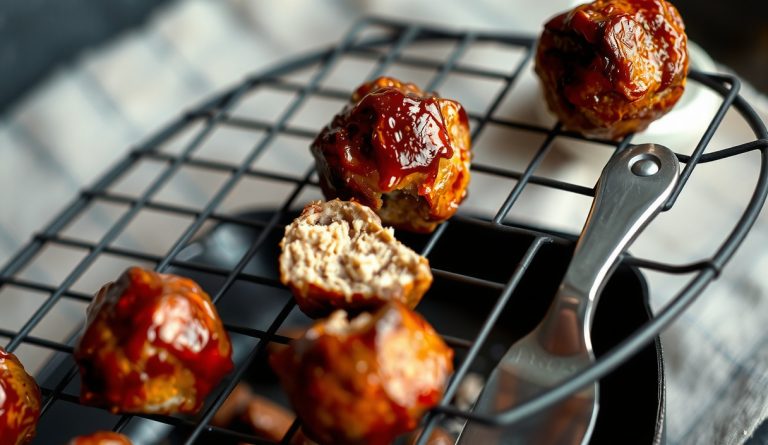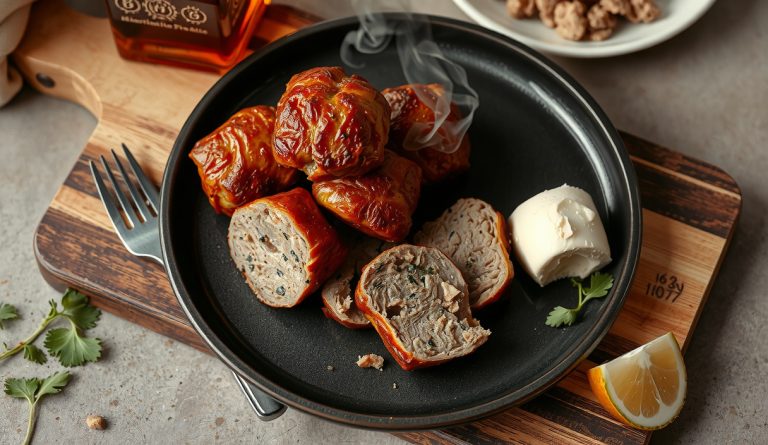
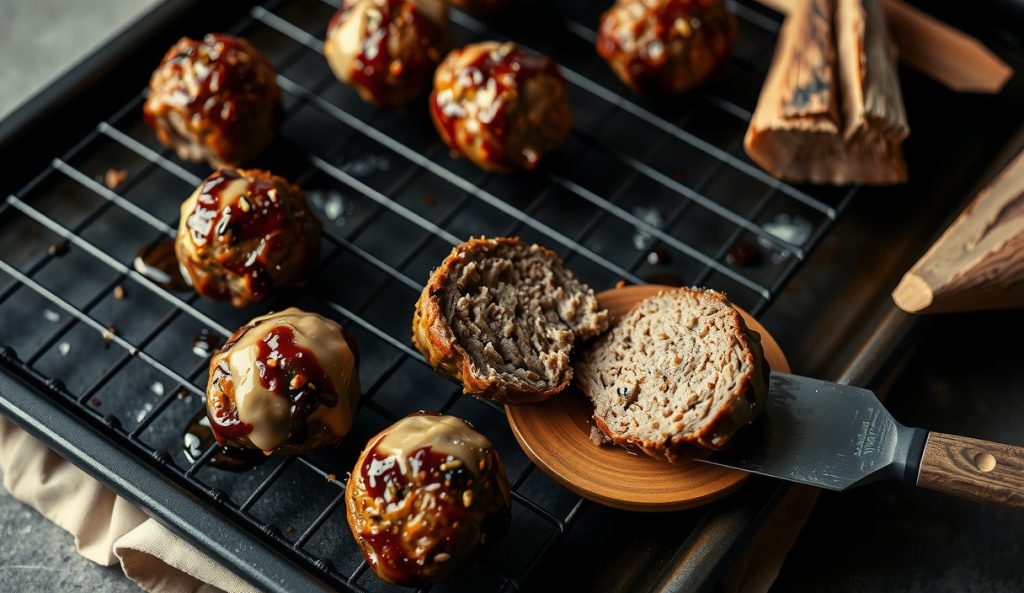
Apple wood is the canonical smoke source for gluten-free smoked meatballs because its low guaiacol output produces a mild, background smoke character that doesn’t compete with the parmesan and herb notes in the mix. A 50/50 hickory-cherry blend is the most controllable route to a forward, assertive, bacon-like smoke profile when that is the flavor goal.
What changes when you switch to hickory-cherry smoke?
Replace the apple wood entirely with equal parts hickory and cherry chunks or chips. Hickory combustion produces significantly higher guaiacol concentrations at the meat surface — guaiacol is the primary phenolic compound responsible for the deep, smoky, cured-meat aroma most people associate with American barbecue. At the right dose, guaiacol signals bacon and brisket; at too high a dose, or when white smoke replaces thin blue smoke, guaiacol tips into acrid bitterness.
Cherry wood moderates this outcome in two ways: its slightly higher sugar content contributes a mild sweetness that provides sensory contrast to guaiacol’s sharp edge, and its lower burn temperature relative to hickory helps regulate the combined combustion rate so the smoke stays thin and blue rather than billowing white. The 50/50 ratio gives the cook meaningful control over smoke intensity without sacrificing the bacon-like character hickory delivers.
Monitor the firebox or chip tray more actively than you would with apple wood. Hickory is a denser hardwood and burns hotter; if hickory transitions to white smoke — which carries incomplete combustion products including creosote — the bitterness registers immediately on the meatball’s surface. Keep chamber temperature at 225°F and manage airflow continuously to maintain steady thin blue smoke throughout the cook.
What stays the same with the hickory-cherry variation?
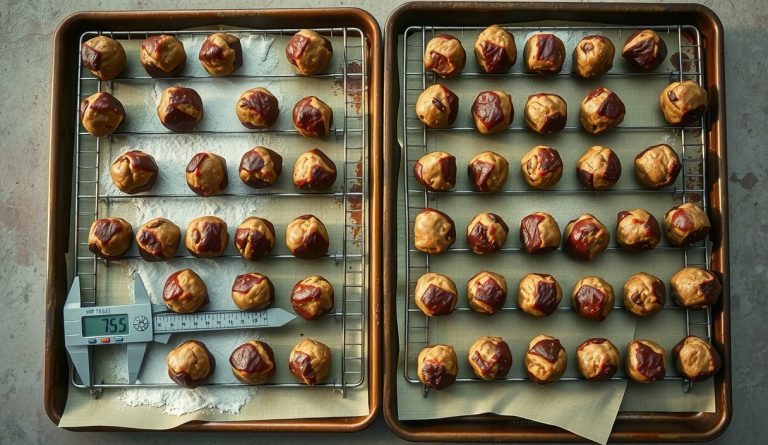
The cook temperature (225°F), target internal temperature (160°F), meatball diameter (1.75 inches), and every element of the mix formulation remain unchanged from the canonical method. The only variable is the smoke source; the thermal environment the meatballs experience is identical. No timing adjustments or rub changes are required.
When is the hickory-cherry blend the better choice?
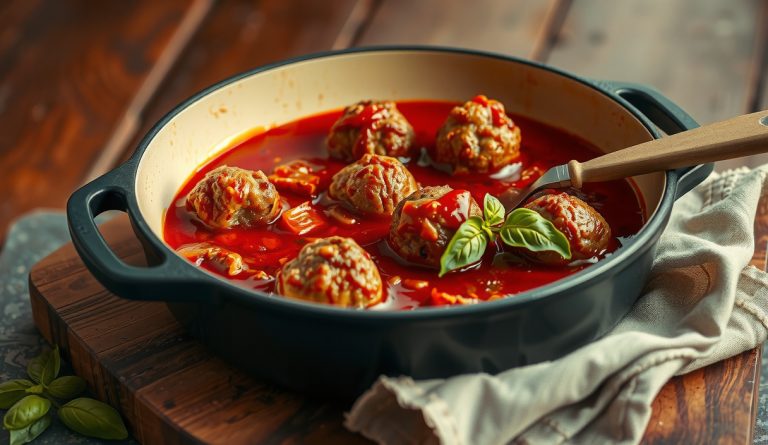
Choose this variation when serving the meatballs as a standalone appetizer or in a context where smoke is the primary flavor story — a charcuterie board presentation, a beer pairing, or alongside a simple crusty bread where the smoke character needs to carry the dish. The elevated guaiacol load makes this variation less suited to finishing in a delicate cream sauce, where guaiacol can dominate; the hickory-cherry meatballs pair better with robust tomato-based or brown sauces that have the intensity to stand next to them.
Use the full method, equipment, and rub measurements from the original Gluten-Free Smoked Meatballs — Rice-Flour Binder.