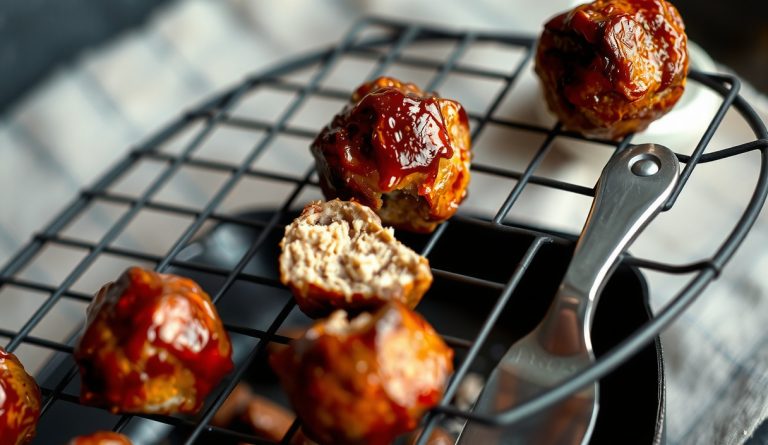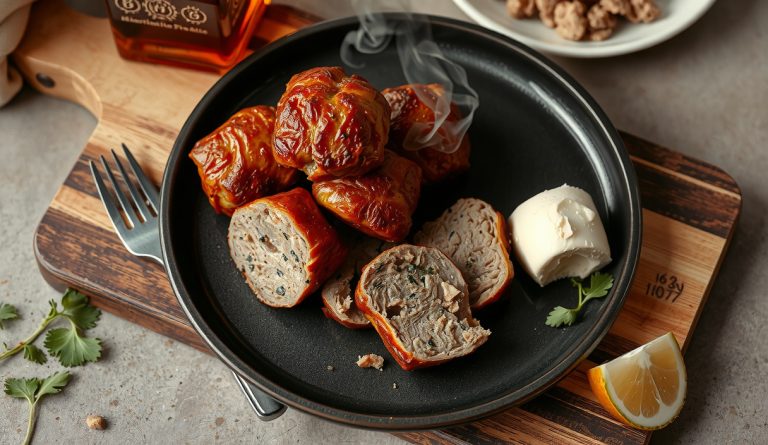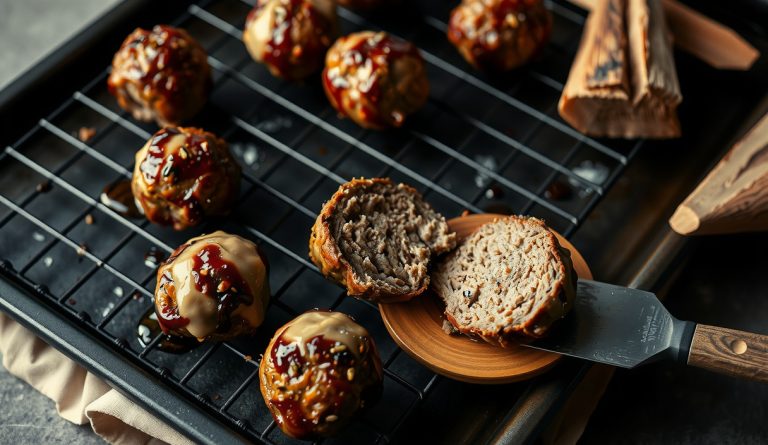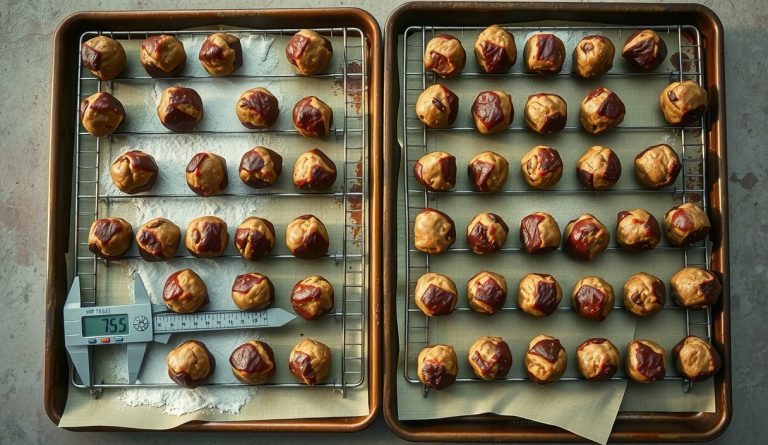
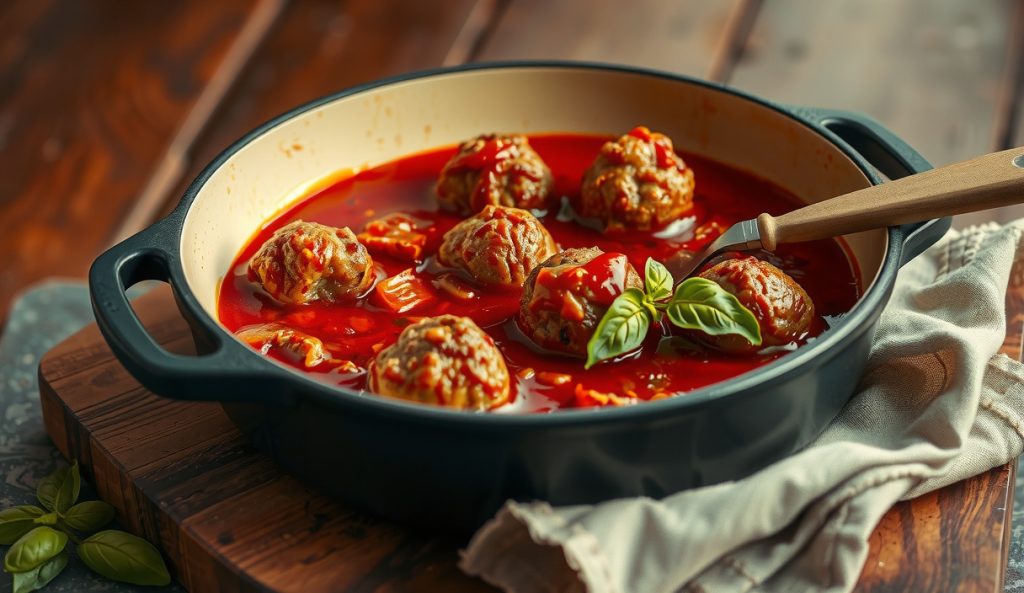
The canonical smoked meatball recipe produces a defined surface bark and a structured interior — satisfying on their own or finished in a light sauce. This sauce-braised variation adds a deliberate second cooking stage: a 20-minute braise in tomato sauce immediately after the full smoke. The result is a fundamentally different textural register — the exterior softens into the sauce, the interior grows silkier, and the smoke flavor integrates throughout the dish rather than sitting on the surface.
What changes when you add the braise?
Once the meatballs reach 160°F internal on the smoker, transfer them immediately to a tomato sauce held at a gentle 185°F and braise for 20 minutes. Tomato sauce at standard concentration sits at approximately pH 4.2 — acidic enough to begin hydrolyzing the surface proteins and loosening the bark’s crust, but not so acidic that it destabilizes the meatball body’s structure. The collagen in the ground chuck’s connective tissue, which has already begun unwinding during the smoke phase, continues hydrolyzing during the braise; at 185°F over 20 minutes, enough conversion to gelatin occurs to produce a noticeably more unctuous mouthfeel throughout the finished meatball.
A key structural advantage of the rice flour binder becomes critically relevant during the braise: rice starch gels are acid-stable at pH values down to approximately 3.5, well below the tomato sauce environment of pH 4.2. The moisture-trapping network formed during the smoke phase remains fully intact through the braise, meaning the meatballs hold their moisture and do not turn waterlogged or pasty even as the sauce penetrates the loosened surface. This is a meaningful difference from wheat-flour binders, whose gluten networks begin to weaken under sustained acidic heat — making the gluten-free formulation technically superior for this specific technique.
What stays the same in this variation?
The full smoke phase is not abbreviated in the sauce-braised variation — every meatball must reach 160°F internal before transferring to the braise. The mix formulation, smoke temperature, and wood selection carry over unchanged from the canonical recipe. The 20-minute braise is an addition layered on top of the primary cook, not a replacement for any part of it.
When is the sauce-braised finish the better choice?
The sauce-braised finish is the right call for a Sunday supper or any occasion where the meatballs are being served over pasta or polenta as a plated main course. Braising integrates the smoke into the sauce so the overall dish tastes composed rather than assembled — two separately cooked components becoming one coherent flavor. This approach is also a practical technique for batch cooking: meatballs smoked ahead of time can be held in the sauce at low temperature and served when ready, improving with the extra time in the braise rather than degrading.
Use the full method, equipment, and rub measurements from the original Gluten-Free Smoked Meatballs — Rice-Flour Binder.