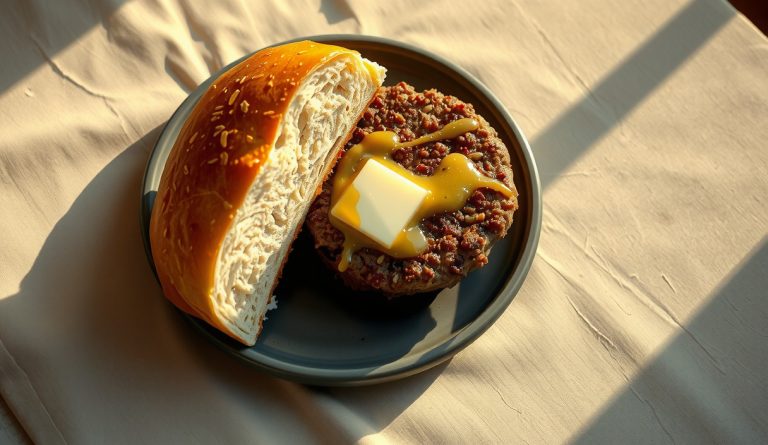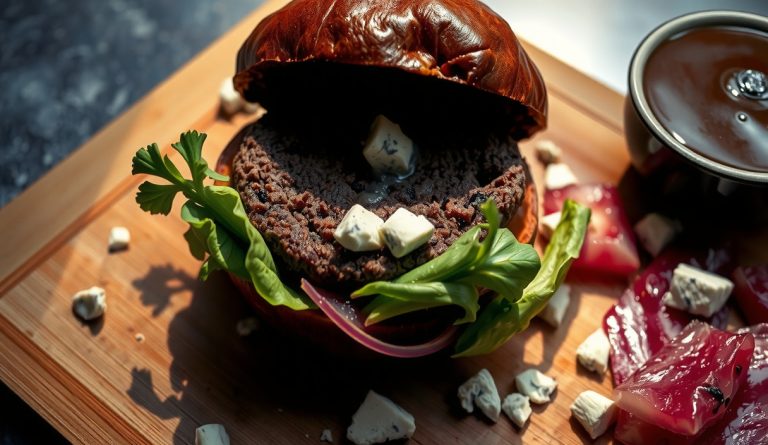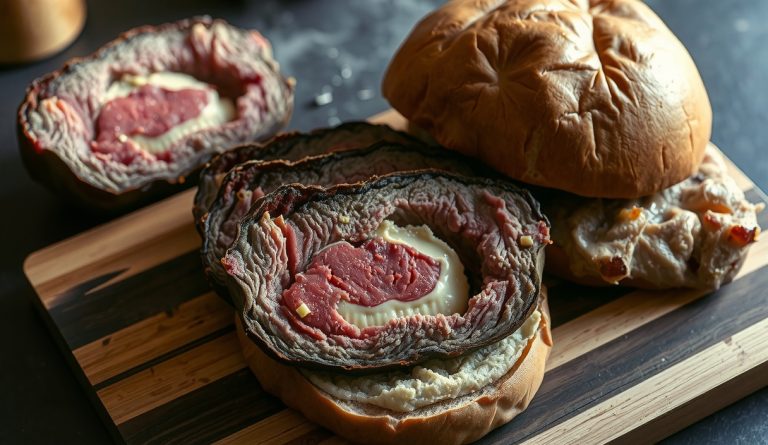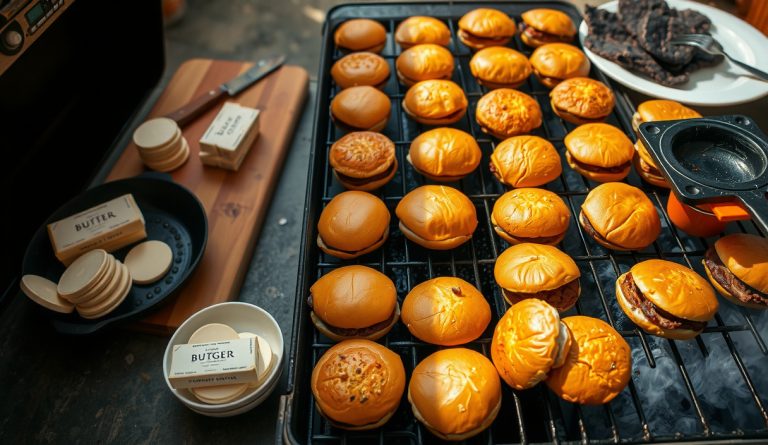
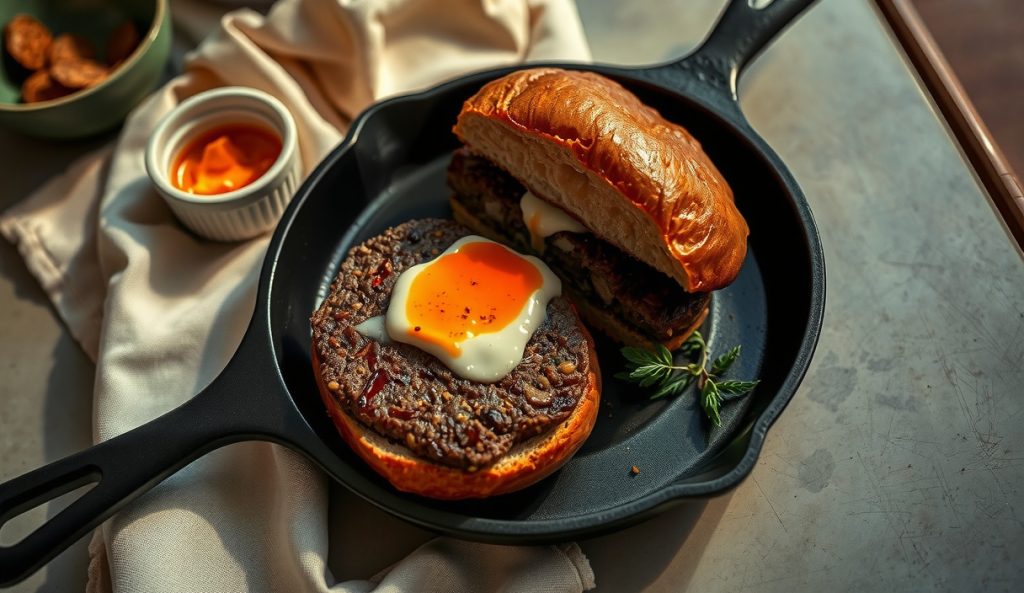
Texas barbecue operates on a narrow, confident flavor palette: beef-forward, smoke-dominant, with warm dried-chile heat rather than vinegar or sweetness. Translating that register into the compound-butter center of a smoked burger means replacing the herb-forward canonical butter with a spice-built alternative engineered to match — not contrast with — the intensity of hickory or post oak smoke.
What changes from the original smoked burger recipe?
Build the Texas compound butter from softened unsalted butter combined with ground cumin, smoked paprika, ancho chile powder, and a small measure of brown sugar. The cumin and ancho contribute fat-soluble aromatic compounds — primarily terpenoids and capsaicinoids — that distribute through the molten butter and permeate the patty interior as the disc melts during the sear.
The brown sugar serves both a flavoring and a functional role: sucrose begins caramelizing around 320 °F, and the trace amount introduced via the melting butter encourages a slightly deeper fond on the cast-iron surface during the final sear, reinforcing the smoked crust rather than fighting it.
Switch your smoke wood to hickory or post oak. Both species produce smoke with higher concentrations of guaiacol and syringol compounds that read as bold and resinous — the same character found in Central and East Texas brisket. Fruit woods used in the canonical herb-butter version are too mild to stand alongside ancho and cumin at cooking temperatures.
In the final 30 seconds of the sear, lay a slice of sharp cheddar over the patty and cover with a basting dome to melt it quickly without extending cook time. Sharp cheddar’s lactic-acid sharpness cuts through the fat-rich spiced butter and keeps the overall flavor profile from reading heavy or one-dimensional.
What stays exactly the same as the base recipe?
The 80/20 chuck blend, the disc-forming technique, smoke temperature, pull temperature, and cast-iron sear method are all unchanged from the original. The pocket geometry and sealing process remain identical — the only variables being what goes inside the disc and which wood goes into the firebox.
When is the Texas spiced-butter variation the better choice?
Choose this variation when building a menu around Texas barbecue flavor — alongside smoked beans, pickles, and white bread — or when cooking for guests who find the herb-butter version too delicate relative to heavy smoke. The Texas variation is also the natural call when hickory or post oak is already loaded in the smoker for a concurrent brisket or rib cook.
Use the full method, equipment, and disc-forming measurements from the original Smoked Burger with Compound-Butter Center.