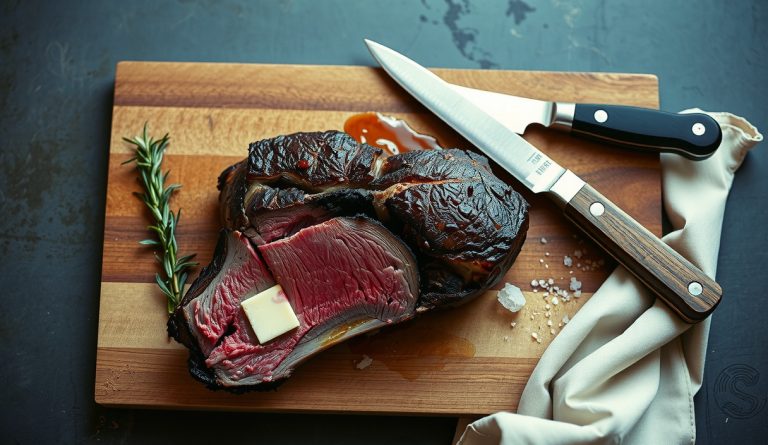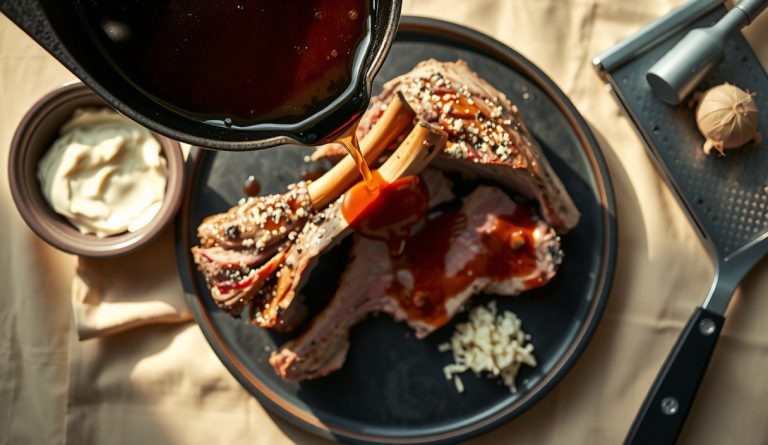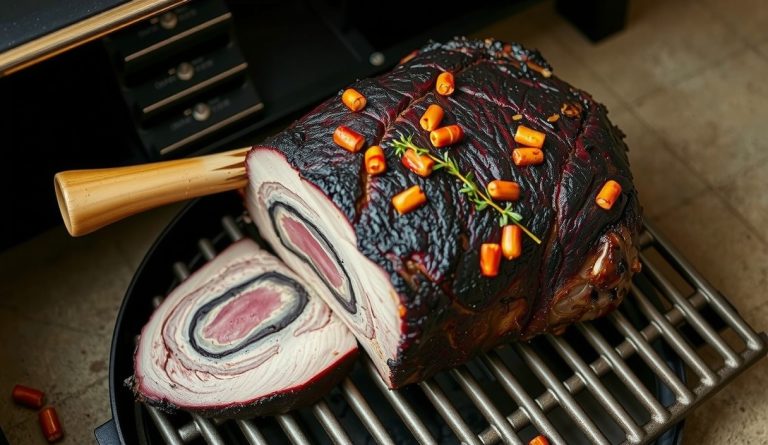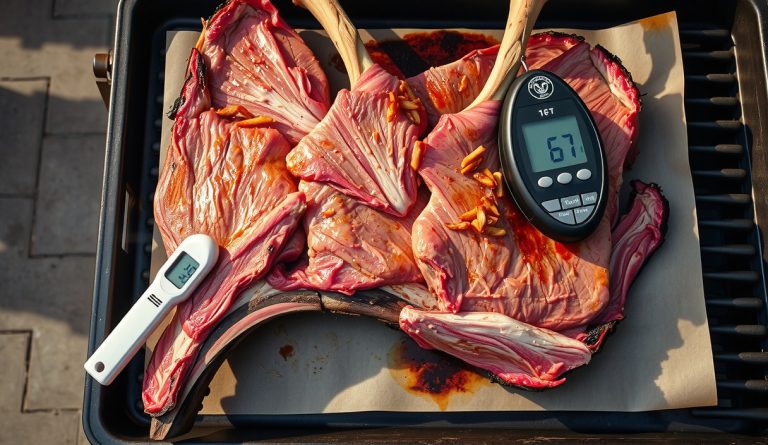
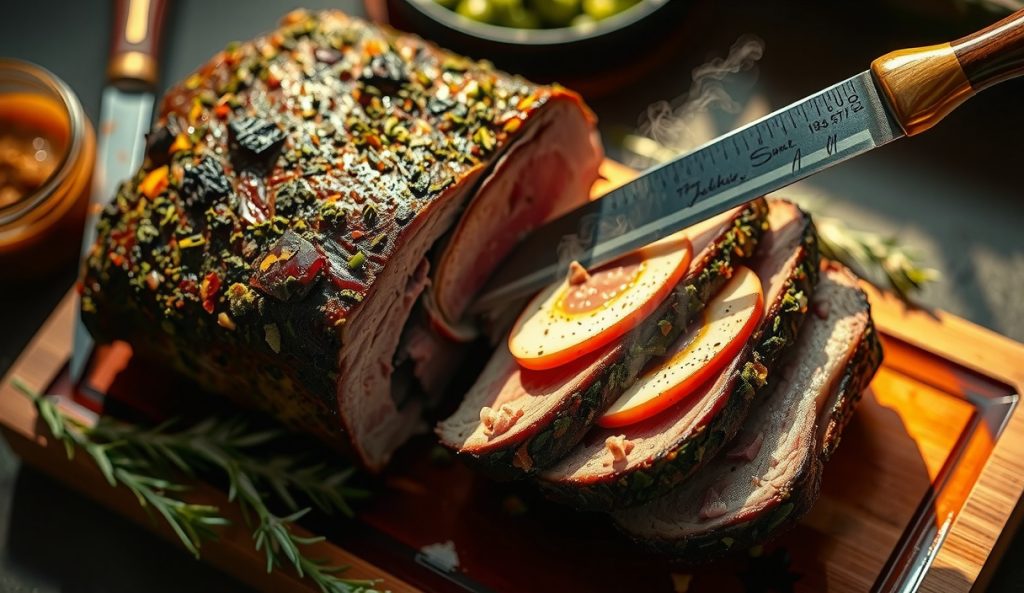
The herb-crusted smoked prime rib builds on the canonical method by layering a wet herb paste over the dry brine, transforming the exterior into a mahogany bark studded with charred rosemary, thyme, and garlic — the visual and aromatic signature of a French-inflected roast delivered through a barbecue process. The result functions simultaneously as a pit roast and a Sunday centerpiece, legible to both barbecue enthusiasts and classically-minded dinner guests.
The paste goes on after the dry brine period has concluded and the surface of the meat is tacky but not wet. Applying the paste to a dry, slightly sticky surface maximizes adhesion before the roast enters the smoker, ensuring the herb layer stays in place through the low-temperature smoke phase.
What changes when you add the herb crust?
Combine finely chopped fresh rosemary, fresh thyme, minced or microplaned garlic, coarse-cracked black pepper, and whole-grain or smooth Dijon mustard into a spreadable paste. The mustard performs two distinct functions: its emulsified oil-water structure anchors fat-soluble herb compounds to the meat surface so they do not slide off during the initial low-temperature smoke phase, and its acidity contributes a faint tang that integrates into the bark as surface moisture drives off.
The allyl isothiocyanates responsible for mustard’s sharpness largely volatilize under heat, so the pungency mellows substantially by the time the crust sets. At the 500°F reverse sear, the garlic and herb solids char at the surface — not to bitterness when the paste layer is thin, but to a toasty, slightly caramelized note that compounds the smoke flavor already present in the roast.
Omit the garlic powder from the base rub in this variation. Fresh garlic in the paste provides more than sufficient allium presence, and stacking dried garlic powder with fresh garlic can push the balance toward harsh after a full sear at 500°F.
What stays the same as the canonical method?
The dry brine timeline, smoker temperature, internal pull temperature, and reverse-sear sequence are all unchanged from the base recipe. The herb paste sits on top of the rub layer and does not affect heat transfer meaningfully at the thicknesses involved. Carry-over behavior, resting time, and slicing approach remain identical to the canonical smoked prime rib method.
When is the herb-crusted variation the better choice?
This variation is the stronger choice when guests appreciate the visual and aromatic drama of a French-style herb crust but still expect the smoke character of a pit roast. The herb-crusted exterior photographs well and signals preparation effort before a single slice is taken, making it well-suited to holiday presentations where the roast is carved tableside.
If the table includes guests unfamiliar with pronounced smoke flavor, the herbal complexity softens the perception of smokiness without reducing the actual smoke concentration in the meat. The crust mediates the sensory experience at the surface without altering the interior smoke ring or flavor penetration.
Use the full method, equipment, and rub measurements from the original Smoked Prime Rib — Bone-In, substituting this paste for the garlic powder component.