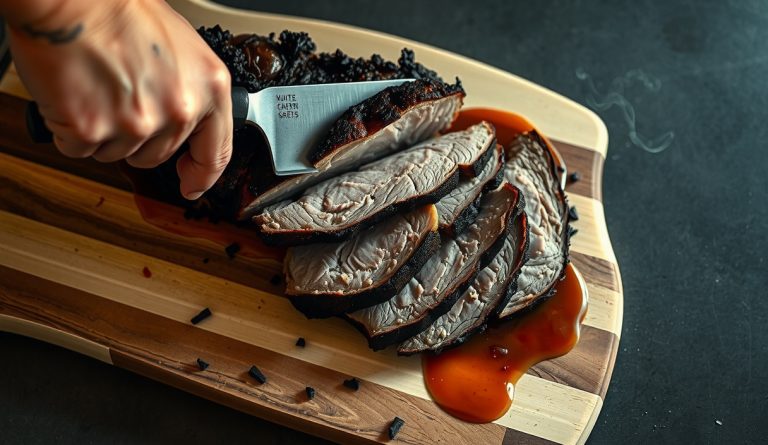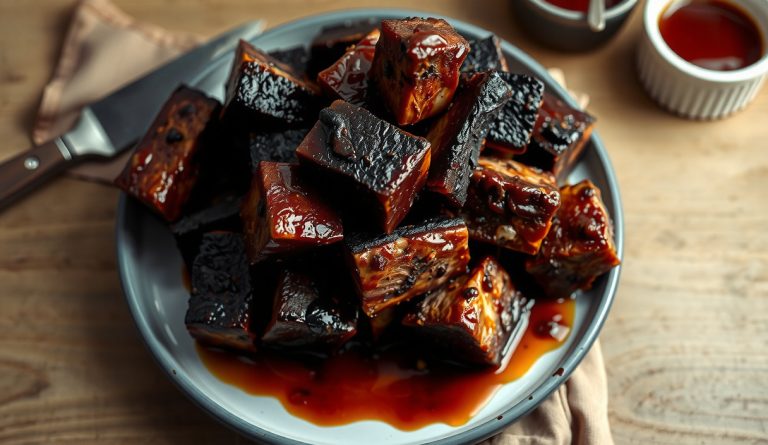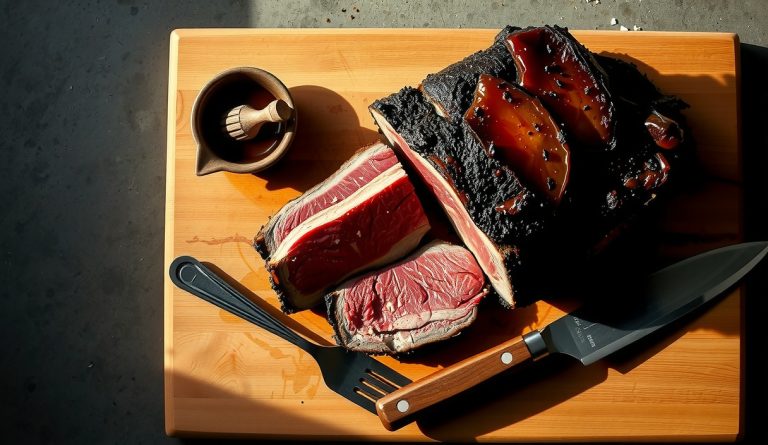
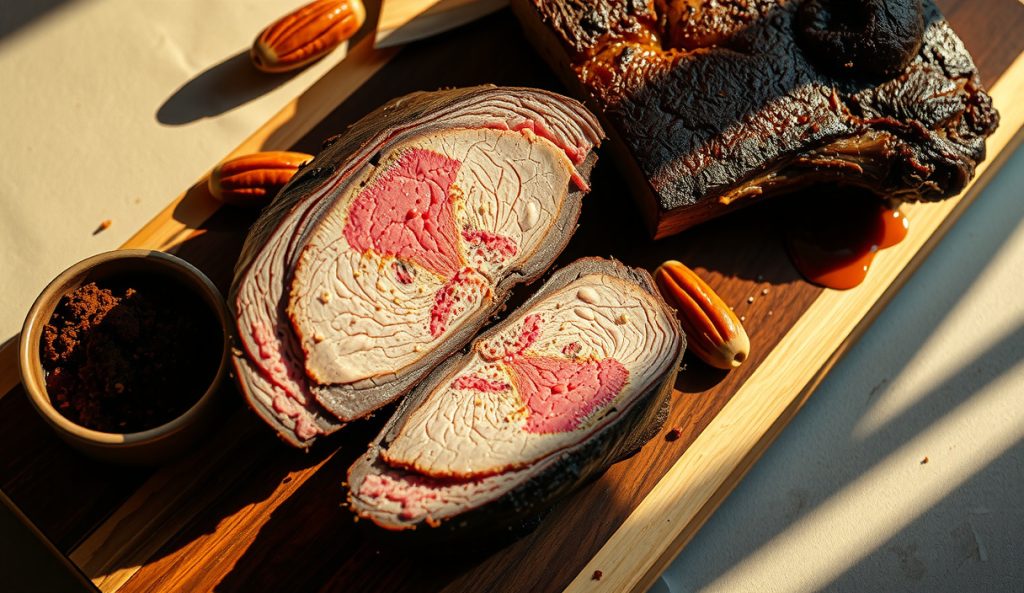
This Coffee-Chili Bark variation pushes bark intensity further than the canonical rub by enlisting two ingredients that contribute both flavor and accelerated surface browning chemistry. The result is a darker, more complex crust with a subtle bitterness that cuts through chuck roast’s rich intramuscular fat. The variation reads as sophisticated without being difficult to execute — just two additional ingredients measured by the teaspoon.
If you want a bark that commands attention before anyone takes a bite, the Coffee-Chili variation is the direction to go.
What changes in the Coffee-Chili Bark rub?
Add 1 tablespoon of finely ground espresso and 1 teaspoon of ancho chili powder per 3 pounds of meat to the canonical base rub, mixed dry before applying. The espresso contributes meaningfully beyond flavor: the chlorogenic acids and melanoidin precursors concentrated in dark-roasted coffee are highly reactive with surface amino groups on the meat, effectively expanding the pool of Maillard reactants available at the bark surface. In practical terms, you will see a darker crust develop somewhat earlier and more uniformly than with the base rub alone.
Ancho chili powder is a dried poblano derivative with a Scoville range of roughly 1,000–1,500 SHU — well below the threshold for perceptible heat at this quantity — but it contributes dried fruit, tobacco, and mild earthiness that integrates cleanly with beef fat. Do not substitute a hot chili powder blend; the intent here is complexity, not capsaicin burn.
For smoke wood, cherry or pecan is strongly recommended with this rub. Both carry a natural sweetness that harmonizes with the coffee’s bitterness; heavier woods like hickory or mesquite can tip the flavor profile into harsh territory when combined with this rub.
What stays the same from the base recipe?
The application method, cook temperature, wrap protocol, and pull temperature are identical to the canonical Smoked Chuck Roast recipe. The Coffee-Chili additions affect surface chemistry and flavor only — they do not alter the collagen hydrolysis timeline or the internal texture development of the roast.
When is the Coffee-Chili Bark variation the better choice?
This variation performs best when serving an audience that expects bold, layered bark flavor — competition-style presentations, backyard events where the crust gets evaluated before the slice does, or pairings with lighter smoke woods that might otherwise produce a bark that reads as understated. The Coffee-Chili Bark is also well suited to flat cuts where the bark-to-interior ratio is relatively high and the crust carries more of the eating experience per bite.
Use the full method, equipment, and base rub measurements from the original Smoked Chuck Roast — Poor-Man’s Brisket.