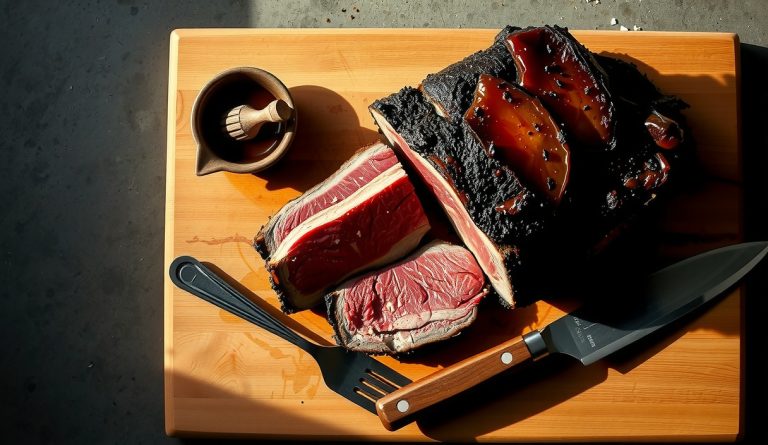
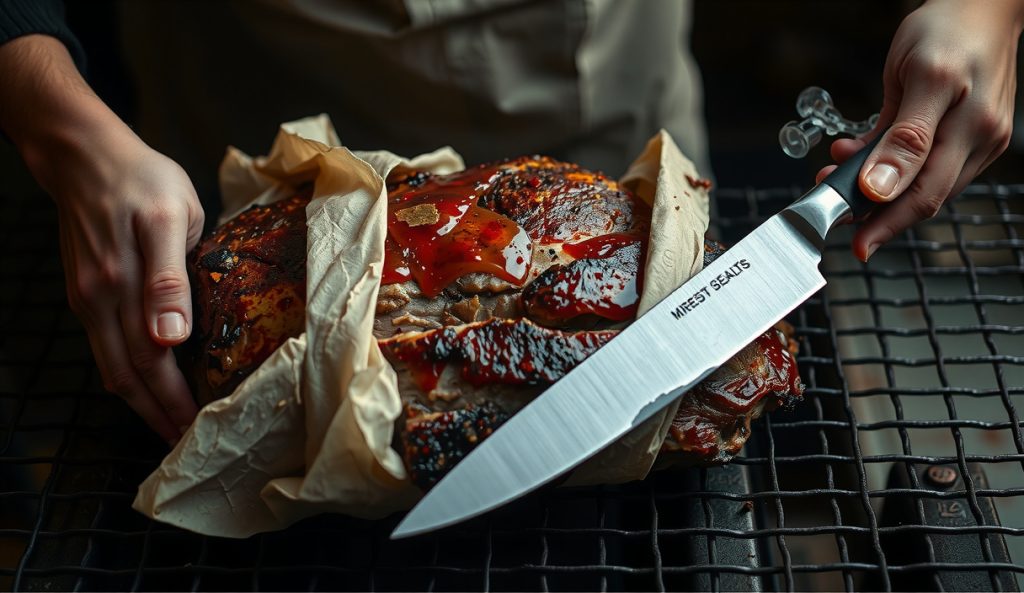
The canonical Smoked Chuck Roast is written around a 3-pound cut — a practical size for most households. When you move to a 4- or 5-pound chuck roast, the cook scales predictably with mass. There is no new technique to learn, no revised rub formula, and no different temperature target. The primary adjustment is time, and the secondary adjustment is wrap integrity.
This variation is for cooks feeding a larger group, or for anyone who wants additional yield for burnt ends, sandwiches, or week-ahead meal prep without running two separate cooks.
What changes when you cook a larger chuck roast?
Total cook time at 225°F increases to approximately 9 to 11 hours for a 5-pound chuck roast. The physics is straightforward: thermal energy must penetrate a greater cross-sectional distance to raise the geometric center of the roast to the collagen-conversion range — roughly 160–205°F sustained — and the mass of connective tissue requiring hydrolysis is proportionally larger.
The rate-limiting chemistry — collagen converting to gelatin at approximately 160–180°F over time — is not fundamentally altered by the size change. Wrap trigger temperature (165–170°F internal) and pull temperature (203–207°F internal) remain identical to the canonical recipe. Rub ratios scale linearly with weight.
The one structural adjustment that matters for the larger chuck roast is wrap integrity: double-layer the butcher paper when wrapping. A longer braise phase means the paper absorbs more moisture and rendered fat over a greater duration. A single layer on a large chuck carries a meaningful risk of compromising the wrap seal in the final hours, which disrupts the retained-moisture environment that finishes the cook.
What stays exactly the same on the larger cut?
Pit temperature, all trigger and pull temperatures, rub application method, rest duration and technique, and the overall two-phase structure of the cook — unwrapped smoke phase followed by wrapped braise phase — are identical to the canonical 3-pound recipe. Scale the rub quantity up proportionally to weight and proceed exactly as written.
When is the 4- to 5-pound chuck roast the better choice?
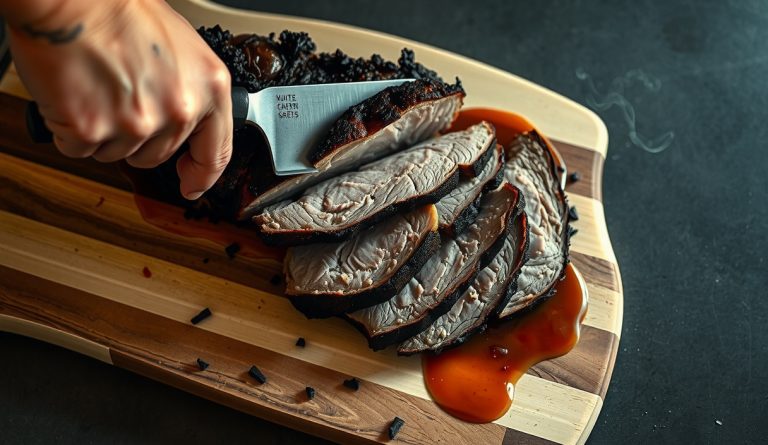
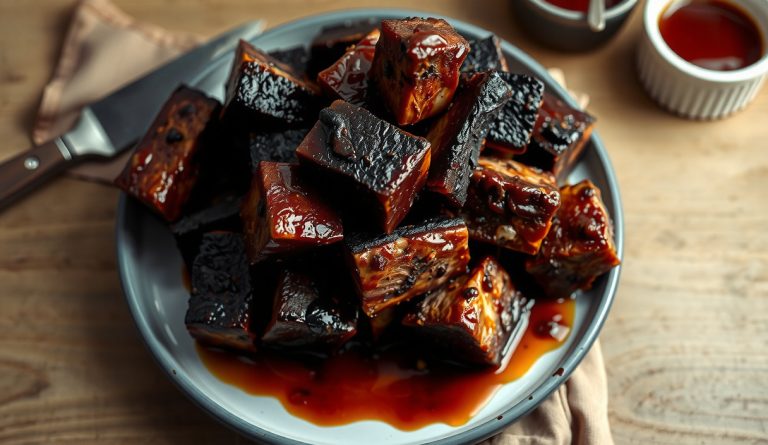
Choose this variation when feeding 6 or more people from a single roast, or when you intend to reserve a portion for burnt ends after the primary serve. A 5-pound chuck roast yields enough finished meat that both uses are viable from one cook — the front half of the roast sliced for service and the remainder cubed for the additional smoke pass.
Use the full method, equipment, and rub measurements from the original Smoked Chuck Roast — Poor-Man’s Brisket, scaling rub quantities to match the increased weight.