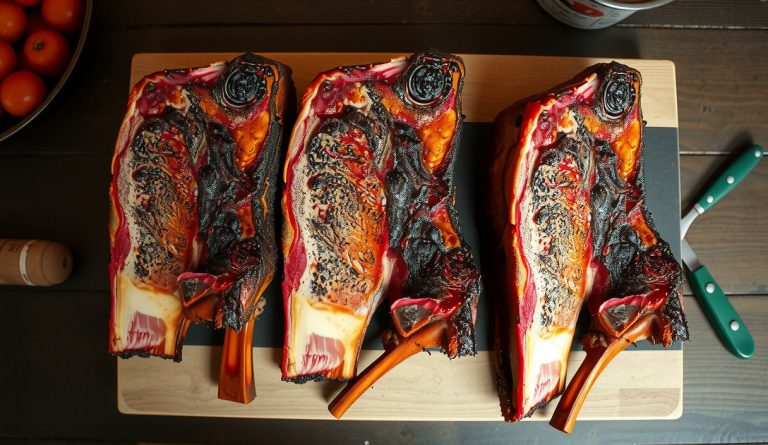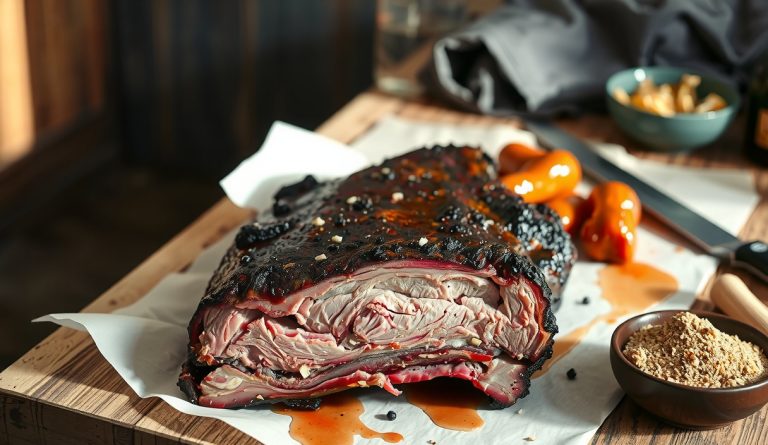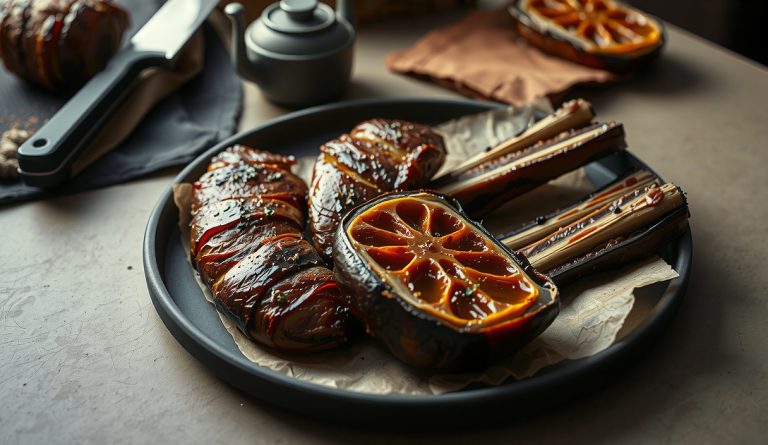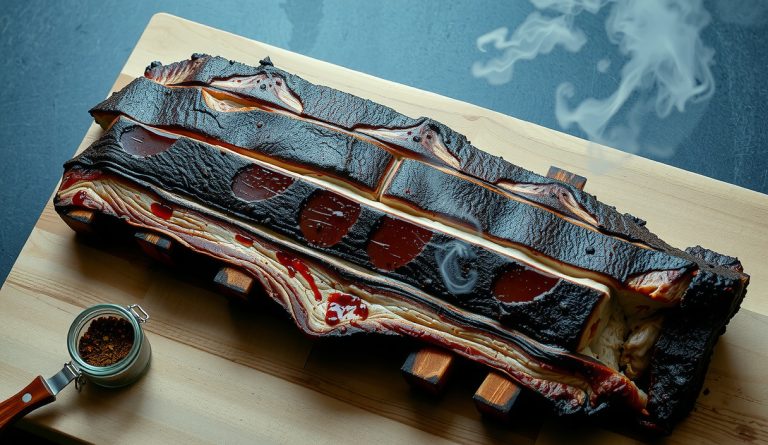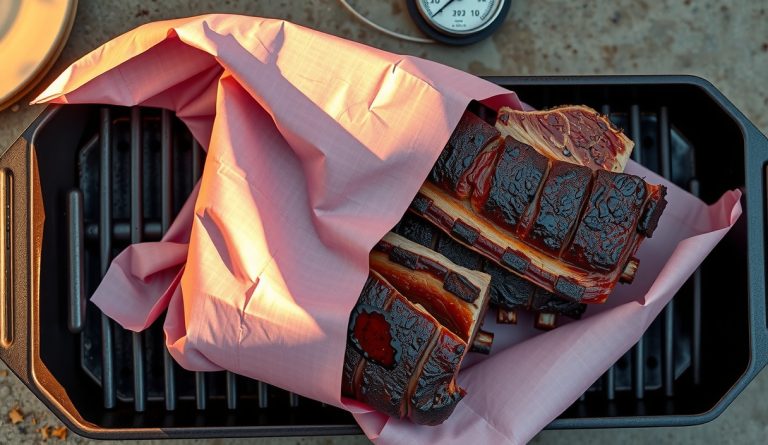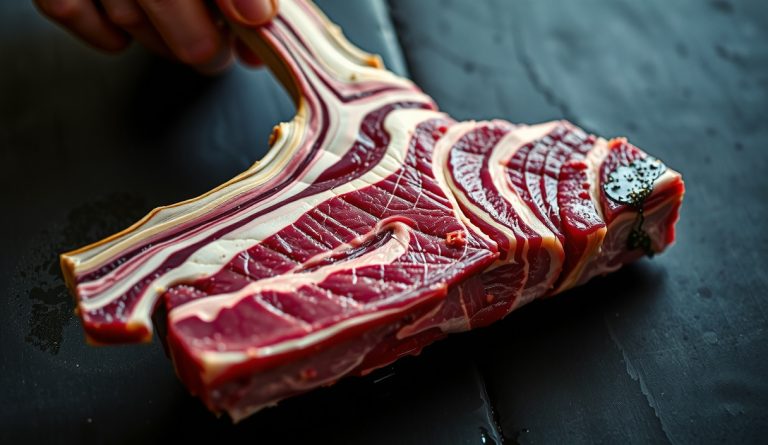
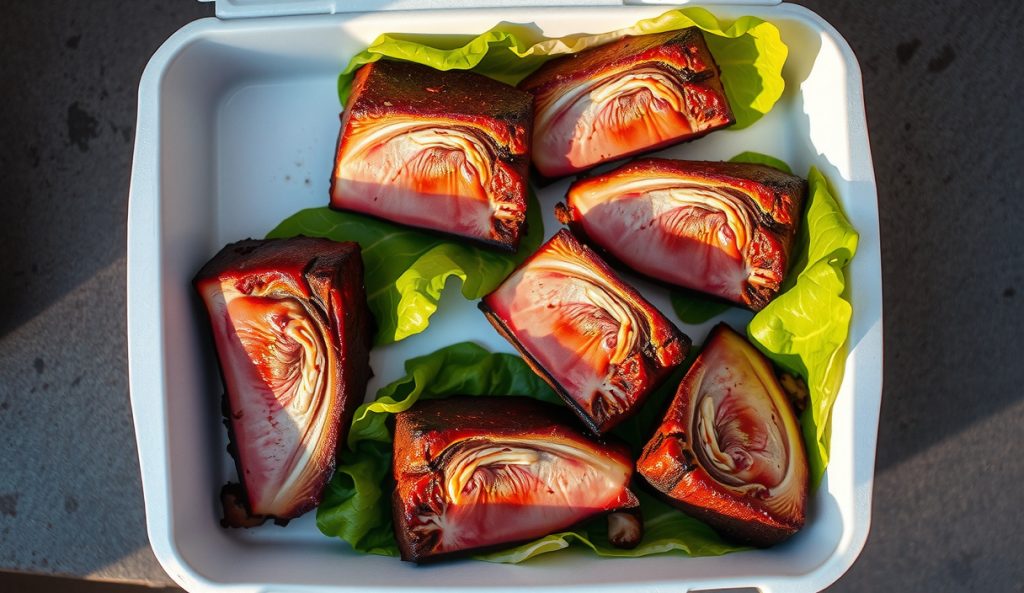
Cooking one or two slabs of plate ribs is a management exercise. Cooking four to six simultaneously on a competition offset is a logistics problem. The beef behaves the same way; the cooker does not. Airflow asymmetry, lid-open time during rotation, and the thermal mass of multiple slabs at different stages all interact in ways that cause slabs to diverge in internal temperature even if they started identical. The protocol below is how competition pitmasters manage that divergence rather than being surprised by it at turn-in.
What changes when you scale to four to six slabs?
The primary operational change when cooking multiple slabs is rack position management. In most offset smokers, lower rack positions run 15°F–25°F hotter than upper positions due to radiant heat from the firebox floor and reduced distance from the primary combustion zone. Loading all slabs onto the lower rack and walking away allows slabs nearest the firebox to run 30–45 minutes ahead of those at the far end by the time you check at hour three. Rotate slabs between rack levels every two hours — moving lower-rack slabs up and upper-rack slabs down — to equalize cumulative heat exposure across the entire cook.
The second change is probe discipline. Each slab must have its own leave-in probe, and those probes must be read independently. Do not calculate an average temperature across slabs and use that single number to make a pull decision. The slab with the lowest internal temperature governs the pull call — if five slabs are at 203°F and one slab is at 196°F, the cook is not done. Pulling to average temperature is the most common cause of under-rendered ribs in a competition cook, and under-rendered plate ribs at BMS-standard beef are immediately detectable in the bite.
What stays the same when scaling up?
The rub formula, the pit temperature target, the stall-wrap decision, the 203°F–207°F pull window, and the minimum rest time all remain identical to the canonical single-slab method. Scaling a competition cook means scaling the logistics, not the recipe or the thermodynamics.
When is the competition build the better choice?
This protocol applies any time you are cooking more than two slabs simultaneously, whether in a sanctioned competition or at a large private event. The competition build is also the correct approach when using a cooker with known hot spots — a cooker you have not thoroughly mapped with an empty-grate thermometer grid will behave unpredictably under full load, and independent per-slab monitoring is the only reliable safeguard against uneven doneness.
Use the complete rub, fire management, wrap, and rest instructions from the original Smoked Beef Ribs — Dino Bones recipe, layering the rotation and per-slab monitoring protocol described above onto that foundation.