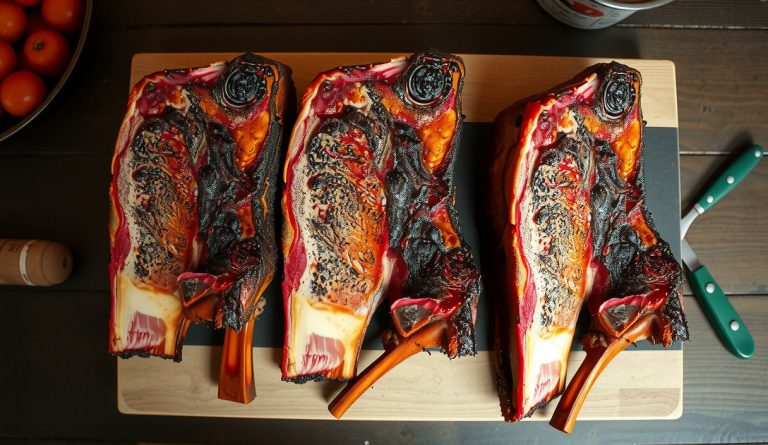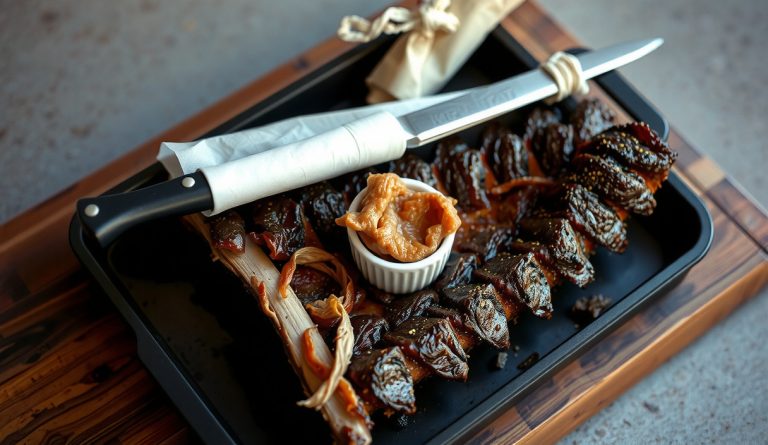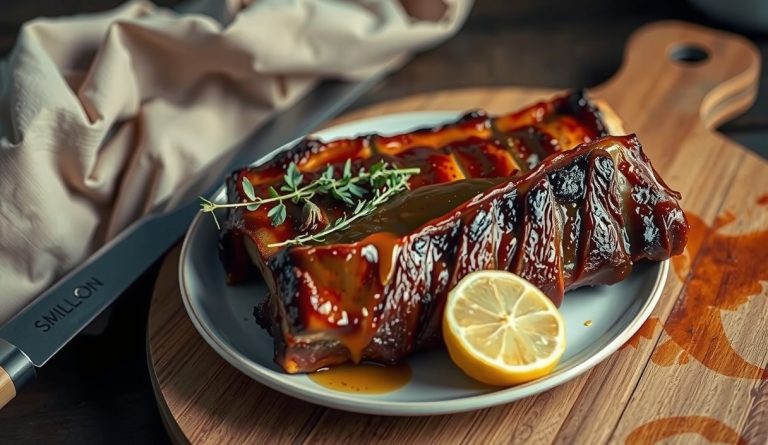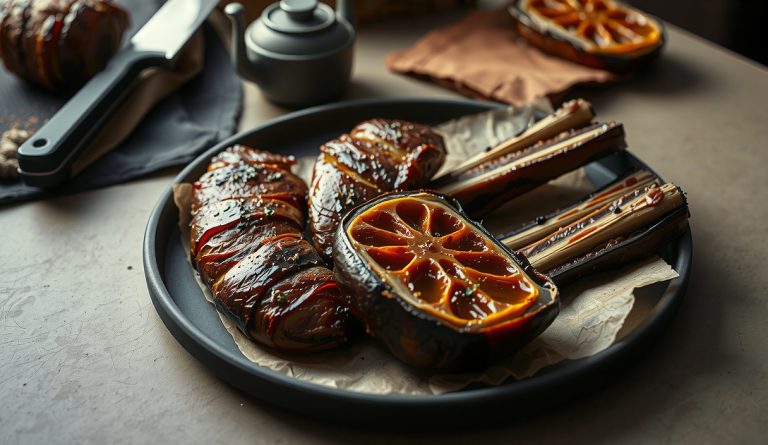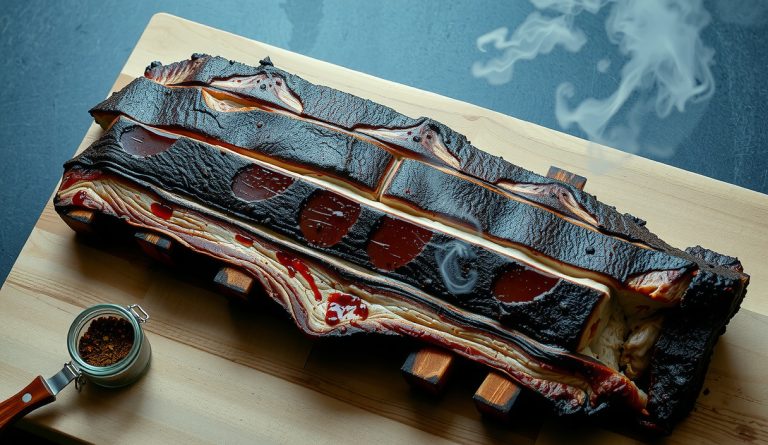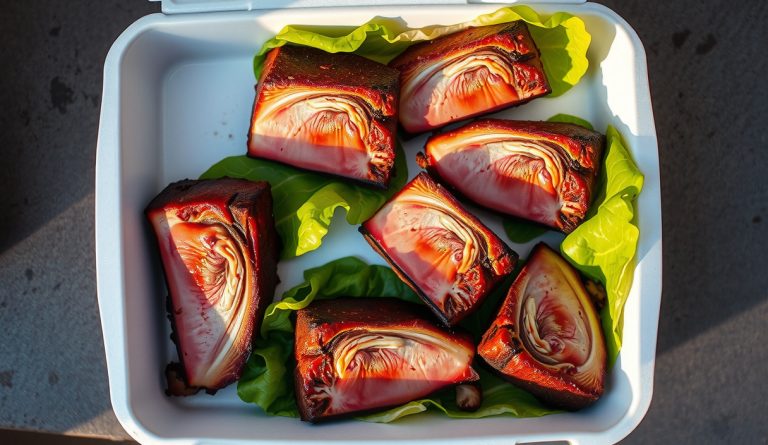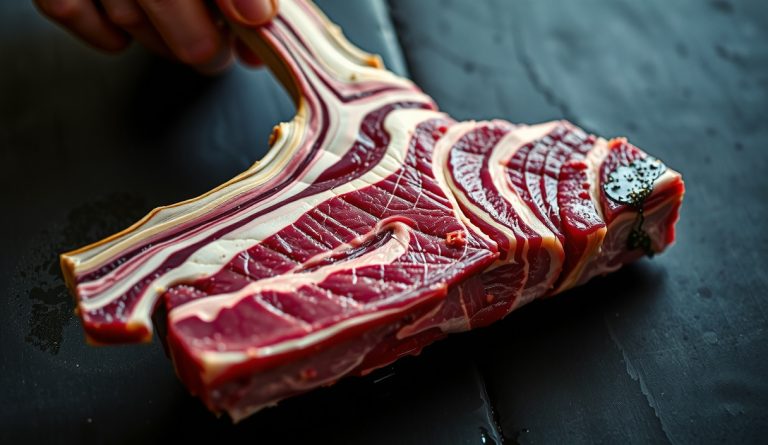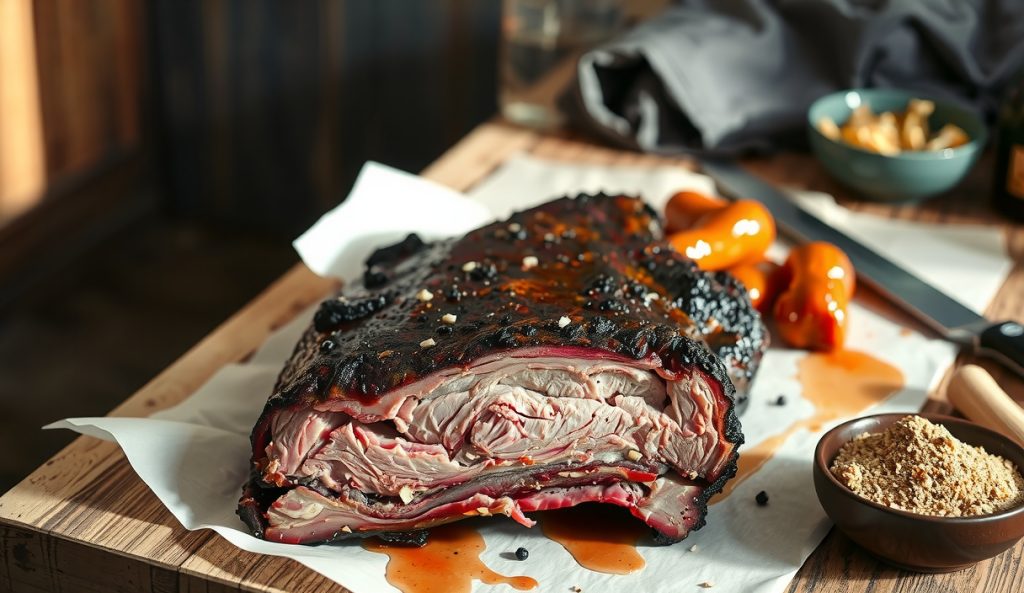
Good news first: the canonical Dino Bones recipe is nearly gluten-free by default. Beef plate ribs, kosher salt, cracked black pepper, post-oak smoke, and fire contain zero gluten. The hazard lives in the optional binder and any store-bought rub, sauce, or condiment that may arrive at the table alongside. This post walks every potential gluten exposure point specific to this recipe so you can cook — and serve — with full confidence.
What changes to make this recipe fully gluten-free?
Optional binder: The canonical recipe lists an optional binder — commonly yellow mustard or a Worcestershire-spiked slather. Standard Worcestershire sauce contains barley malt vinegar, a direct gluten source that survives the cook. Swap it for a certified gluten-free Worcestershire (Lea & Perrins is not certified GF in the US; look for French’s GF Worcestershire or coconut aminos as a 1:1 functional replacement). Yellow mustard is typically gluten-free, but check for shared-facility wheat warnings on the label. If you skip the binder entirely — as many Central Texas purists do — there is no gluten risk at all, and bark adhesion at 250°F over a long cook is driven by protein denaturation, not the binder.
Store-bought rubs and pre-seasoned meat: If you source the ribs pre-seasoned or use a commercial rub rather than the canonical 50/50 kosher salt and 16-mesh pepper, audit the label for wheat starch or wheat-derived anti-caking agents (often listed as “modified food starch” without specifying source). Build the rub from scratch — coarse kosher salt plus 16-mesh black pepper — and you eliminate this vector entirely. Pure spice-only rubs with no fillers are inherently gluten-free.
Table sauces: If you serve a dipping sauce alongside the finished ribs, be aware that standard soy-sauce-based BBQ sauces contain wheat. Substitute tamari (certified GF) or coconut aminos where soy flavor is desired. Malt-vinegar-based sauces are also off the table; apple cider vinegar or distilled white vinegar are the clean swaps.
Cross-contamination at the pit: A wire grill brush sheds steel bristles but carries no gluten risk. The real cross-contamination concern is a shared spice grinder used previously with wheat-containing blends, or rub applied with bare hands after handling bread. Dedicate a pepper grinder to gluten-free cooks, and wipe the grate with a clean oil-dampened towel before the ribs go on if other gluten-containing foods have been cooked on the same surface.
What stays the same in the gluten-free version?
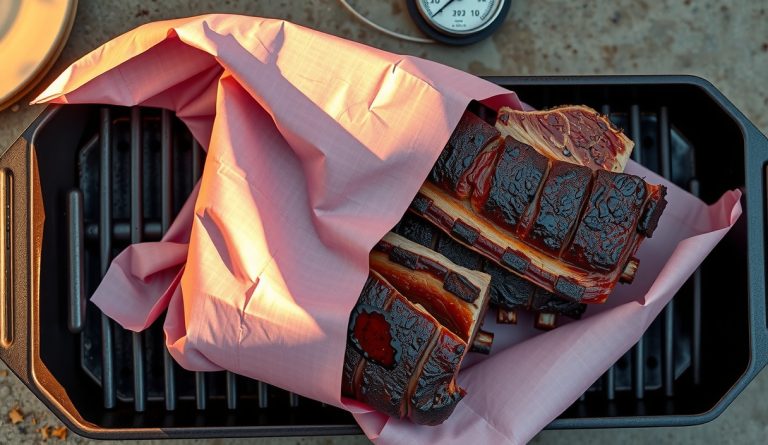
Every hour of the method is untouched. The 250°F pit temperature, the 8-to-10-hour post-oak smoke, the stall management, the 200°F–205°F probe-tender target, and the 45-to-60-minute insulated rest are all gluten-free processes. Maillard browning, collagen hydrolysis, and gelatin formation are pure chemistry — wheat has no role in any of it. The bark pulled off the grate is structurally identical to the canonical version.
When is the gluten-free version the better choice?
Any gathering that includes a guest with celiac disease or non-celiac gluten sensitivity benefits from this audit — not because the recipe required radical surgery, but because the optional binder and table condiments are the invisible failure points that sideline gluten-free guests after an otherwise safe cook. Run the canonical recipe with a scratch-built rub, a verified gluten-free binder, and gluten-free sauces on the side, and the entire table eats the same plate rib.
Follow the full timing, temperature, and technique at the original Smoked Beef Ribs — Dino Bones recipe.