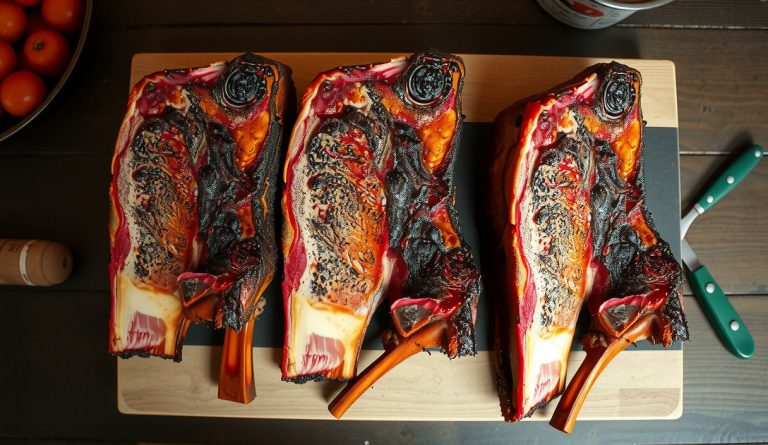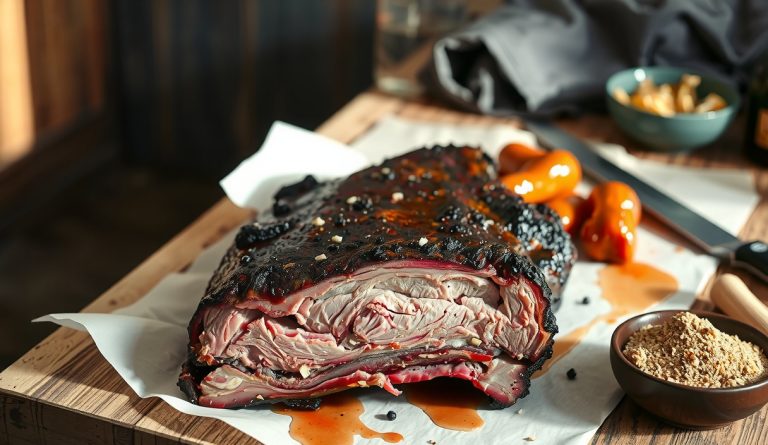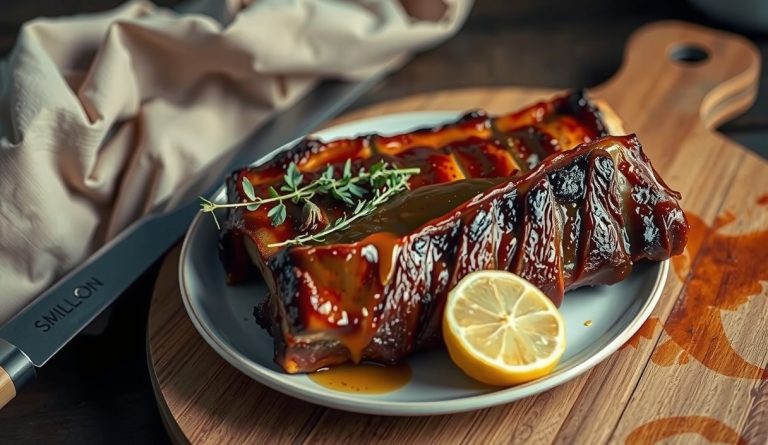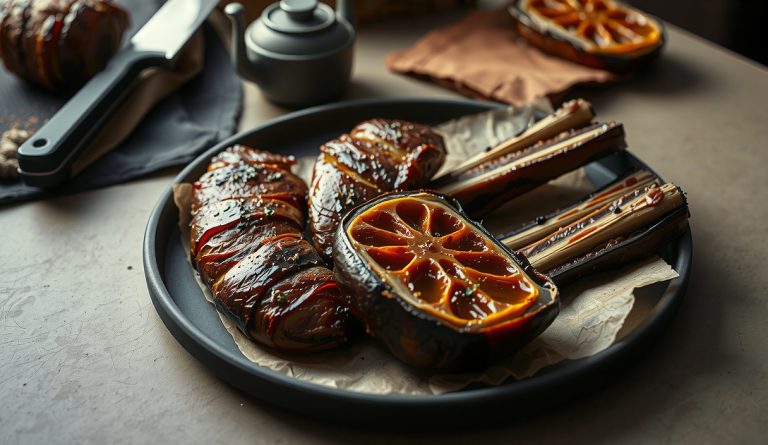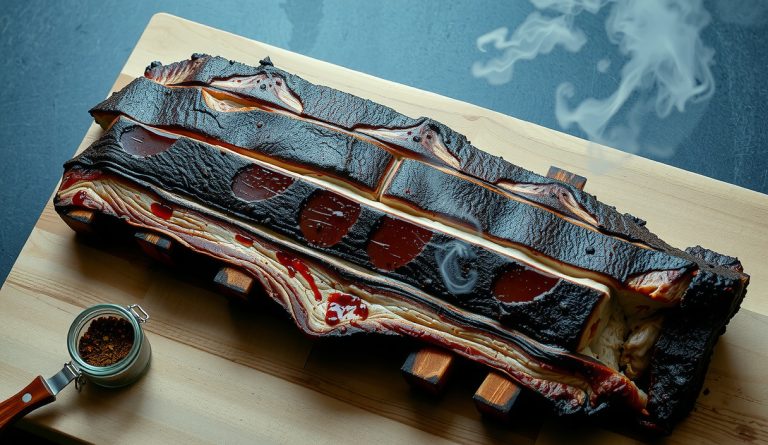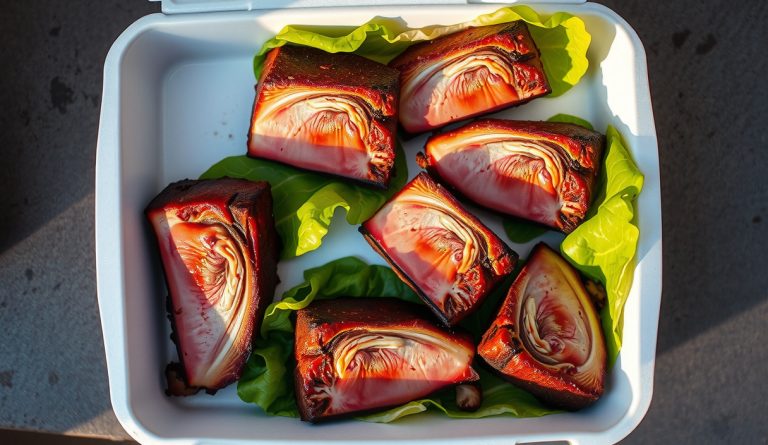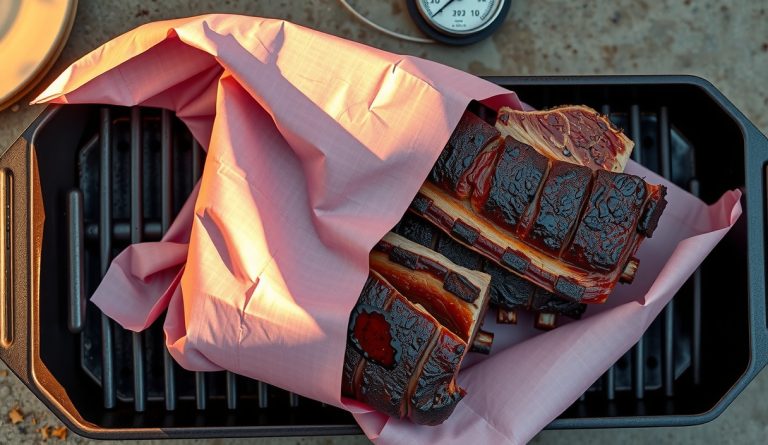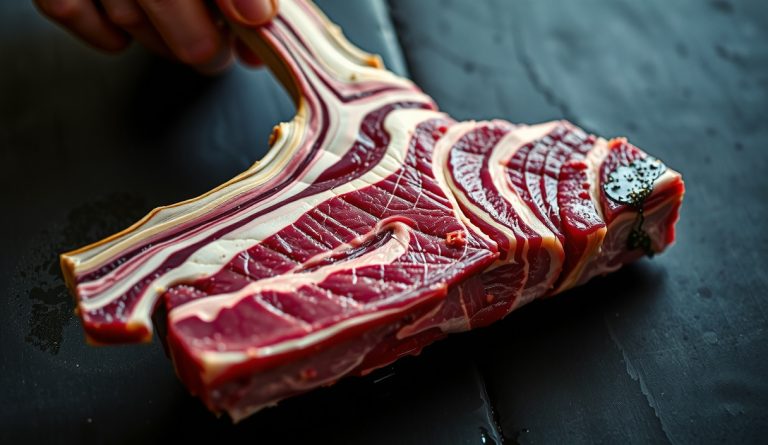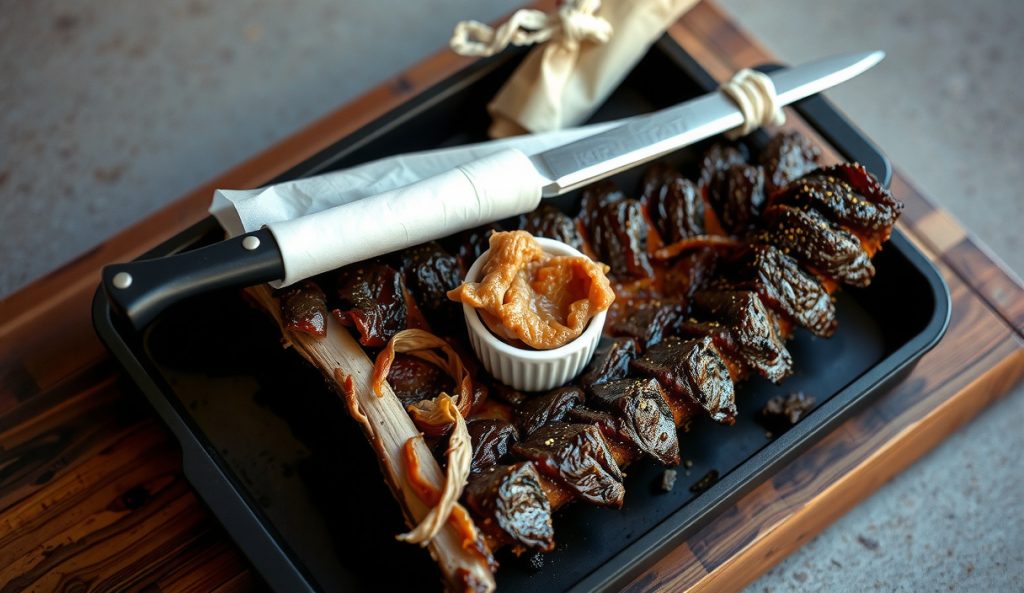
Beef plate ribs (the 123A cut) are almost embarrassingly well suited to a ketogenic diet. The cut carries 1.5 to 2.5 inches of heavily marbled muscle, a thick fat cap that renders continuously through the cook, and zero inherent carbohydrates. The macro profile — high fat, high protein, negligible carbs — is the keto template. The only surgical work required is auditing the canonical recipe’s sugar inputs, which live in optional rub sweeteners and any finishing sauce brought to the table.
What changes for a keto cook?
Rub sugar: The canonical’s core rub is 50/50 coarse kosher salt and 16-mesh black pepper — already zero-sugar and keto-clean. If you extend the rub with brown sugar, turbinado, or a sweet commercial blend (a common variation for beef ribs), replace any granulated sugar with allulose at a 1:1 volume swap. Allulose is the superior choice for one specific reason: it participates in Maillard and caramelization reactions at temperatures comparable to sucrose, so it builds the same lacquered, slightly glossy bark the fat cap produces. Net carbs from a typical 1-tablespoon-per-pound sweet rub application drop from roughly 6–8 g per serving to under 0.5 g with allulose, which is largely non-glycemic.
Erythritol and monk-fruit blends will also work as sugar substitutes, but erythritol does not caramelize — it recrystallizes as it cools, leaving a faintly gritty, cooling sensation on the bark surface. If you want bark behavior closest to the canonical smoked beef ribs, allulose is the right call.
Table sauce: Standard BBQ sauces are keto’s biggest landmine — ketchup, molasses, honey, and brown sugar can stack 15–25 g net carbs into a single 2-tablespoon pour. For plate ribs, the rendered gelatin and bark are rich enough that no sauce is necessary; this is how Central Texas traditionally serves plate ribs. If you want a sauce option, build a zero-sugar finishing glaze from beef tallow, smoked paprika, apple cider vinegar, a dash of gluten-free hot sauce, and allulose for gloss. Two tablespoons clock in at under 1 g net carbs.
Sides and serving format: Skip the slider bun (15 g net carbs) and serve sliced directly off the bone onto a board. Keto-compatible sides that complement the richness of beef plate ribs include roasted cauliflower finished with beef tallow and smoked paprika, a sharp vinegar-dressed coleslaw sweetened with erythritol instead of sugar, or simply pickles and raw onion — the classic Texas accompaniment that happens to be nearly zero-carb.
What stays exactly the same in the cook?
The entire cook is unchanged. Smoked beef plate ribs cook at 250°F over post-oak for 8 to 10 hours, fat cap up, no wrapping, probe-tender at 200°F–205°F internal temperature, followed by a 45-to-60-minute insulated rest. The collagen-to-gelatin conversion that gives plate ribs their unctuous texture is a thermally driven process with no carbohydrate dependency. The smoke ring, the bark formation via Maillard chemistry between beef proteins and pepper, and the continuous fat-cap basting all proceed identically whether sugar is present or not.
When is this keto variant the better choice?
This is the variant to reach for when strictly tracking net carbs or feeding a keto crowd. The canonical smoked beef ribs recipe is already 90% of the way to keto-compliant, and these targeted swaps close the gap without compromising the bark, the smoke profile, or the extraordinary fat-to-protein ratio that makes plate ribs the most satisfying single cut in BBQ.
Full technique, temperatures, and timing live at the original Smoked Beef Ribs — Dino Bones recipe.