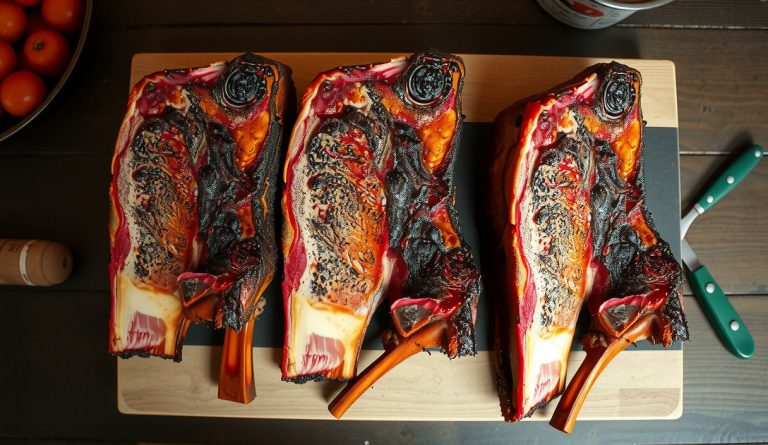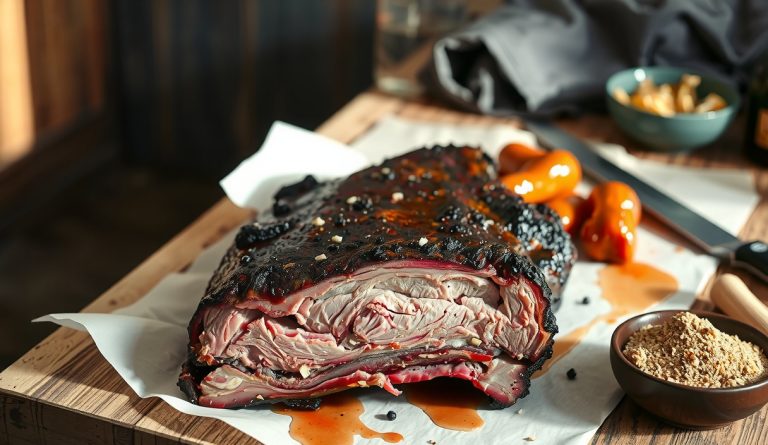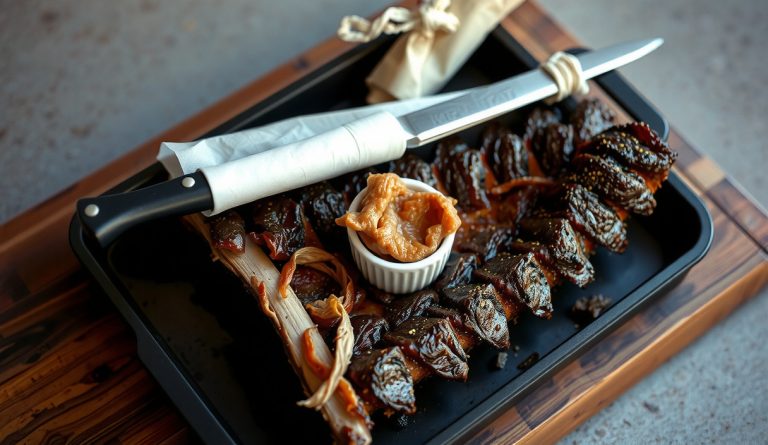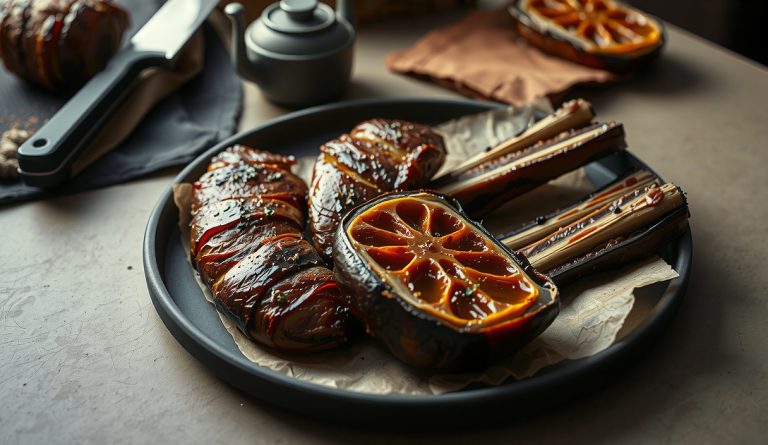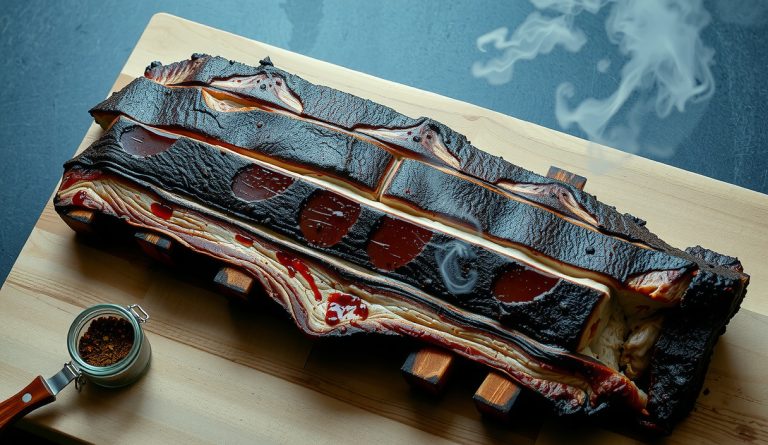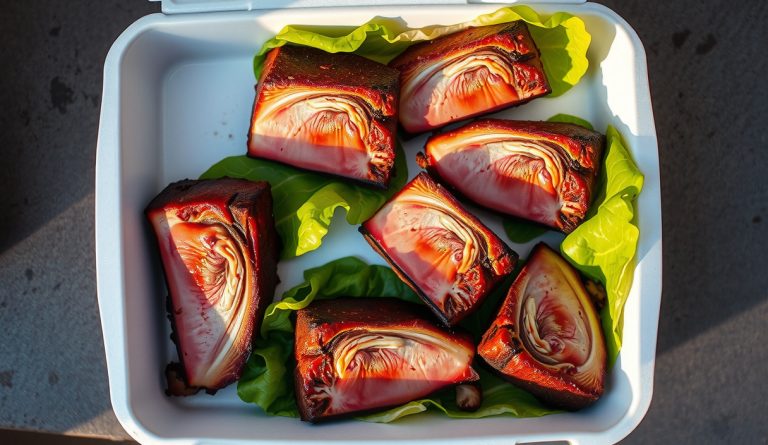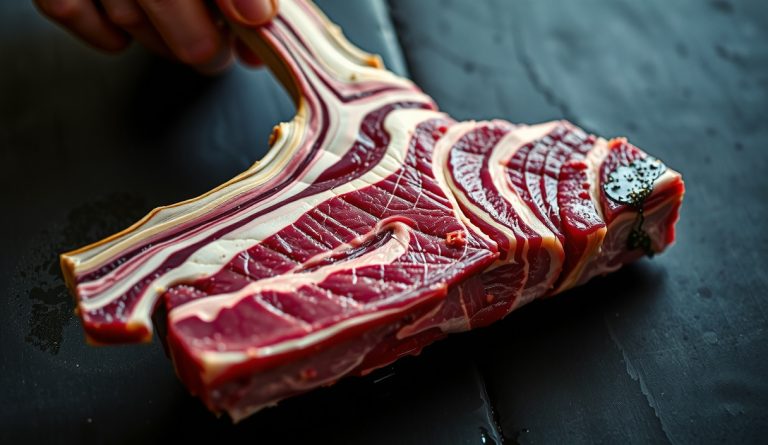
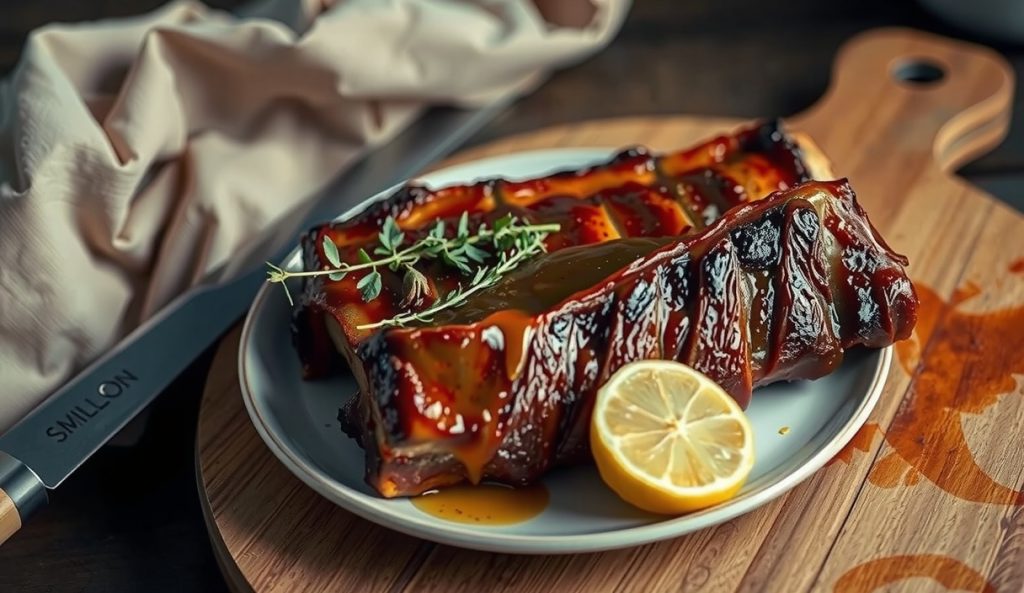
Salt performs three distinct jobs on a plate rib: it draws surface moisture via osmosis, then that brine is reabsorbed carrying dissolved proteins to the surface where they denature into a tacky pellicle that anchors bark; it seasons deeply through slow diffusion over the long cook; and at the surface, it accelerates early Maillard reactions by concentrating reactive amino groups. Cutting sodium on this low-sodium dino bones recipe is not painless — but it is achievable if you understand which of salt’s roles you are reducing and how to compensate for each one.
What changes when you cut sodium on smoked beef ribs?
Rub salt reduction: Pull the salt in the canonical 50/50 rub down to a 25/75 ratio — one part salt to three parts 16-mesh black pepper. For a 10-pound slab, this moves applied sodium from roughly 2,800 mg total surface application to approximately 700–900 mg, spread across 4–6 servings. The bark will form, but it will be slightly less crusty and the pellicle layer thinner because the osmotic draw is weaker. Compensate by extending the uncovered dry-brine rest to 90 minutes (versus the canonical 60–75 minutes) to allow maximum surface moisture cycling even at the lower salt concentration.
Potassium chloride blends: Diamond Crystal makes a 50/50 sodium-chloride/potassium-chloride blend that halves sodium per gram of apparent salt. Potassium chloride reads as salty at low concentrations but turns metallic-bitter above roughly 30% of the seasoning load. At the 25/75 rub ratio above — where salt is already a minority ingredient — blending half the salt as potassium chloride adds perceived saltiness without crossing the bitterness threshold, particularly given the aggressive pepper, smoke, and rendered beef fat competing for palate attention.
Flavor rebuilding: What salt’s absence costs in savory depth, you recoup with layered aromatics. Add 1 teaspoon of finely ground dried porcini mushroom powder to the rub — glutamates amplify umami without adding sodium — plus 1 teaspoon of smoked paprika for color compensation and a secondary phenolic aromatic layer. A light wipe of the rib surface with unseasoned beef tallow at the 4-hour mark, when bark is setting, reintroduces lipid-based flavor continuity and helps compensate for the slightly drier surface the reduced salt produces.
Table sauces and sides: Standard BBQ sauces run 200–400 mg sodium per 2-tablespoon serving. Serve the low-sodium dino bones with a fresh salsa verde — tomatillos, jalapeño, lime zest, cilantro — built without added salt. The acidity and brightness of salsa verde perform the same palate-cleansing contrast function as a vinegary sauce at a fraction of the sodium. Pickles, a typical low-sodium accompaniment suggestion, are off the table here; compensate with raw white onion and fresh horseradish.
What stays the same on the low-sodium cook?
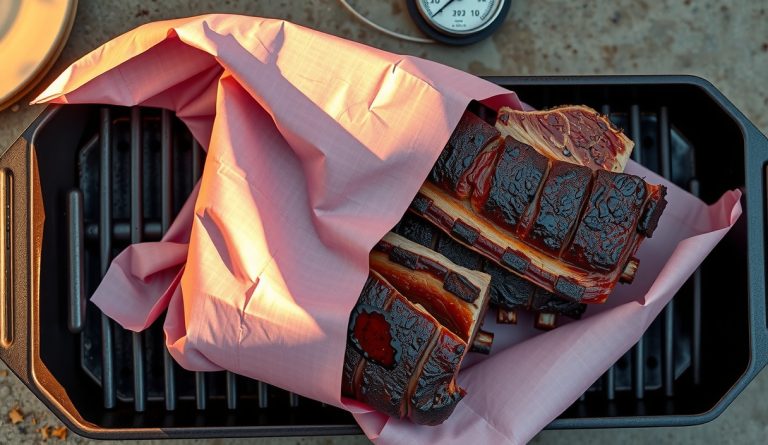
The cook itself is completely unchanged: 250°F, 8 to 10 hours over post-oak, fat cap up, no wrap, an internal target of 200°F–205°F, and a 45-to-60-minute insulated rest. Collagen hydrolysis to gelatin is a temperature-and-time reaction; it does not require salt. The smoke ring, the fat-cap rendering, the self-basting mechanism, and the final unctuous texture of the plate rib are all sodium-independent processes.
Who is this low-sodium variant the better choice for?
This low-sodium smoked beef rib variant serves guests managing hypertension, heart disease, or medically restricted sodium budgets who still want to sit at the dino-bones end of a BBQ table. The trade-offs are real — bark is slightly softer and the initial seasoning intensity is lower — but the fundamental experience of a properly rendered, smoke-saturated plate rib is fully intact.
Complete technique and timing are at the original Smoked Beef Ribs — Dino Bones recipe.