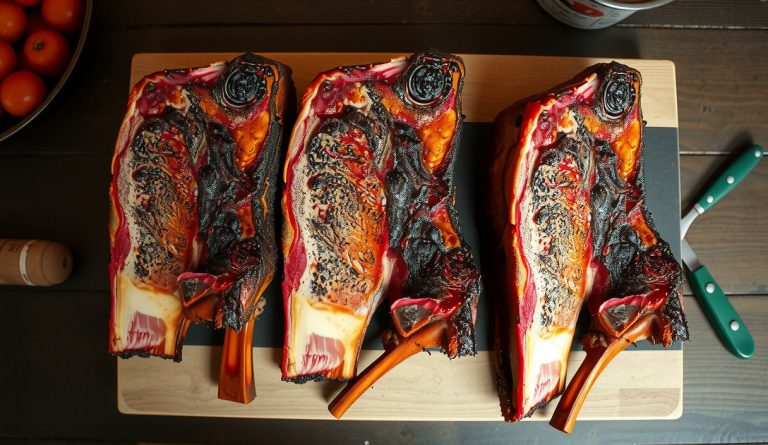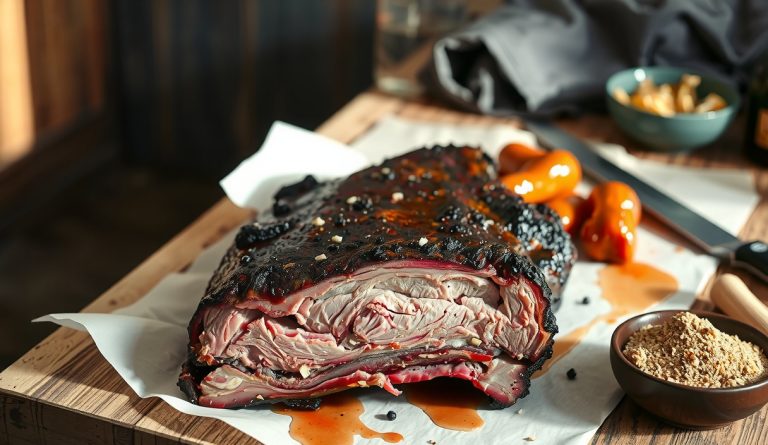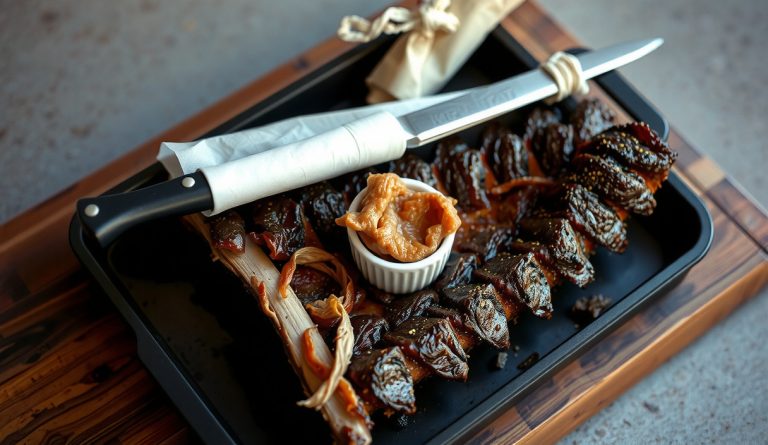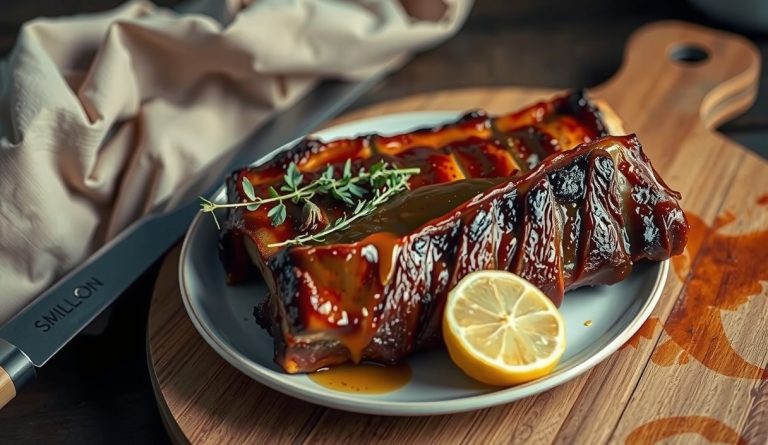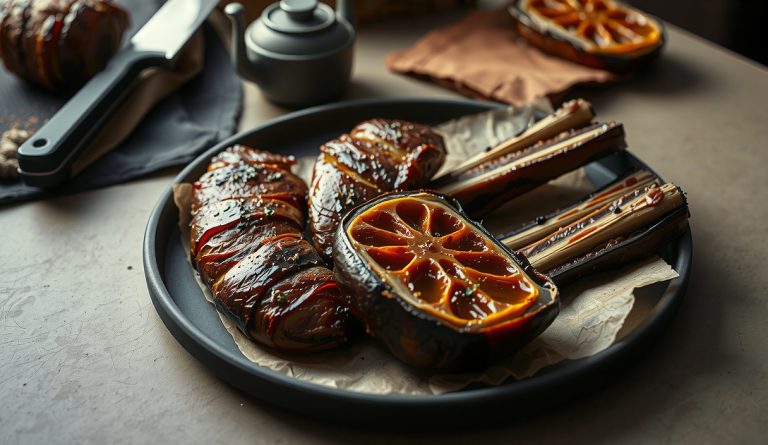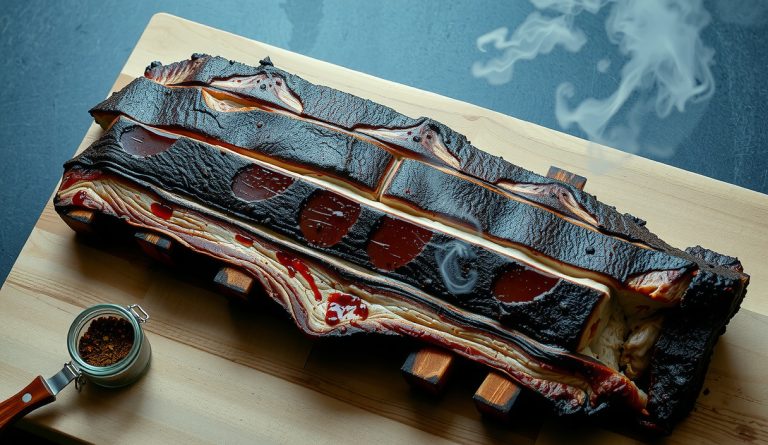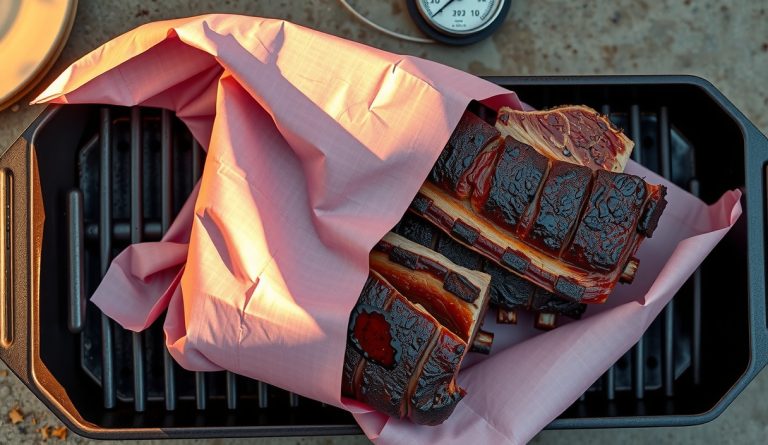
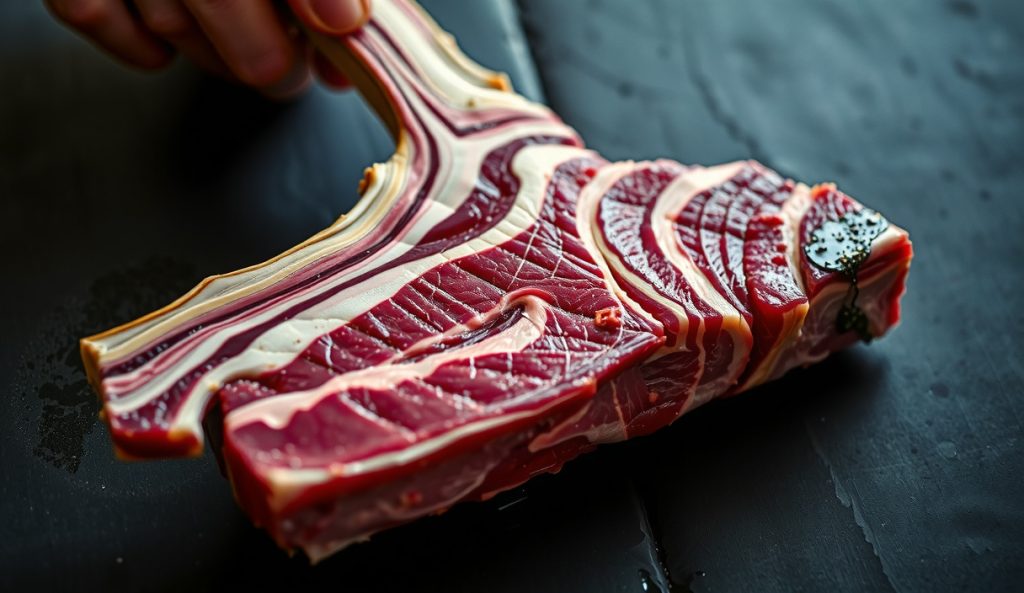
American Wagyu plate ribs at BMS 6–8 are not a technique variation — they are the same cook applied to a fundamentally different raw material. The process is identical; the outcome is categorically richer. If you have access to Wagyu plate ribs and want to understand what changes and why, this is the guide. If you are sourcing them for the first time, budget for the fact that rendered fat will drip throughout the entire cook at a rate that standard USDA Choice ribs simply do not produce.
What changes when you cook Wagyu plate ribs instead of Choice or Prime?
The intramuscular fat content in Wagyu at BMS 6–8 is substantially higher than in USDA Prime, which typically peaks around BMS 5. As that fat renders during the low-and-slow cook, it migrates through the muscle fiber bundles and deposits back into the meat during the rest period — a process sometimes described informally as self-basting. The finished slice glistens visibly and the mouthfeel is markedly more unctuous than a Choice or Prime plate rib cooked identically.
Because the fat content in Wagyu plate ribs is so elevated, the gelatin yield from collagen conversion is also higher relative to total mass. A Wagyu plate rib that probes at 200°F rather than 205°F will still feel tender and taste rich — the dissolved gelatin compensates for slightly less complete fiber relaxation. Reduce your total seasoning by approximately 20% (both salt and pepper) to prevent sodium from competing with and masking the intense beefy fat flavor that is the entire point of using this grade. Over-seasoning Wagyu plate ribs is the single most common mistake made with this cut.
What stays the same when cooking Wagyu plate ribs?
Pit temperature, wood selection, the decision point for butcher-paper wrap, the target internal temperature range, and the rest duration are all unchanged from the canonical method. Wagyu plate ribs behave identically to Choice or Prime during the cook — you are not adjusting process, only seasoning quantity and pull-temperature tolerance.
When are Wagyu plate ribs the better choice for a cook?
Wagyu plate ribs are appropriate for occasions where the beef itself is the centerpiece — a small dinner where each person receives a single bone and the entire meal orbits that slab. Wagyu plate ribs are not cost-effective for large groups, and the richness is genuinely fatiguing in large portions; plan for smaller serving sizes than you would with Choice or Prime. Wagyu plate ribs are also an instructive cook for experienced pitmasters who want to understand how fat content affects collagen conversion rate and final texture at identical time-temperature curves.
Use the complete pit setup, wood selection, wrap protocol, and rest method from the original Smoked Beef Ribs — Dino Bones recipe, reducing total rub quantity by 20% to account for the grade’s inherent intensity.