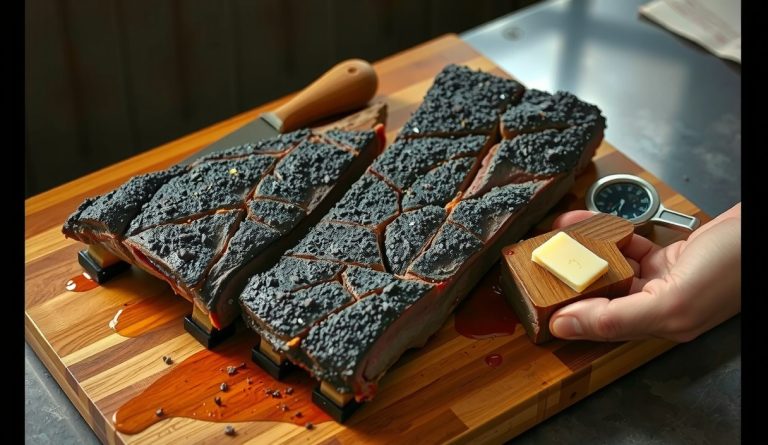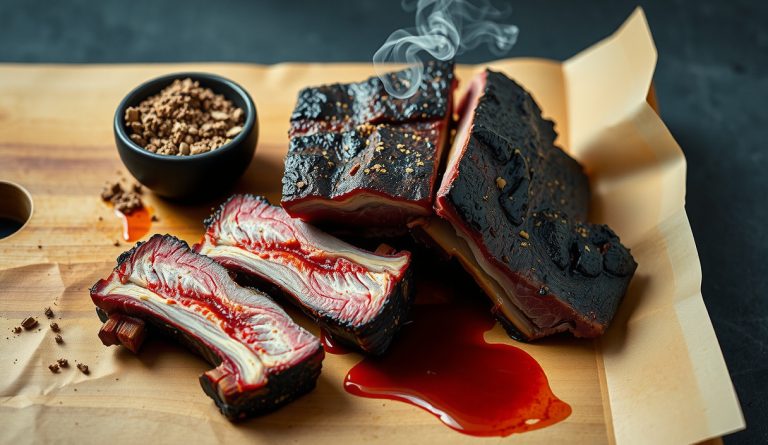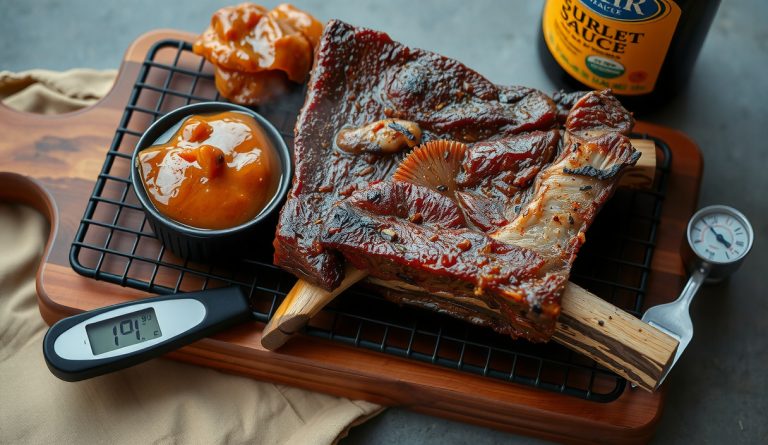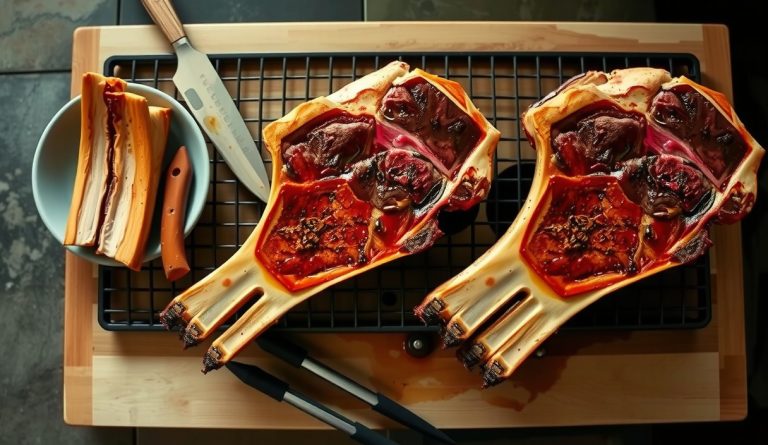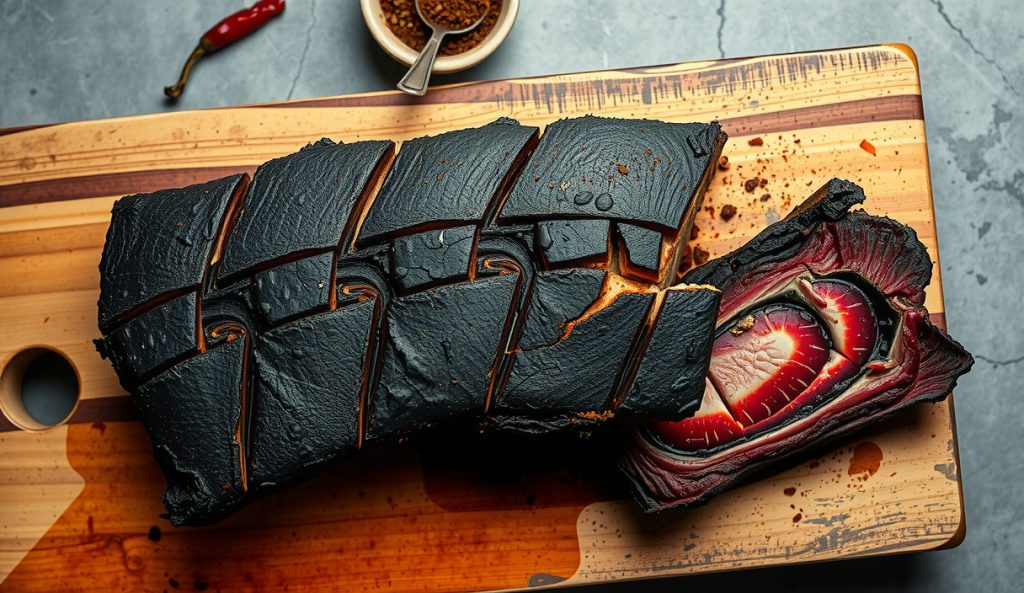
This variation makes one targeted change to the canonical rub and nothing else. Adding 1 tablespoon of finely ground espresso and 1 tablespoon of ancho chili powder to the base salt-and-pepper coat shifts the bark’s flavor architecture toward roasted bitterness and mild fruity heat — qualities that amplify rather than compete with hardwood smoke. The variation is a strong fit for cooks who want a bolder, more complex exterior without altering timing, temperature, or the fundamental low-and-slow collagen conversion that defines great short ribs.
What changes in the Espresso-Chili Bark variation?
The only modification is a two-ingredient addition to the base rub. Stir 1 tablespoon of finely ground espresso and 1 tablespoon of ancho chili powder into the salt-pepper rub before applying it to the ribs. The espresso introduces additional Maillard browning precursors — specifically carbonyl compounds produced during the coffee roast — that react with surface proteins during the early smoke phase to produce a darker, more intensely flavored bark.
This is additive chemistry: the espresso does not replace the Maillard reaction already driven by the beef’s own reducing sugars and amino acids — it provides more substrate for that same reaction, accelerating and deepening bark color without requiring any change to pit temperature or cook duration.
Ancho chili powder — made from dried, smoked poblano peppers — contributes mild heat, a distinct fruity-raisin complexity, and carotenoid pigments that deepen the bark’s visual color. Its capsaicin content is low enough that the heat reads as warmth rather than sharpness, keeping the beef the dominant flavor. Neither addition changes bark formation timing or the cook’s overall trajectory: use the same 250°F pit temperature and the same probe-tenderness method to determine doneness.
What stays the same when you add espresso and chili to smoked short ribs?
Everything structural is unchanged. Salt concentration, cook temperature, target internal temperature (around 203°F / 95°C for full collagen-to-gelatin conversion), resting protocol, and wood selection all remain exactly as specified in the canonical recipe. The two added rub ingredients sit on top of the existing framework — they do not alter the meat’s internal environment or the collagen kinetics that govern tenderness.
When is the Espresso-Chili Bark variation the better choice?
Choose this variation when serving guests who appreciate a pronounced, coffee-forward bark, or when the wood supply runs lighter than ideal — the espresso’s roasted notes compensate for reduced smoke deposition on the bark’s surface. The variation also performs well when pairing the ribs with bold accompaniments such as chimichurri, pickled chiles, or a charred-corn salsa, where the canonical recipe’s cleaner bark might get lost against strong competing flavors.
Use the full method, equipment, and rub base measurements from the original Smoked Beef Short Ribs.