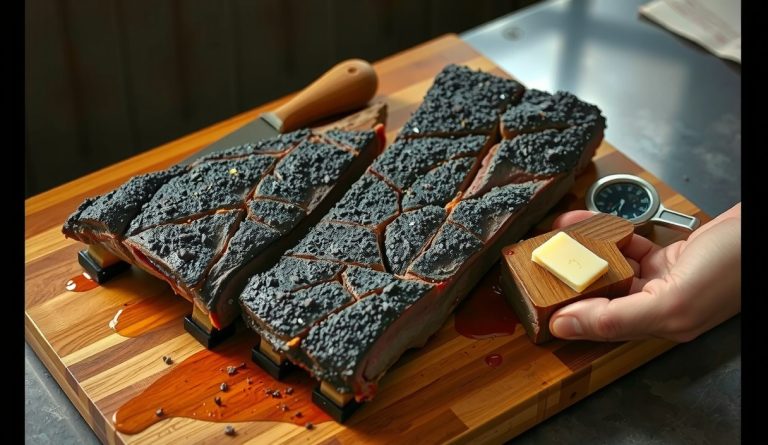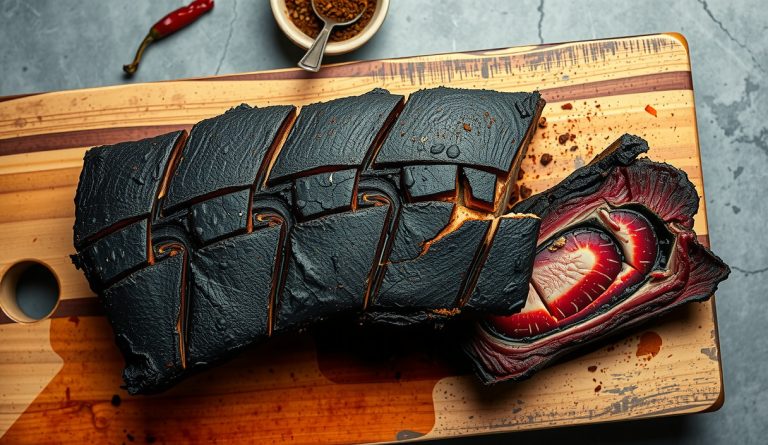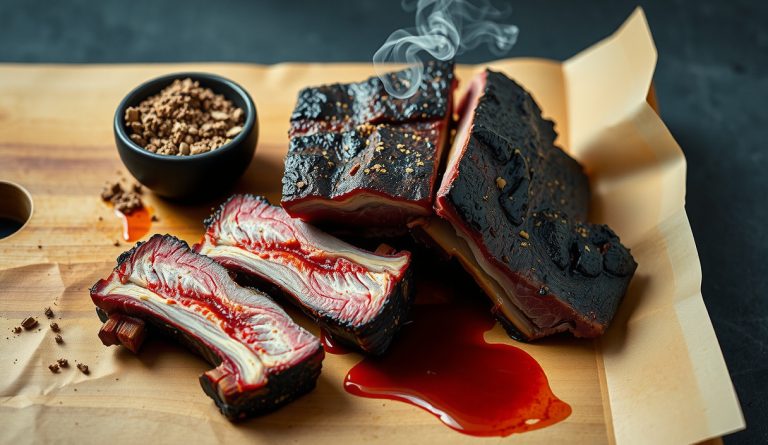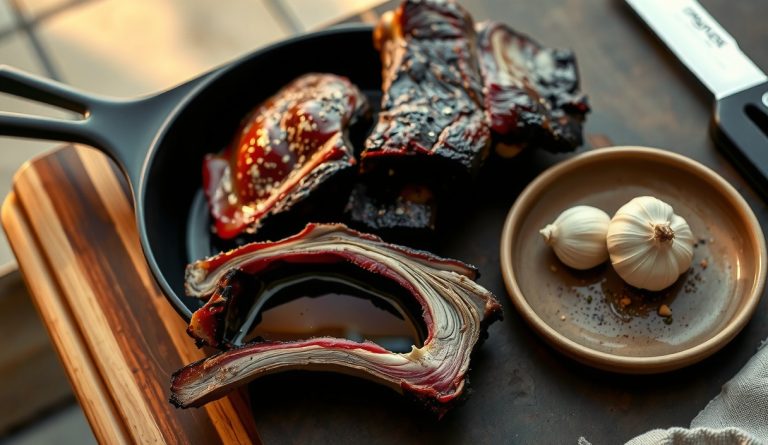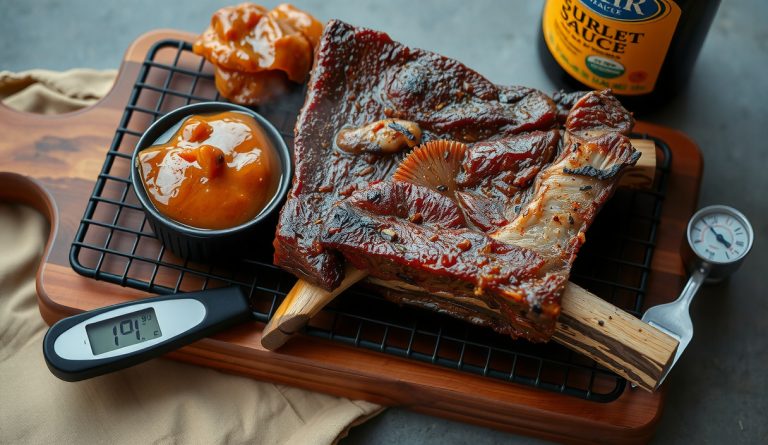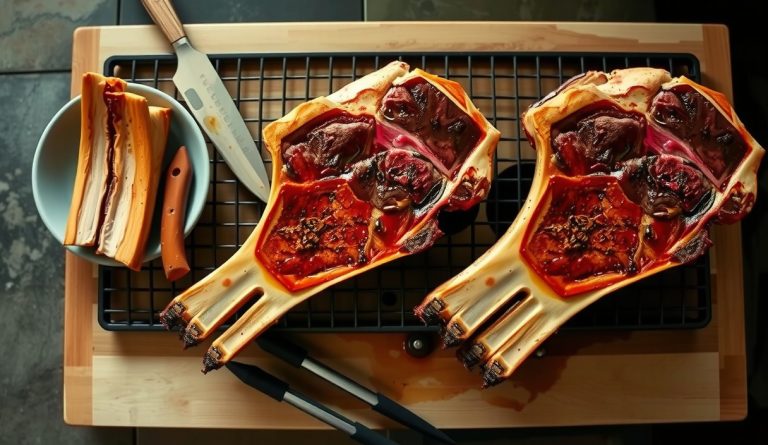
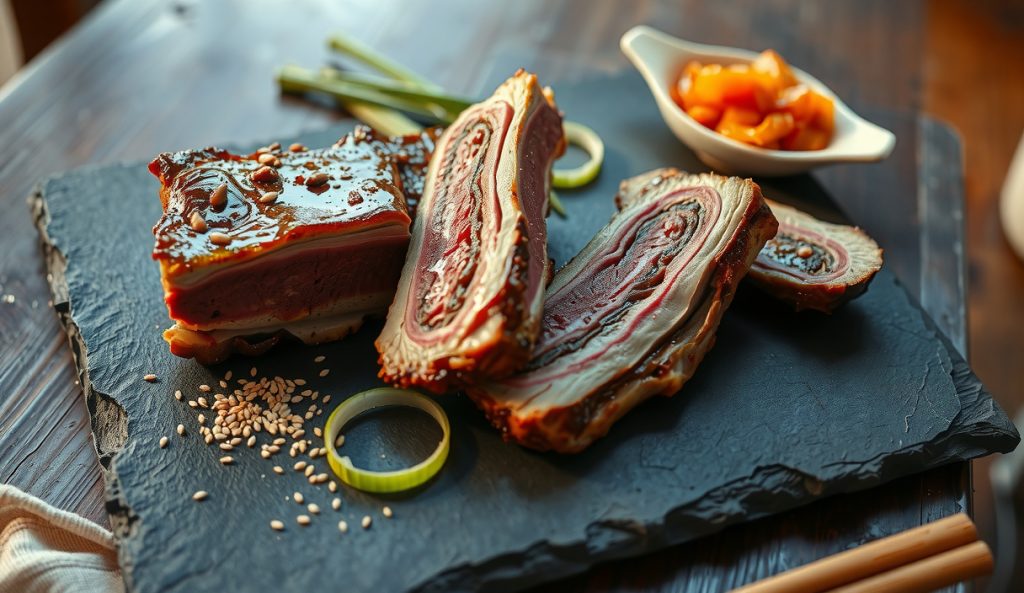
Korean galbi is traditionally grilled fast and hot over live fire. This variation borrows the galbi marinade’s flavor profile — soy, gochujang, sesame, ginger, Asian pear — and applies it to the low-and-slow plate short rib format. The result is a bark with the sweet-savory depth of galbi and the thick, rendered fat cap that only a four-to-five hour smoke can produce. This recipe bridges two distinct cooking traditions and rewards the patience the canonical low-and-slow method demands.
What changes when you add the galbi marinade?
Marinate the short ribs for 12 hours in a blend of soy sauce, gochujang, sesame oil, fresh ginger, and a small amount of Asian pear puree. The pear’s relevant contribution is actinidin, a cysteine protease that partially hydrolyzes myofibrillar proteins at the surface, loosening tissue structure and improving marinade penetration. This is a surface-level effect — actinidin does not penetrate deeply enough to affect the intramuscular collagen that controls overall tenderness, which remains the domain of time and heat.
After marinating, pat the short ribs completely dry — residual liquid on the surface will steam rather than sear, delaying bark formation. Apply a light salt-and-pepper coat and smoke as directed. The sugars introduced by the soy and gochujang (primarily glucose and fructose) provide abundant Maillard substrate, accelerating bark development. Expect a fully formed bark 30 to 45 minutes earlier than the standard timeline. Monitor color and feel from the two-and-a-half-hour mark onward, and use probe tenderness — not color alone — to confirm doneness.
What stays the same as the standard smoked short rib method?
The smoking temperature (250°F), wood selection, target internal temperature, and resting protocol are all unchanged. The galbi marinade alters surface chemistry and accelerates early bark timing, but it does not change the internal environment where collagen hydrolysis to gelatin occurs — that conversion still requires the same sustained heat over the same range of time. Probe for tenderness at the thickest point of the short rib, as always.
When is the Korean-inspired galbi smoke the better choice?
This variation is the better choice when you want to serve short ribs as part of a Korean-influenced spread — alongside banchan, steamed rice, or ssam lettuce wraps — or when you want the marinade to do tenderizing work on a slab that is on the leaner side. The gochujang’s fermented heat and the soy’s glutamate depth also make this version particularly compelling when served without sauce, letting the bark carry the full flavor load.
Use the full method, equipment, and smoking parameters from the original Smoked Beef Short Ribs.