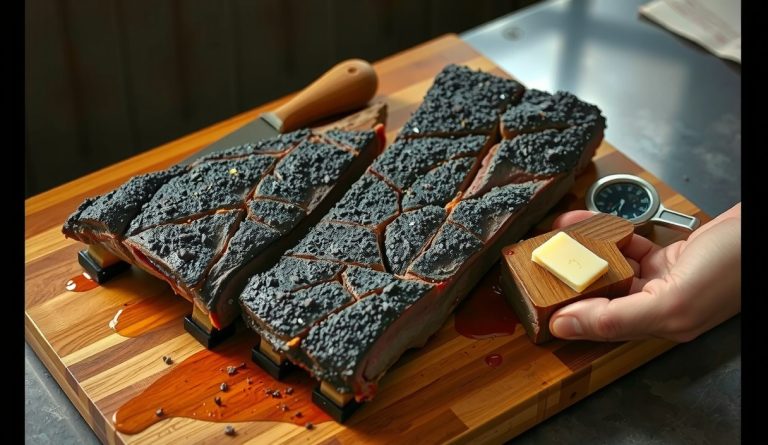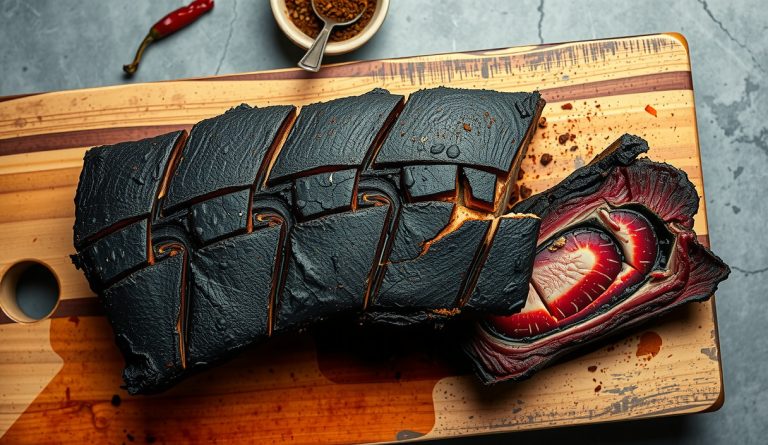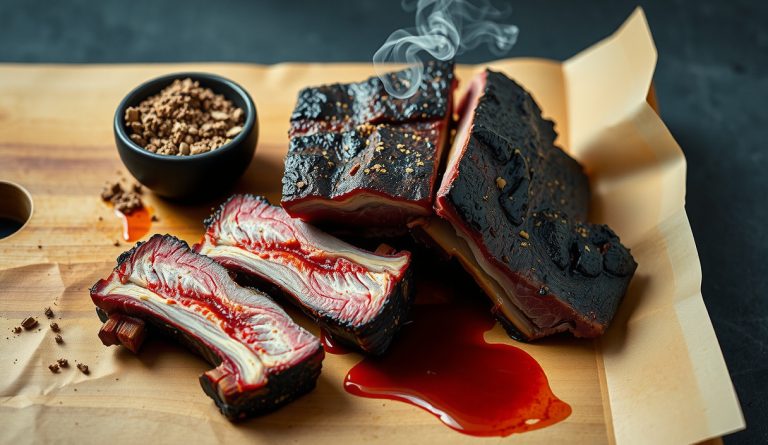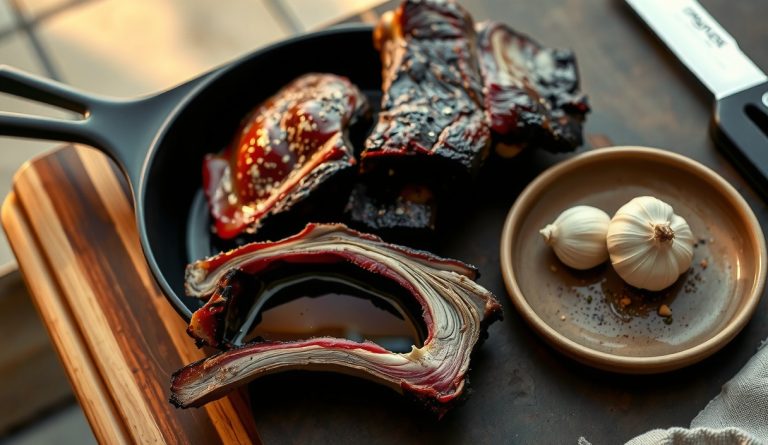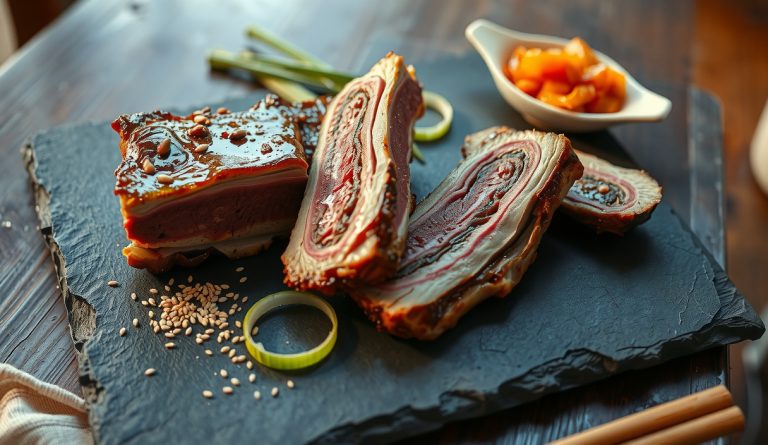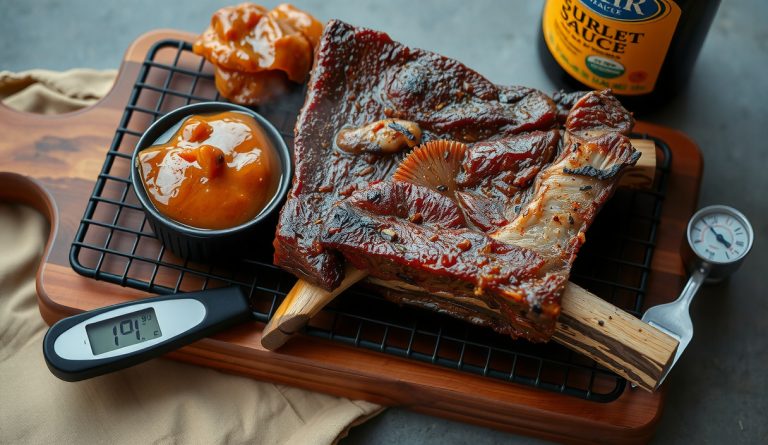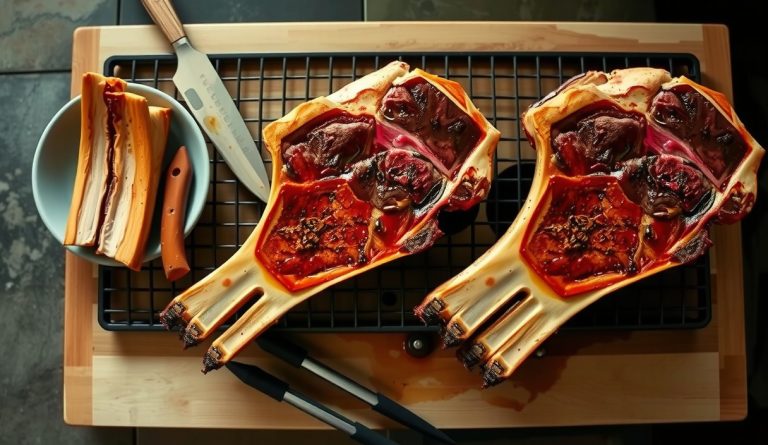
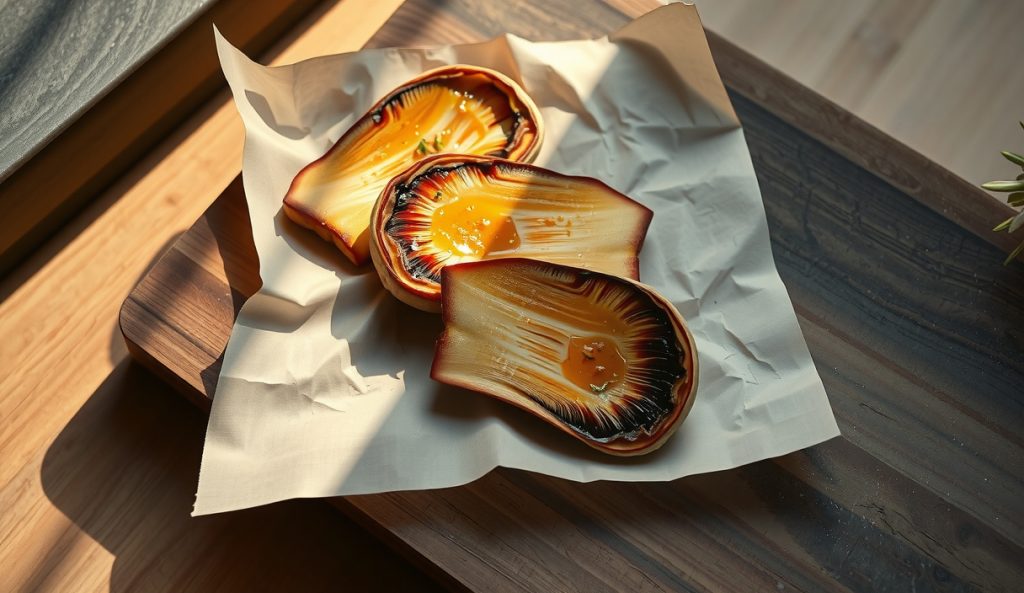
This is not a replacement for smoked beef short ribs. King oyster mushrooms cannot replicate the collagen-to-gelatin conversion, the intramuscular fat rendering, or the sheer mass of a plate rib bone. What king oyster mushrooms can do — with honesty and the right technique — is occupy the same flavor register at the same table: a deeply smoked, bark-crusted, yielding slab that satisfies the same instinct that makes people go quiet around a short rib. The method borrows almost everything from the canonical beef version.
What changes when you swap beef for king oyster mushrooms?
The analog: King oyster mushrooms (Pleurotus eryngii) are the correct choice for this specific companion dish. Their dense, fibrous stem — built primarily from chitin and glucan rather than muscle protein — provides genuine resistance and chew without going mushy under sustained heat, a failure mode that eliminates most other mushroom varieties for a long smoke. Cut the stems into 3-to-4-inch cylinders approximately 1.5 inches in diameter. Leave the caps attached when possible for structural integrity. Thick portobello slabs are an acceptable alternative but will yield faster and carry more water, requiring more aggressive pre-salting.
Smoke uptake mechanics: King oyster stems are porous and hydrophilic — they absorb smoke compounds more aggressively than beef, which means the same post oak or hickory chunks that work perfectly for a short rib will over-smoke a mushroom in the same time window. Use one small chunk of post oak (half the canonical quantity) and run active smoke for the first 90 minutes only. After that, close the vent slightly to reduce smoke flow while maintaining heat. The guaiacol and syringol compounds that define smoke flavor partition into the aqueous interior of the mushroom rapidly; additional wood after the 90-minute mark adds creosote bitterness, not depth.
The rub — same formula, adjusted application: The canonical 1:1 coarse salt-to-pepper rub applies directly to king oyster stems. However, because king oyster stems contain roughly 90% moisture by weight, the dry-brine period matters more here than it does with beef. Apply the rub at least 60 minutes before cooking and place the salted stems uncovered on a wire rack in the refrigerator. The salt draws surface moisture out via osmosis; that moisture redissolves and is partially reabsorbed, seasoning the interior. This step also dries the surface sufficiently for Maillard browning — skip it and the surface stays wet too long, producing steaming instead of bark formation.
Temperature and timing: Cook the king oyster stems at 250°F indirect for 2 to 2.5 hours. Target a deep mahogany bark on the exterior; internal probe temperature is not the useful metric here the way it is for collagen conversion in beef. The correct texture cue is a slight resistance when squeezed with tongs — yielding but not collapsing. A light brush of neutral high-smoke-point oil (avocado or refined coconut) at the 90-minute mark mimics the self-basting quality of rendered beef fat and promotes continued bark development.
What stays exactly the same as the beef version?
The rub formula, the wood species, the smoker temperature (250°F), the no-wrap philosophy, and the butcher-paper presentation are all identical to the canonical beef method. The flavor compounds in the smoke interact with the mushroom’s surface through the same lignin-derived chemistry as they do with beef. The bark that forms on king oyster stems is genuinely a Maillard bark — amino acids from the mushroom’s glutamate-rich tissue reacting with reducing sugars at reduced water activity — not a caramel glaze or a painted-on color.
When is the king oyster mushroom version the better choice?
Serve the king oyster companion alongside canonical short ribs for a mixed table, or on its own for vegetarian guests who want a genuine pit-smoke experience rather than a token afterthought. King oyster stems hold well at rest, slice cleanly for presentation, and carry the smoke-and-pepper profile with enough authority to anchor a plate. This is a companion dish that belongs at the same BBQ — not a consolation prize.
The full method, science, and equipment notes for the beef version are at the original Smoked Beef Short Ribs recipe.