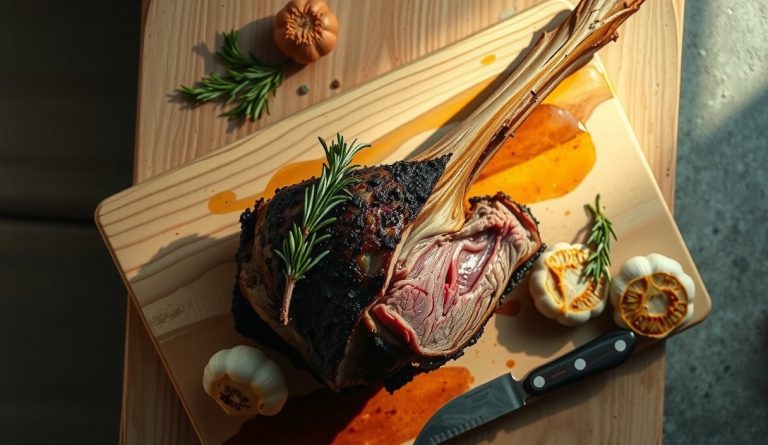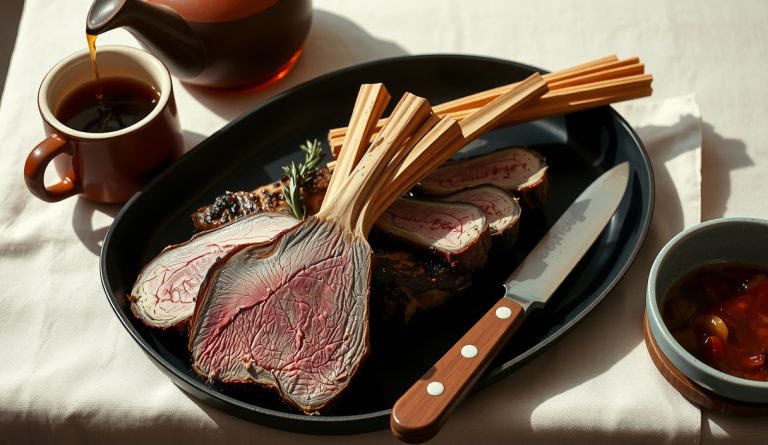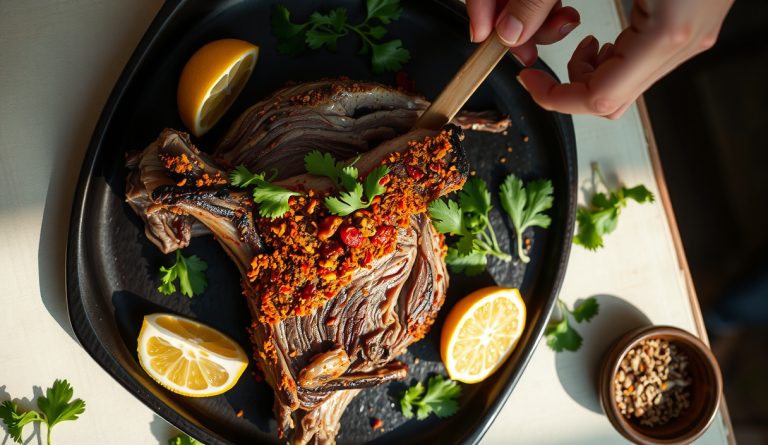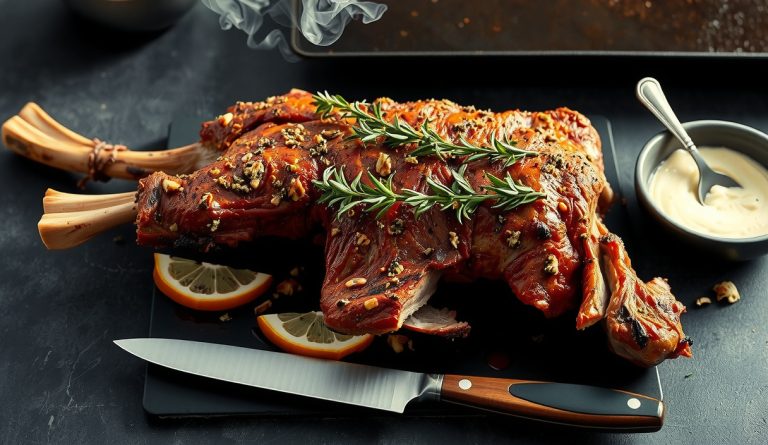
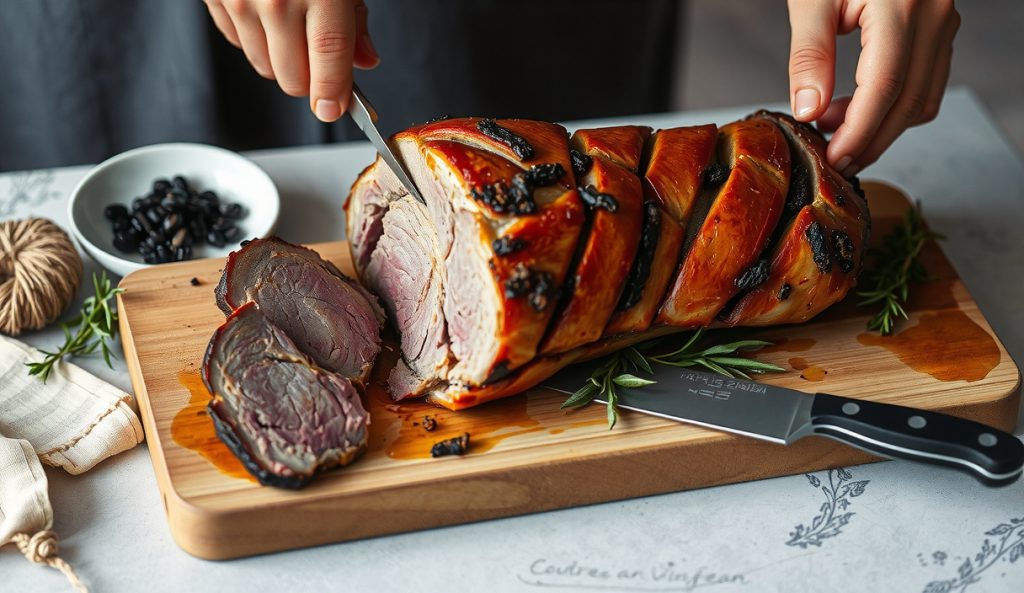
A butterflied, boneless leg of lamb is the weeknight-friendly version of the canonical bone-in roast. With the bone removed, heat penetrates from all sides simultaneously rather than having to migrate inward past an insulating mass of calcium-dense tissue at the center. The result is a faster, more uniform cook — at the cost of a shape that resists the even cylinder a bone naturally provides.
What changes when you go boneless and butterflied?
Tie the butterflied leg with butcher’s twine at 1.5-inch intervals before it goes on the smoker. This compresses the irregular folds into something approaching an even cylinder, reducing hot spots and giving you a consistent thickness to probe. Because boneless roasts have more exposed surface area relative to their mass, carryover cooking is more aggressive — internal temperature will climb 5–7°F off the heat instead of the 3–5°F typical of a bone-in leg. Pull the boneless roast at 130°F internal and rest it fully before slicing. For a same-weight roast, expect to shave approximately 45 minutes off the total cook time compared to the bone-in version at 275°F.
What stays the same as the bone-in method?
The garlic-rosemary paste, the smoker temperature of 275°F, the dry-brine timing, and the resting window of at least 20 minutes all carry over unchanged from the bone-in recipe. The structural goal — a deeply crusted exterior and a rosy, medium-rare interior — is identical. Only the pull temperature and the trussing step differ between the two methods.
When is the boneless butterflied method the better choice?
Choose the boneless butterflied method when you are working within a tighter time window on cook day, when your guests include people who find bone-in carving intimidating at the table, or when you want uniform slices for a platter presentation. The boneless format is also the better choice for high-heat reverse-sear finishes, where the even thickness prevents the thinner flap edges from overcooking before the center catches up.
Use the full method, equipment, and rub measurements from the original Smoked Leg of Lamb — Garlic-Rosemary Crust.