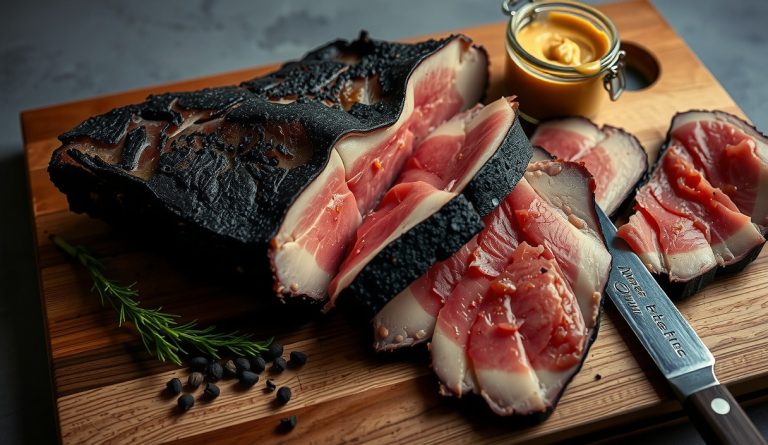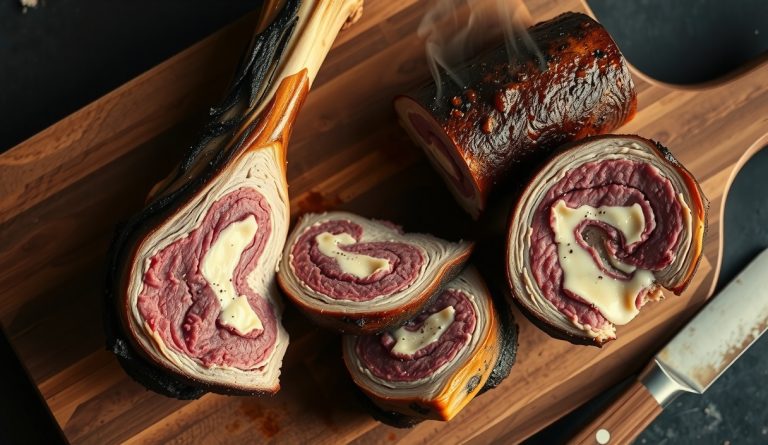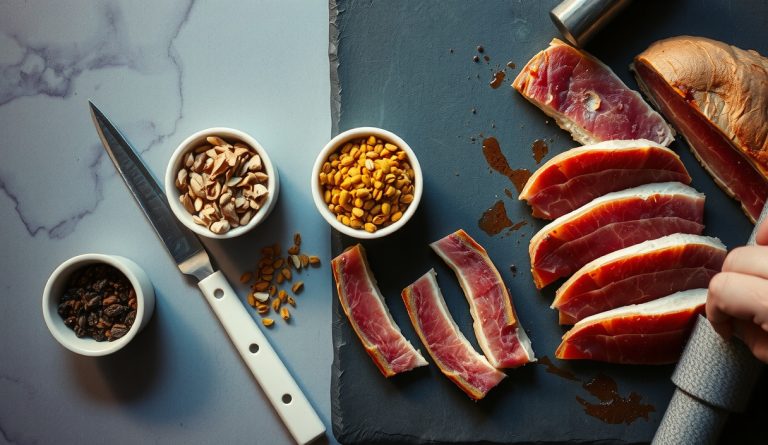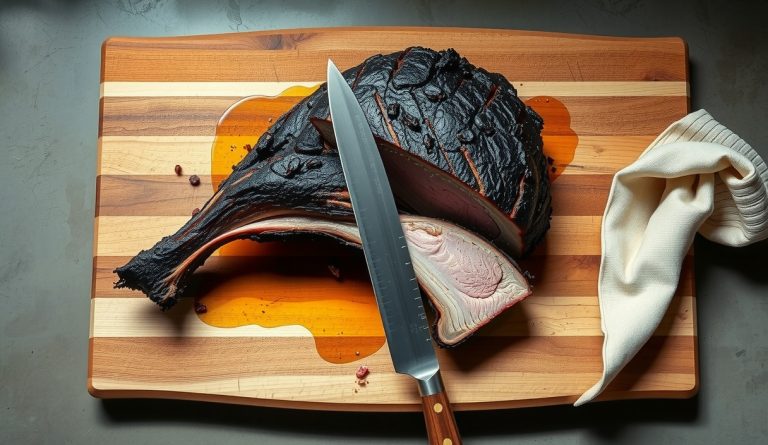
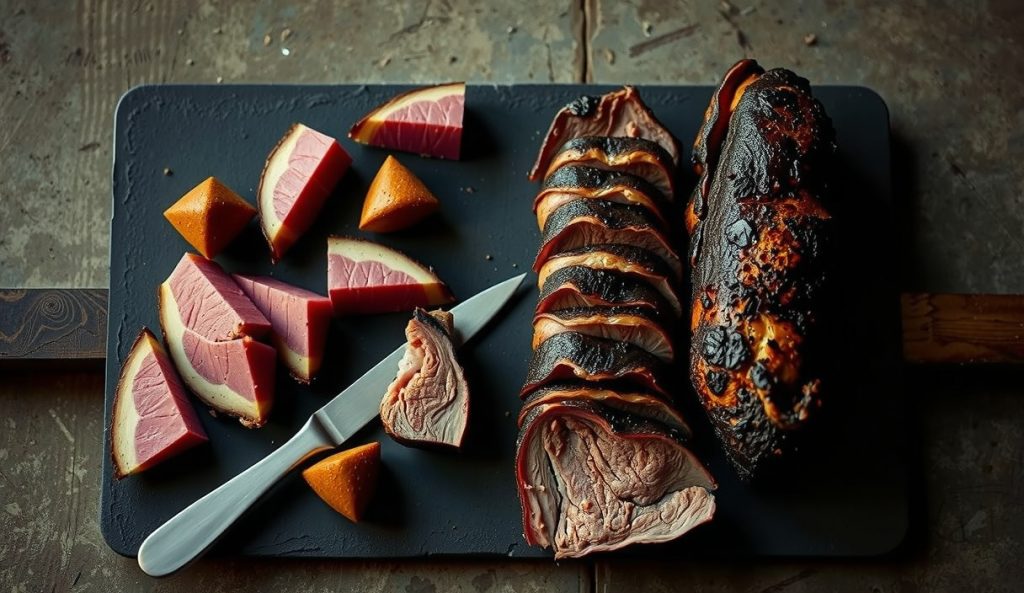
The brisket point is the deckle-end muscle sitting atop the flat, separated by a thick seam of fat. Where the flat trades in lean, uniform slices, the point is threaded with intramuscular fat and dense collagen bundles that render down into something closer to beef butter. If your goal is a chopped pastrami sandwich piled on rye, or a crisped-up breakfast hash, the point-cut is the superior raw material.
What changes when you use the point cut instead of the flat?
The cure protocol — brine concentration, salt equilibration, and spice penetration — is identical to the canonical flat. What changes is geometry and thermal behavior during the smoke phase.
The point is significantly thicker than the flat, and its fat mass acts as a thermal buffer, absorbing heat energy before it can propagate inward. Expect the smoke phase to run 1 to 2 hours longer than the flat before the 165°F pull temperature is reached. Do not attempt to compensate by raising pit temperature: collagen-to-gelatin conversion requires sustained time in the 160°F–180°F window, and rushing that window produces a greasy, chewy result rather than the silky, unctuous texture the point is capable of delivering.
During the steam phase, the additional collagen load works in your favor. Type I and type III collagen fibers hydrolyze into gelatin aggressively once water activity is high and temperature holds above 190°F — exactly what the steam environment provides. The result at 203°F internal is a point-cut that practically pulls apart under its own weight.
Because the point lacks the flat’s uniform thickness, slicing for a classic deli presentation is impractical: the grain runs in multiple directions and fat pockets interrupt clean cuts. Plan to chop or pull the finished pastrami rather than thin-slice it. In sandwich and hash applications, that texture variety is a feature, not a limitation.
What stays the same as the standard flat-cut method?
The brine formula, cure duration, rub composition, pit temperature target of 225°F, the 165°F smoke-phase pull, and the steam-to-203°F finish all remain unchanged when cooking the point. The sequence — cure, dry, rub, smoke, steam — is the same process applied to a different muscle geometry.
When is the point cut the better choice for pastrami?
Choose the point cut when you are building chopped pastrami sandwiches, incorporating pastrami into a breakfast hash, or simply want the richest possible eating experience and are not constrained by the need for uniform deli slices. Point-cut pastrami also freezes exceptionally well once chopped, making it a practical batch-cook option for weeknight meals.
Use the full cure brine, rub measurements, equipment guidance, and steam setup from the original Smoked Pastrami from Scratch.