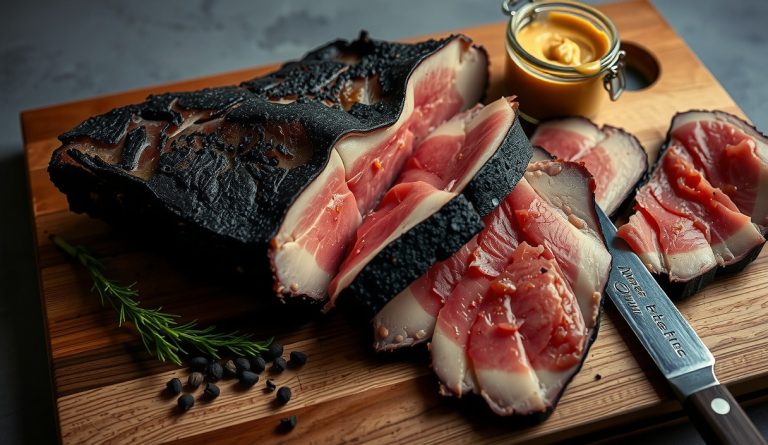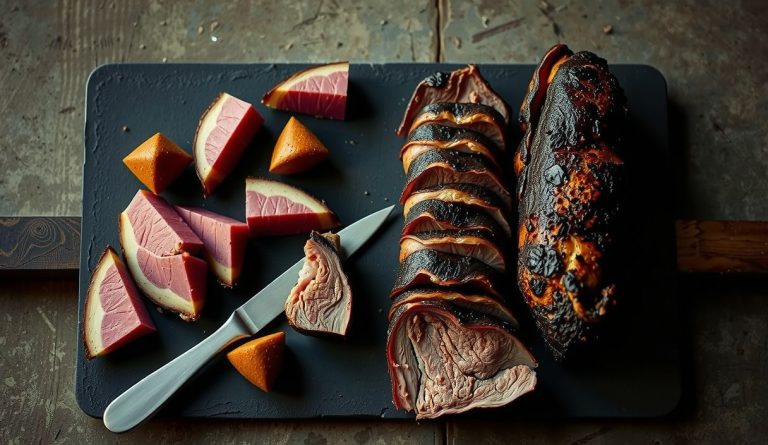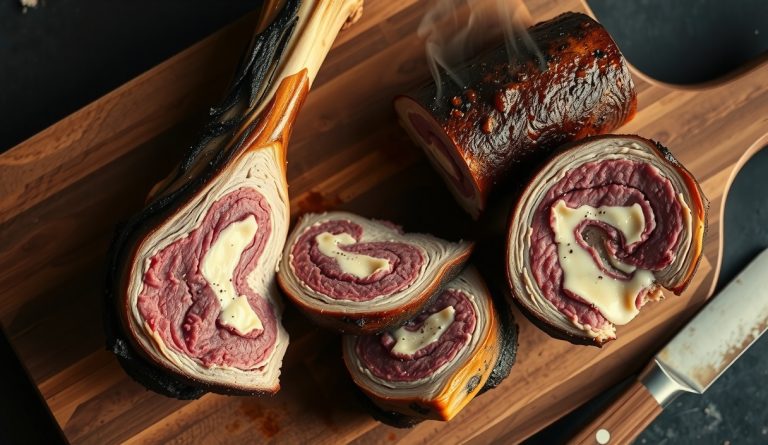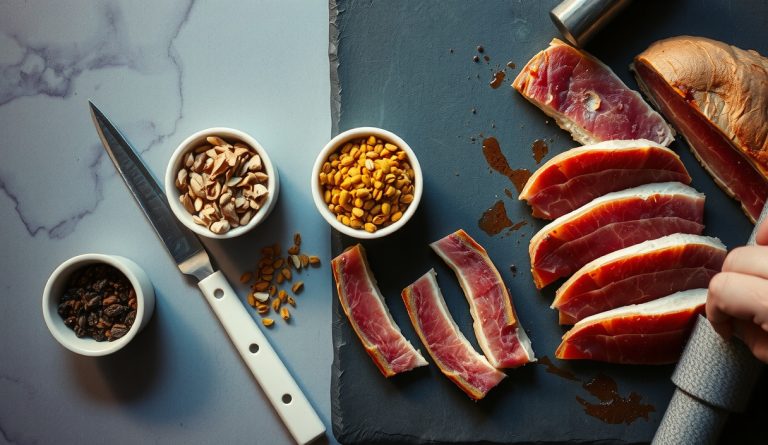
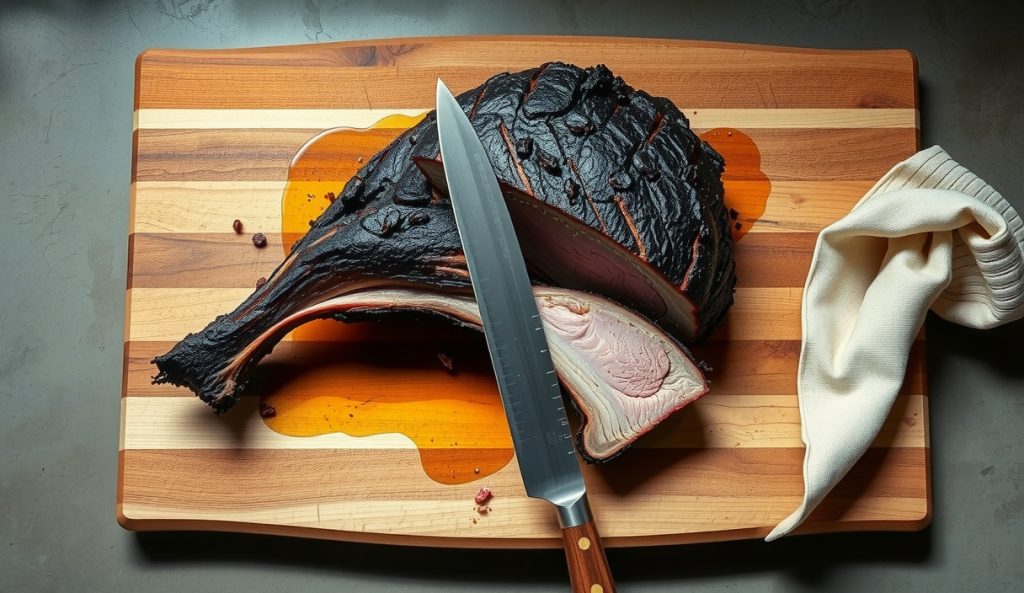
A whole packer brisket includes both the flat and the point still connected, typically weighing between 10 and 14 pounds untrimmed. Converting a whole packer into pastrami is a week-plus project, but the yield — enough to stock a freezer, feed a gathering, or supply a week of sandwiches — justifies the extended timeline for the right cook. This is a deliberate commitment, not a weeknight pivot.
What changes when you scale up to a whole packer?
The most critical scaling adjustment is brine volume and cure duration. A whole packer requires a 6-gallon vessel to ensure the brisket is fully submerged without compression — compression restricts brine circulation and creates uneven salt penetration. Cure time extends to 10 to 14 days.
Equilibration curing — where brine salt concentration is calculated to achieve a precise final salinity in the meat — relies on diffusion kinetics: sodium ions migrate down a concentration gradient from brine into muscle tissue at a rate governed by the muscle’s protein density and cross-sectional thickness. The whole packer’s center, particularly through the thickest part of the flat where it meets the point, can exceed 5 inches of depth. Full equilibration at that geometry requires the extended 10-to-14-day window. Pulling early risks an under-cured center that will taste flat and gray when sliced.
Smoke time increases to 10 to 14 hours at 225°F. The point and flat will reach target temperature at different times because they differ in thickness and fat content. Place your probe in the thickest part of the flat — the flat is the limiting factor and will lag behind the point. Once the flat reads 165°F, pull the whole packer for the steam phase. The point may already exceed 165°F at that moment, which is acceptable; the steam phase will bring both muscles to the 203°F finish target together.
What stays the same as the canonical recipe?
Brine salt-to-water ratio, curing salt concentration, rub composition, pit temperature, the two-stage smoke-then-steam structure, and all internal temperature targets are identical to the canonical recipe. When scaling to a whole packer, you are adjusting vessel size and time — not chemistry.
When is the whole packer method the better choice?
The whole packer method makes sense when you are feeding a group of 12 or more, when you intend to vacuum-seal and freeze portions for later use, or when you want both the lean deli-style slices of the flat and the richer chopped meat of the point from a single cook. The whole packer method is not worth the time investment for two to four people unless freezing is part of the plan.
- Feeding 12 or more people from a single cook
- Portioning, vacuum-sealing, and freezing for future use
- Wanting lean flat slices and rich point meat simultaneously
Use the full brine formula, rub ratios, and steam setup from the original Smoked Pastrami from Scratch, scaling brine volume to 6 gallons.