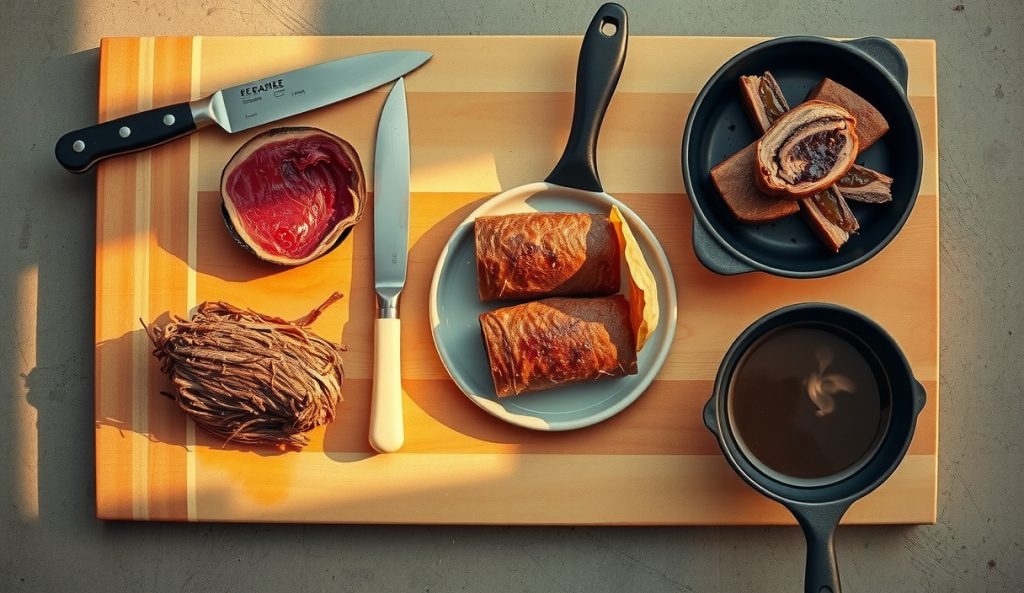
The 36-hour collagen-to-gelatin conversion that defines this recipe is also what makes the finished beef cheek one of the most format-flexible proteins in a cook’s repertoire. Gelatin, unlike muscle fiber, retains moisture under heat, pressure, and time — which means the same cooked beef cheek can move from a plated fine-dining context to a taco service line to a restaurant prep refrigerator without meaningful quality loss in any direction.
What changes between serving formats?
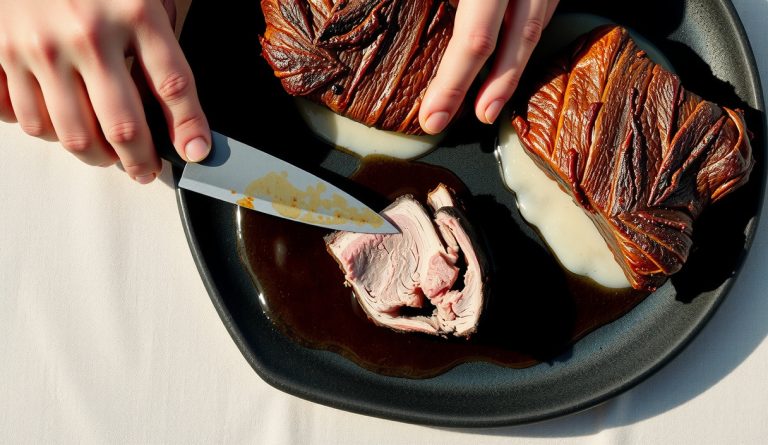
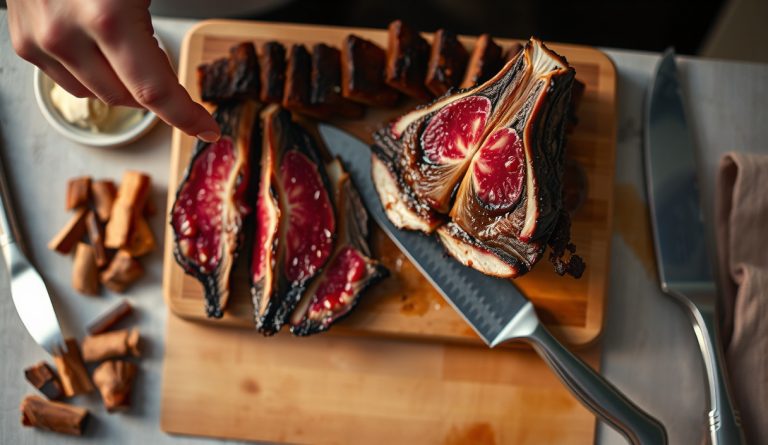
For plated dinner service, slice the beef cheek thick — approximately 1.5 to 2 cm — against the grain. The cross-section reveals the intramuscular fat pattern and holds its shape on the plate with clean, defined edges.
For tacos, shred the beef cheek by hand or with two forks while it is still warm. Gelatin-bound strands retain moisture at holding temperatures far more effectively than pulled brisket flat, which dries out under a heat lamp within 20 minutes. The beef cheek’s strands remain supple because the gelatin matrix continues to hold free water even as surface evaporation occurs.
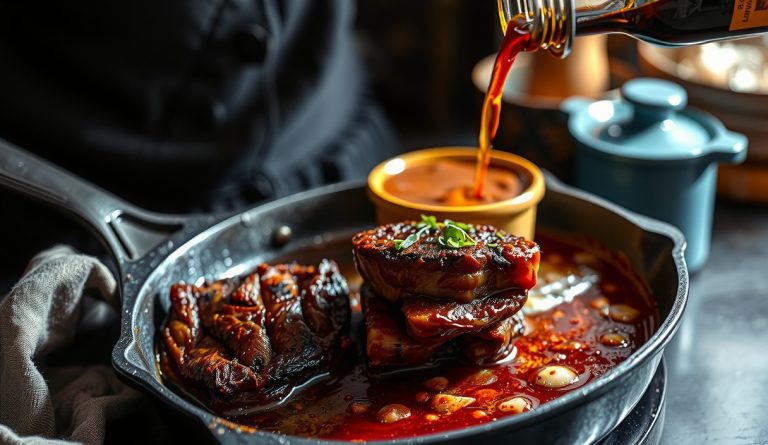
For a beef cheek torta, slice thin — 3 to 4 mm — and press the slices in a cast-iron skillet with weight applied. The gelatin content causes the slices to bond under moderate pressure and heat, producing a cohesive, dense filling with defined edges. This bonding behavior is not possible with a lower-collagen cut.
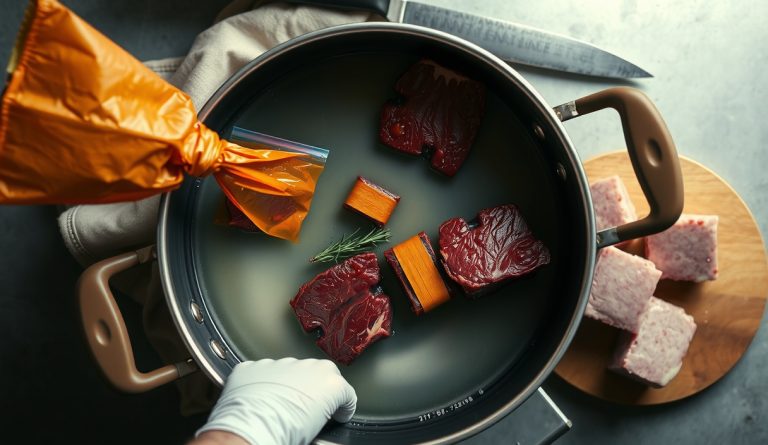
For restaurant prep and re-service, portioned beef cheeks can be vacuum-sealed cold and re-thermalized at 140°F in a water bath for 20 minutes with no texture degradation. At 140°F, the gelatin re-liquefies partially and then re-sets as the slice cools on the plate, maintaining the original silkiness. This is a direct function of gelatin’s reversible sol-gel transition — it is not achievable with muscle-fiber-dominant cuts, which seize and toughen on reheating.
What stays the same regardless of serving format?
The cook itself is identical regardless of serving format. All format decisions happen post-cook, post-rest. The rub, smoke stage, sear, and sous vide parameters do not change based on how you intend to serve the beef cheek.
When is each format the better choice?
Use the shred format for high-volume taco or burrito service where hold time is a real operational constraint — the gelatin matrix protects texture far longer than any brisket flat alternative. Use the re-thermalization path for any professional kitchen running a prep-ahead program; the 20-minute re-thermalization window at 140°F is tight enough to fit any service timeline. Choose the torta press format when you need a structurally compact filling that holds together under sauce and weight without falling apart.
Use the full method, equipment, and rub measurements from the original Sous Vide Smoked Beef Cheeks.