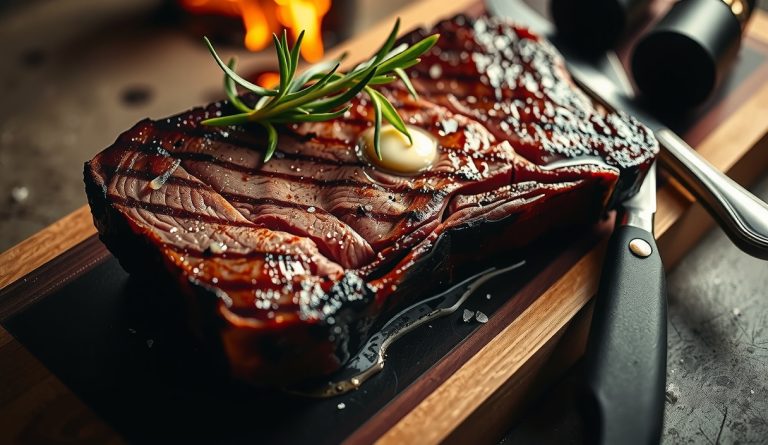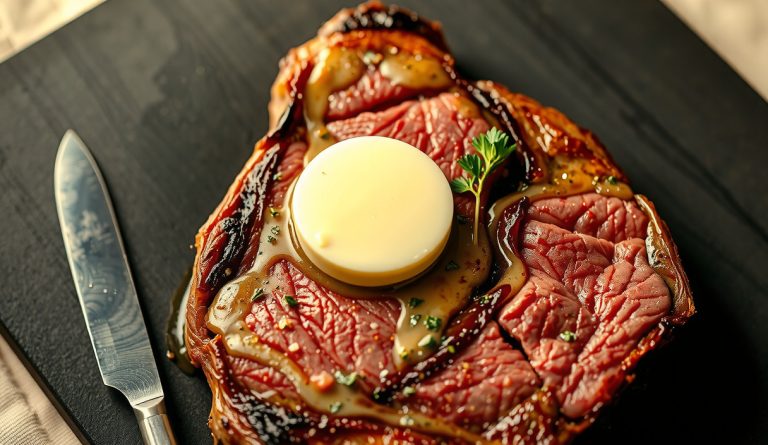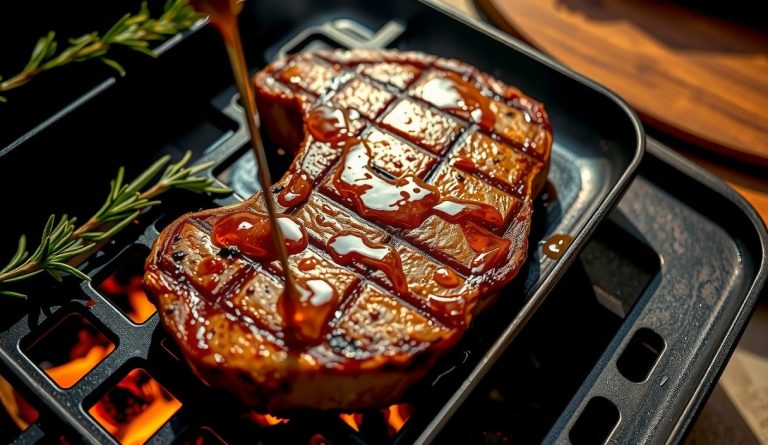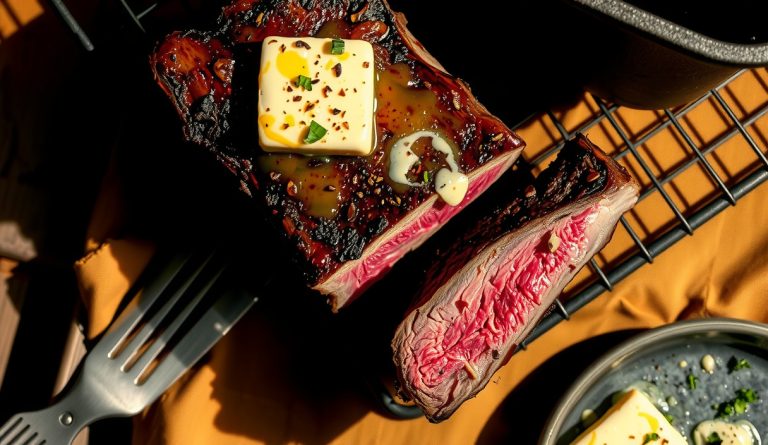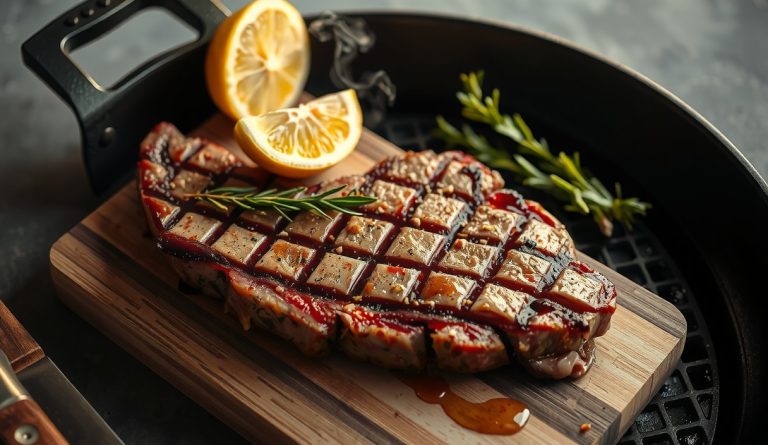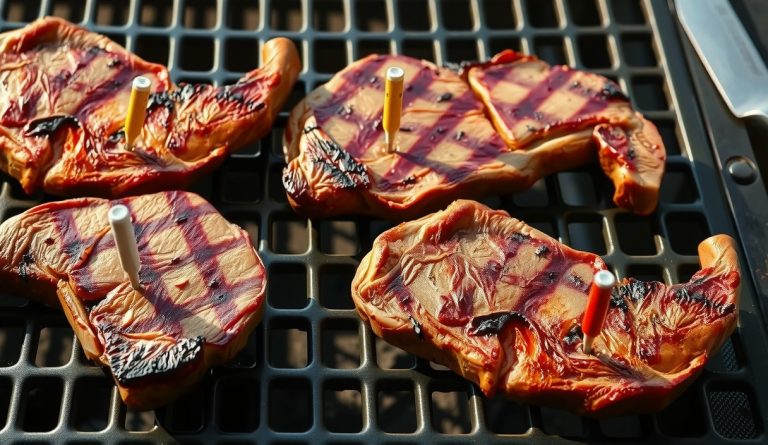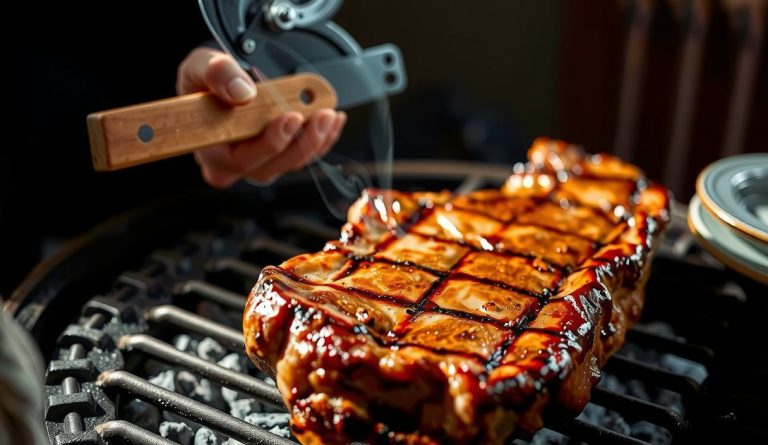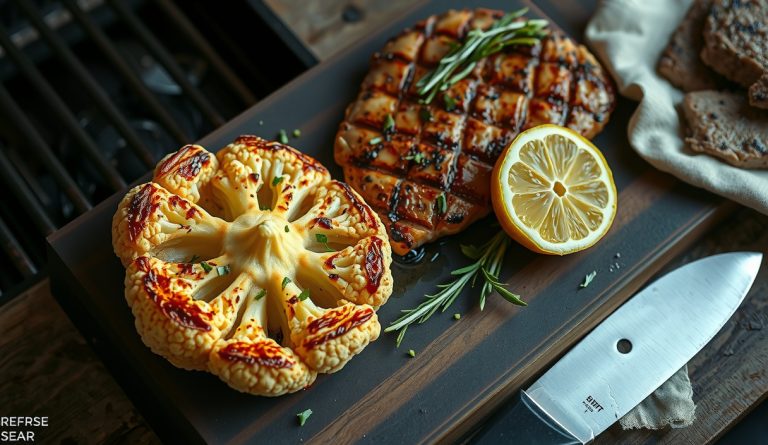
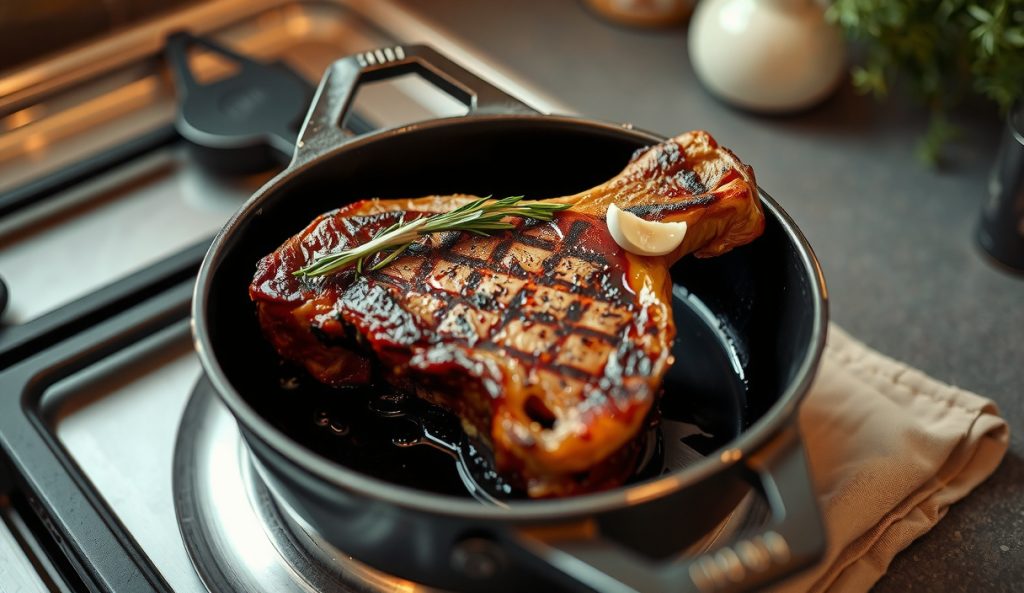
The reverse-sear method depends on a high-heat, short-duration sear — the indirect phase has already completed the interior work, so the ribeye’s surface needs only sixty to ninety seconds of intense conductive contact to trigger Maillard browning. A coal sear is ideal because radiant and convective heat contribute alongside conduction, but a properly preheated cast iron skillet running at full burner output reaches surface temperatures in the 500–600°F range that are genuinely competitive with live coals. The cast iron finish is a legitimate technique, not a compromise.
What changes when you finish on cast iron?
Preheat the cast iron skillet completely dry — no oil — over your range’s highest burner for a minimum of six minutes. The thermal mass of cast iron requires sustained heating to bring the entire pan floor to a uniform high temperature; underpredicting this preheat is the single most common failure point and produces a steam-pale crust instead of a Maillard crust.
Preheat the skillet dry for a specific chemical reason: any oil added to an empty pan at 500°F smokes continuously and begins polymerizing before the ribeye even contacts the surface, producing acrid off-flavors. Instead, apply a thin coat of avocado oil or refined beef tallow directly to the steak’s surfaces immediately before the sear. Both have smoke points above 450°F, providing just enough lubrication to prevent sticking and to facilitate heat transfer between the irregular crust geometry and the pan floor without introducing burned-fat flavor.
Sear each side of the ribeye for sixty to ninety seconds without moving the steak. On thick cuts, a brief edge sear using tongs is worthwhile where the fat cap needs rendering. The pan will generate significant smoke — run full ventilation. After the sear, rest the ribeye on a wire rack, not in the pan; residual pan heat will continue cooking the underside if the steak remains in contact with the skillet.
What stays exactly the same as the original method?
The indirect phase — whether conducted in a low oven at 250°F or on the cool side of a two-zone grill — remains identical. The pull temperature of 115°F before the sear, the four-minute rest after, and all dry-brine and seasoning protocols are unchanged. Only the sear apparatus differs between the two methods.
When is the cast iron finish the better choice?
The cast iron variation is the right call in winter months when coal management is impractical, in apartments or condos where outdoor grilling is prohibited, or when the indirect phase was run in a low oven and transitioning to an outdoor sear is logistically awkward. Cast iron also gives more precise sear-time control than live coals, which is useful for cooks still calibrating the reverse-sear method.
- Winter or cold-weather cooking where coal management is impractical
- Apartments or condos with outdoor grilling restrictions
- Indoor oven indirect phase where an outdoor transition is awkward
- Cooks calibrating sear time who benefit from more precise heat control
Use the full method, equipment, and rub measurements from the original Reverse-Sear Ribeye on the Grill.