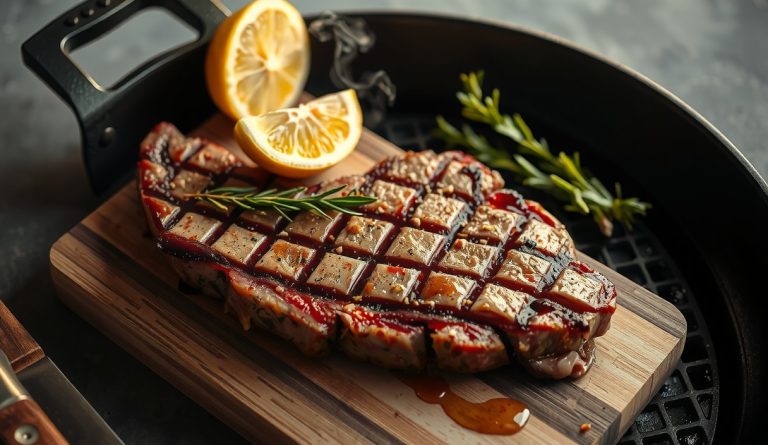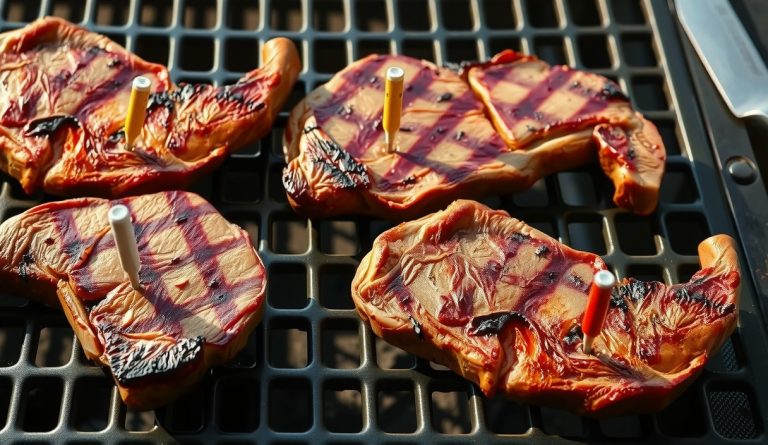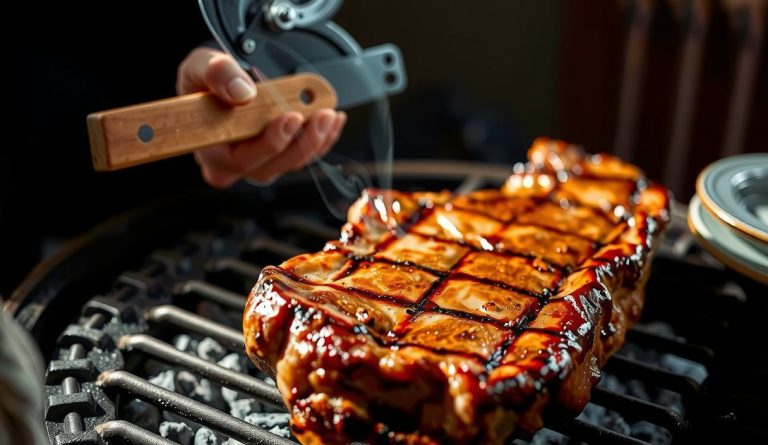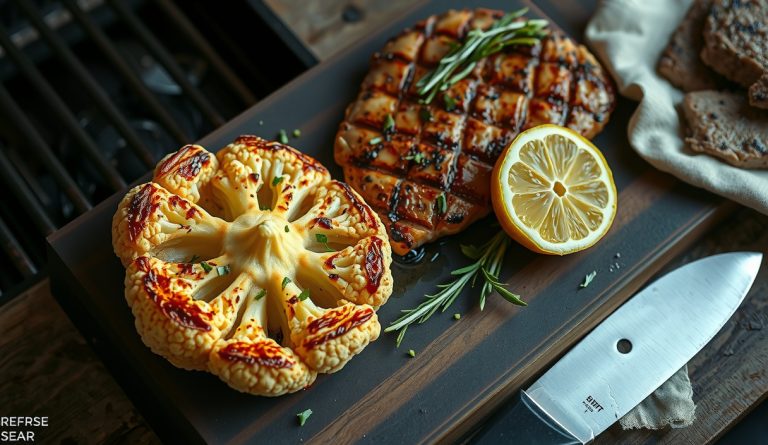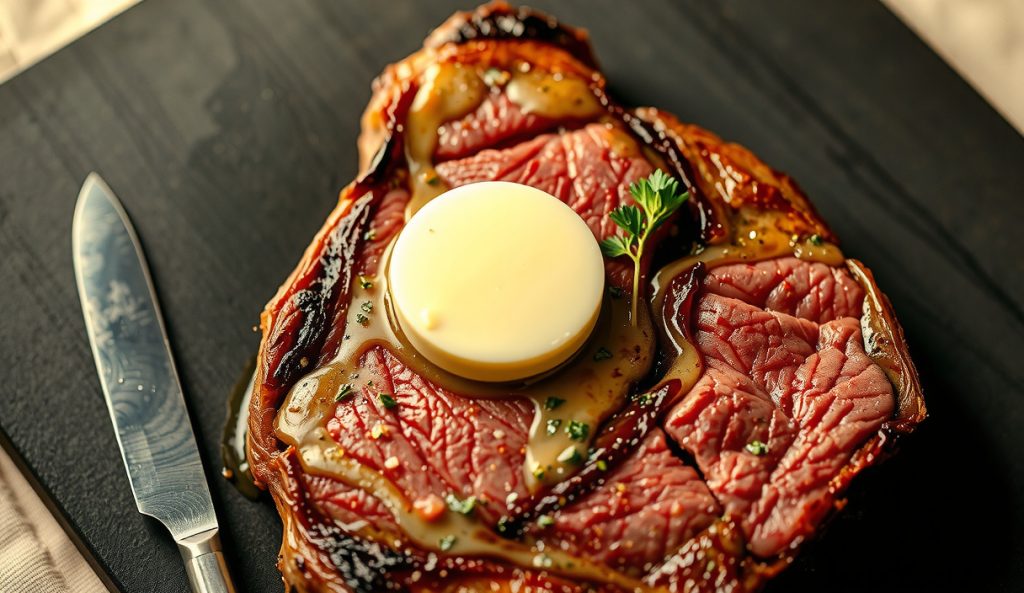
Timing is everything with compound butter on a reverse-seared ribeye. Apply the butter during the sear and the milk solids incinerate, turning bitter. Apply it before the indirect phase and the fat renders away, carrying its aromatics into the grate rather than the meat. The four-minute rest window that follows the sear is the precise moment the surface is hot enough — 300–350°F — to melt the butter completely but no longer gaining temperature, making it the only point in the cook where compound butter actually works as intended.
What changes when you add compound butter to a reverse-seared ribeye?
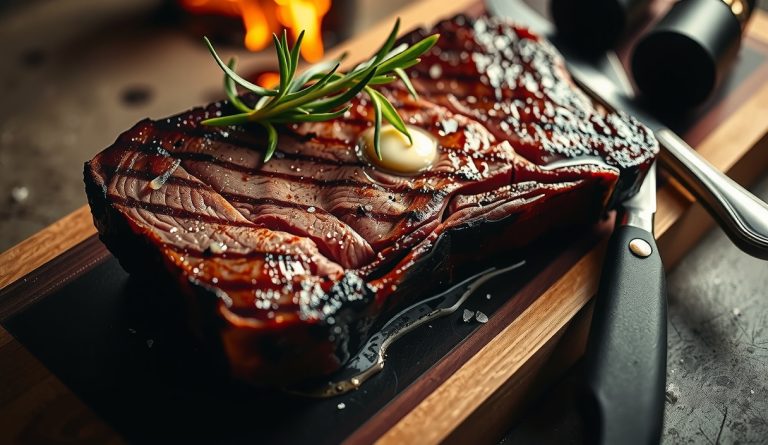
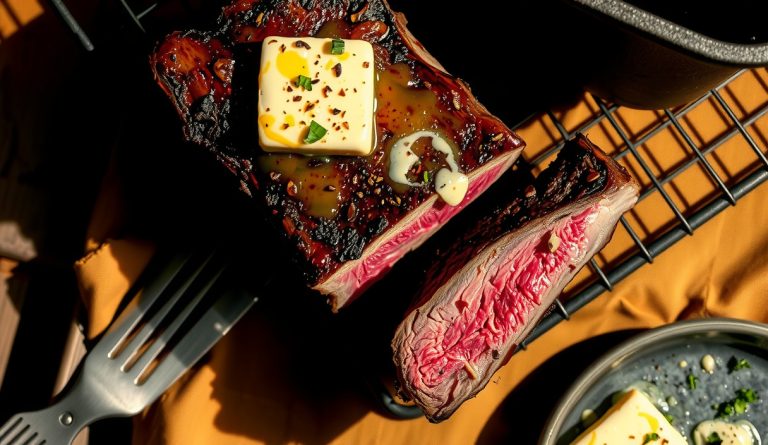
Immediately after pulling the ribeye from the sear and before the rest begins, place roughly one tablespoon of compound butter directly on the top surface. A classic build combines softened unsalted butter with fresh thyme, rosemary, and finely grated raw garlic — worked together at room temperature until homogeneous, then chilled into a log and sliced to order.
The residual heat from the crust — surface temperatures immediately post-sear run 300–350°F — melts the compound butter within thirty to forty-five seconds. That heat drives the butter’s fat-soluble aromatic compounds, primarily terpenes from the thyme and rosemary and organosulfur compounds from the garlic, directly into the surface layer of the crust. These volatiles are lipophilic: they partition preferentially into the rendered intramuscular fat just beneath the crust rather than evaporating, which is why the flavor registers on the first bite rather than only in the aroma.
Keep the portion to one tablespoon. More than one tablespoon and the butter pools under the ribeye during the rest, masking the beef’s own rendered fat character rather than complementing it.
What stays the same in the cook when using compound butter?
The full indirect-then-sear sequence is unchanged. The dry-brine timing, target internal temperature of 115°F before the sear, coal configuration, and four-minute rest duration all remain exactly as specified in the canonical method. The compound butter is an addition at the very end — it does not alter any cook parameter.
When is the compound butter finish the better choice for ribeye?
The compound butter finish is the right call when serving guests who expect steakhouse-level richness, or when the ribeye itself is USDA Choice grade rather than Prime and benefits from supplemental fat-soluble flavor. It also works well for thinner two-inch cuts where the ratio of crust surface to interior is higher and the butter has proportionally more aromatic impact.
Skip the compound butter if the primary goal is evaluating the beef itself — a high-quality dry-aged Prime ribeye often needs nothing after the sear.
Use the full method, equipment, and rub measurements from the original Reverse-Sear Ribeye on the Grill.