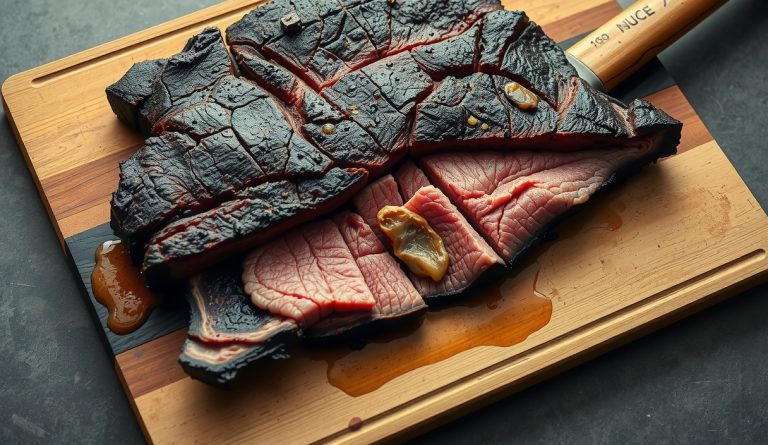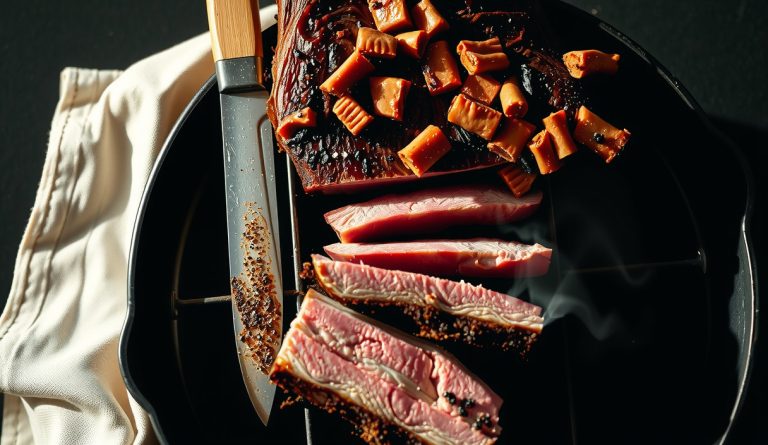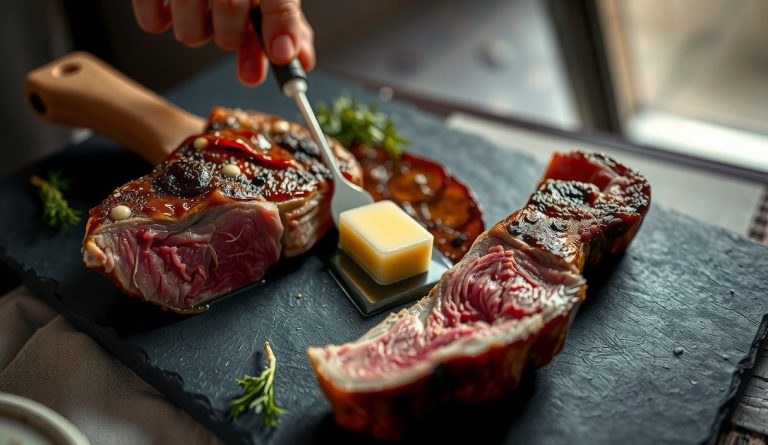
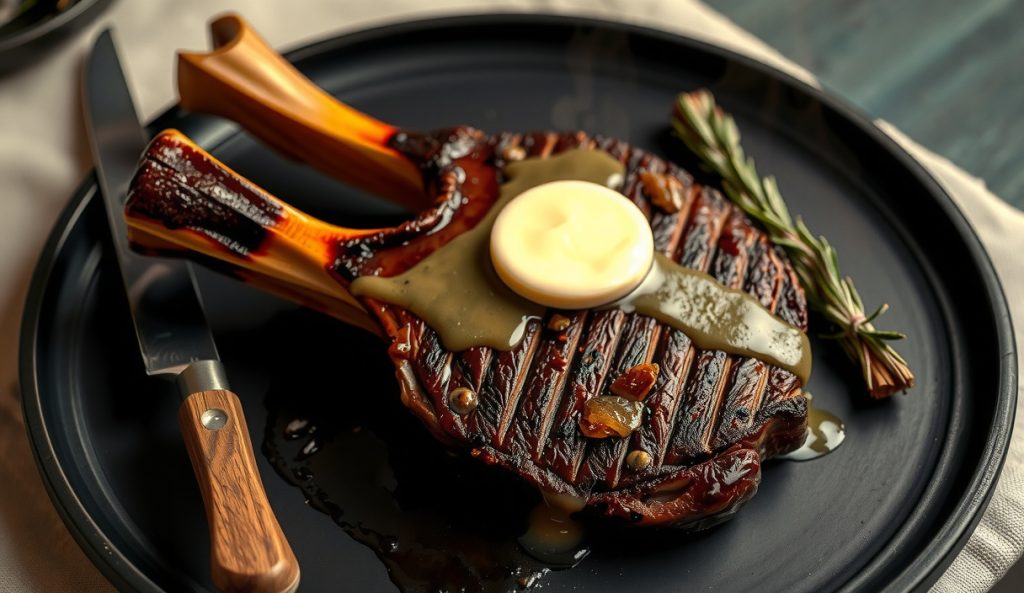
The rest period after searing a tomahawk ribeye is not dead time — it is a precision-delivery window. Placing a round of garlic-herb compound butter on the freshly seared tomahawk immediately after it leaves the heat uses the residual thermal energy stored in the crust to melt the butter slowly and evenly, without driving the internal temperature higher or scorching the fat. The result is a crust that tastes as though it was basted throughout the entire cook, with none of the timing pressure that live basting over a hot grate demands.
What does the compound butter change about this cook?
The compound butter is built from 4 tablespoons of softened unsalted butter blended with 2 minced garlic cloves, 1 tablespoon of fresh thyme leaves, 1 tablespoon of finely chopped fresh rosemary, and a pinch of flaky sea salt. Roll the mixture tightly in plastic wrap, shape it into a log, and refrigerate for at least one hour until firm.
When the tomahawk comes off the sear and rests on a rack or cutting board, immediately slice a half-inch round of the compound butter and lay it flat on the top surface of the meat. The crust surface temperature at this point is typically 300°F to 350°F — well above whole butter’s melting point of roughly 90°F to 95°F — yet the butter melts gently rather than burning because it is no longer in contact with a radiant heat source. This keeps the butter below its smoke point (approximately 350°F for clarified butter; lower for whole butter) for the entire rest period.
The flavor mechanism at work is lipid-phase partitioning. Thymol from thyme and the terpene compounds camphor and borneol from rosemary are fat-soluble, so they migrate preferentially into the butter fat and from there into the rendered surface fat of the seared crust far more efficiently than the same aromatics would transfer from a water-based baste. The standard five-minute rest period is sufficient for this transfer to saturate the outer few millimeters of the seared surface with herb-and-garlic flavor.
What stays exactly the same as the base recipe?
The full reverse sear process — oven temperature, pull temperature, sear timing, and total rest duration — is completely unchanged. The compound butter is an addition at the very final moment of the cook, not a modification to any earlier step. The tomahawk ribeye still rests for a minimum of five minutes before slicing regardless of whether the compound butter is applied.
When is this finish the better choice?
This compound butter finish suits dinner-party or date-night presentations where the visual drama of butter pooling and melting across a plated steak is part of the experience. It also compensates meaningfully on leaner USDA Choice cuts where the fat cap and marbling are present but modest: the compound butter adds surface richness to the eating crust that the steak’s own fat distribution may not fully deliver on its own.
Use the full method, equipment list, and seasoning measurements from the original Tomahawk Ribeye — The Reverse Sear Method.