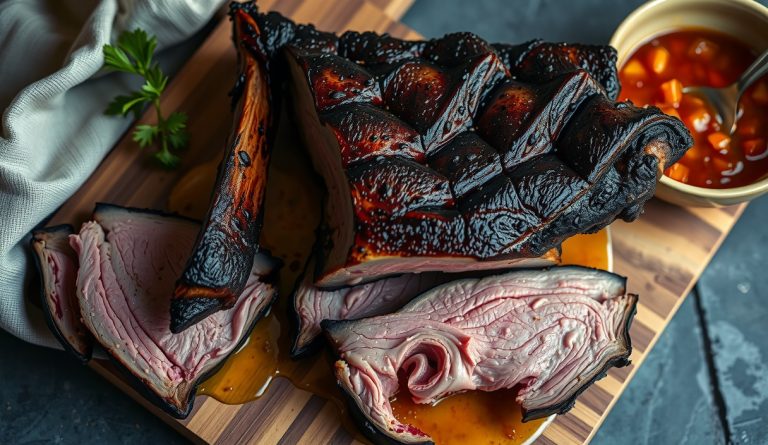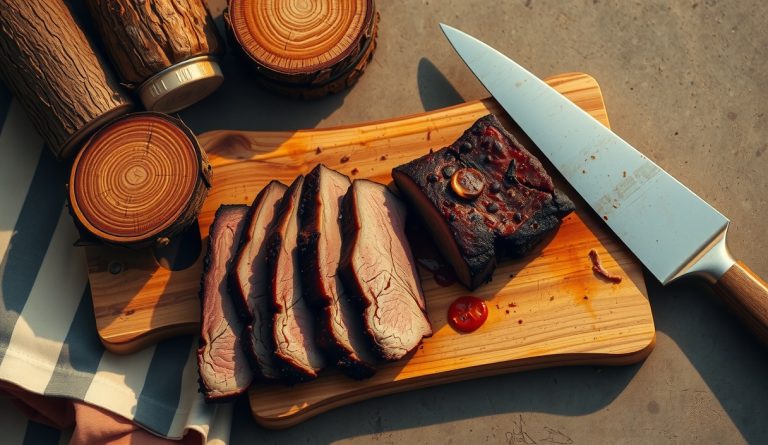
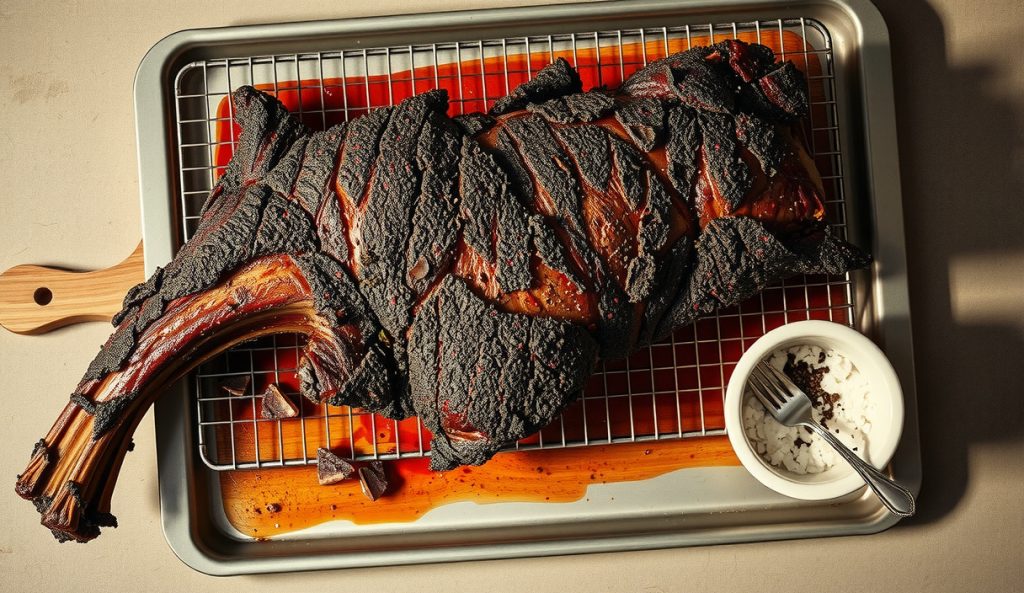
The canonical garlic-salt-pepper rub performs well when applied 30 to 60 minutes before the cook. Extending that window to 12 or 24 hours unlocks a meaningfully different surface texture: a denser, crunchier bark with a more aggressively seasoned crust that stands up to the smoke rather than blending quietly into it. This is not a shortcut — it is a deliberate technique choice that rewards planning.
The extended dry-brine rest is worth considering any time bark quality matters as much as internal tenderness — competition presentations, special-occasion cooks, or whenever the sear needs to produce maximum visual and textural contrast.
What changes with an overnight dry brine?
Apply the full garlic-salt-pepper rub the night before, then place the tri-tip uncovered on a wire rack set over a sheet pan in the refrigerator. The uncovered rack position is not optional: airflow across all surfaces lets surface moisture evaporate freely, which concentrates the seasoning layer and begins pellicle formation.
During the refrigeration period, sodium ions migrate deeper into the muscle tissue through osmotic pressure, seasoning the interior rather than remaining on the outermost surface. The surface proteins also begin a slow denaturing process that creates a drier, tighter exterior crust before the tri-tip ever reaches the smoker.
When this drier surface hits the high-heat sear phase, Maillard browning initiates faster because less residual surface moisture must drive off before caramelization onset — which begins at approximately 280 to 330°F at the surface. As a result, reduce sear time by 20 to 30 seconds per side compared to the canonical method, and watch for color rather than relying on the clock. The crust browns quickly and can transition from ideal to overdone in a narrow window.
What stays the same as the base recipe?
The smoke phase temperature, target internal pull temperature of 125°F, wood selection, and rest protocol are all unchanged from the base method. Only the rub application timing and the final sear duration are adjusted for the overnight dry-brine variation.
When is the overnight dry-brine variation the better choice?
Choose this variation when bark quality is a primary goal — competition cooks, dinner-party presentations, or any occasion where the visual and textural contrast between crust and interior matters most. The overnight dry brine is also the practical option when cook-day time is limited, since the rub work is completed the night before and the morning remains free for other prep.
Use the full method, equipment, and rub measurements from the original Smoked Tri-Tip — Santa Maria Style.