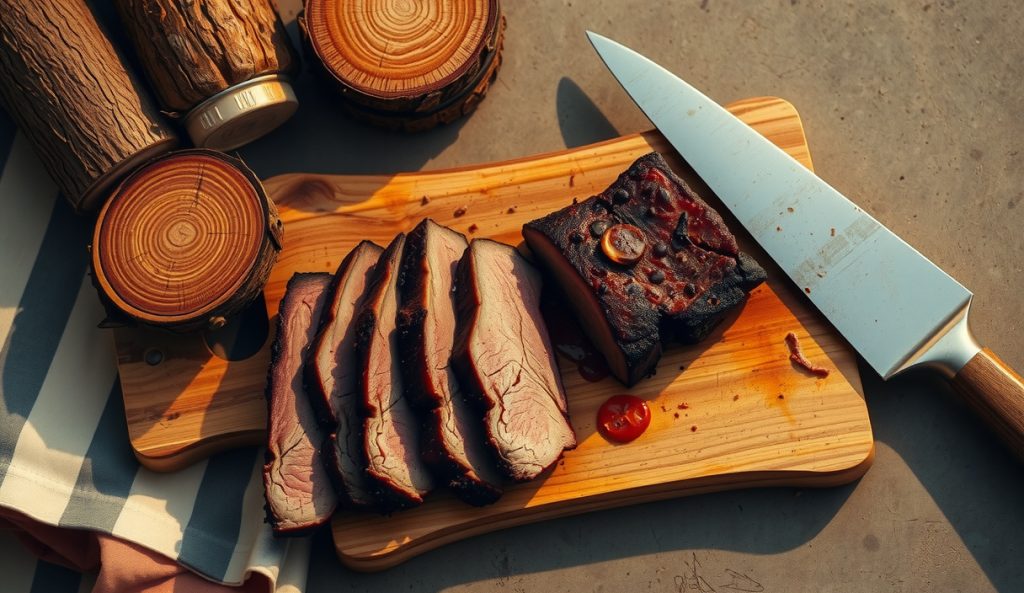
Red oak is the defining smoke source of Santa Maria barbecue. Its moderate combustion temperature and relatively clean phenol profile produce a smoke character that enhances lean beef without dominating it — a balance that took generations of Santa Maria pit cooks to standardize around. Outside of California’s Central Coast, red oak is genuinely difficult to source, and this variation addresses exactly what to do when red oak is not available.
The goal is not to replicate red oak exactly — that is not possible with a different wood species. The goal is to identify a wood whose combustion chemistry produces a similar smoke density and phenol composition so the tri-tip’s clean beef flavor remains the primary note on the palate.
What changes when you swap the wood?
White oak is the closest available substitution in most U.S. markets. White oak shares a similar lignin-to-cellulose ratio with red oak, which means combustion at pit temperatures of 225 to 275°F produces a comparable smoke density and a phenol profile that reads as mild, slightly sweet, and clean on the palate. Smoke output from white oak is slightly lower than red oak — add one additional small chunk to the coal bed at the midpoint of the smoke phase to compensate.
Post oak, the dominant wood in Central Texas barbecue, is another functional option. Post oak burns slightly hotter than red oak and produces modestly more earthy, mineral smoke character, which shifts the tri-tip’s flavor profile slightly toward Texas brisket territory rather than Santa Maria style — acceptable, but not identical. Use post oak in the same quantity as red oak without any quantity adjustment.
Mesquite should be avoided entirely for this cook. Mesquite’s high combustion temperature accelerates phenol production dramatically, and its guaiacol and syringol compounds at pit concentrations overwhelm the mild, clean flavor that defines Santa Maria-style tri-tip. What works as a brief accent on short, high-heat cooks becomes harsh and medicinal over a 90-minute smoke session at 225 to 275°F.
What stays the same in this variation?
Pit temperature, rub composition, sear sequence, pull temperature, and rest time are all identical to the canonical Santa Maria method. Only the wood species changes — every other variable in the cook remains constant.
When is the regional wood swap the better choice?
This variation is the practical path for any cook outside California where red oak is not stocked locally. The regional wood swap preserves the intent and approximate flavor profile of the canonical recipe without requiring specialty online sourcing or multi-day shipping for a single cook.
Use the full method, equipment, and rub measurements from the original Smoked Tri-Tip — Santa Maria Style.